JSTOR Global Plants Home
  • Home
  • Browse
  • About
  • Access
  • Account
    • Saved Items
    • Profile
  • Log in

Global Plants

Skip to Main Content
  • JSTOR Global Plants Home
  • Global Plants

    • Browse
    • About
    • Access
    • Account
      • Saved Items
      • Profile
Log in
  • Browse
  • About
  • Access
  • Account
    • Saved Items
    • Profile
Advanced Search

Compilation
Enneapogon pusillus

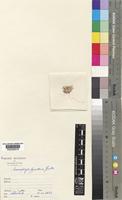
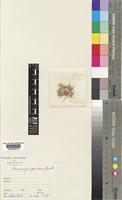
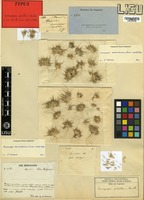
3 Images see all

Enneapogon desvauxii P.Beauv. [family POACEAE]
Type of Enneapogon pusillus Rendle [family POACEAE]
Previous
Next

Name

Identification
Enneapogon pusillus Rendle [family POACEAE ] Enneapogon desvauxii P.Beauv. [family POACEAE ] (stored under name);
Related name
  • Enneapogon pusillus
  • Enneapogon desvauxii

Flora

Entry for Enneapogon desvauxii Beauv. [family GRAMINEAE]
Herbarium
Royal Botanic Gardens, Kew (K)
Collection
Flora Zambesiaca
Resource Type
Reference Sources
Entry From
FZ, Vol 10, Part 1, (1971) Author: E. Launert
Names
Enneapogon desvauxii Beauv. [family GRAMINEAE], Ess. Agrost.: 82, t .16, f. 11 (1812). — W. D. Clayton in F.T.E.A., Gramineae: 167 (1970). TAB 39 fig. B. Type ?from S. America.
Pappophorum brachystachyum Jaub. & Spach [family GRAMINEAE], Ill. Pl. Or. 4: 34, t. 324 (1851). Type as above.
Pappophorum bulbosum Fig. & De Not. [family GRAMINEAE], in Mem. Acad. Sci. Torino, 2, 12: 254 (1852). Type from Arabia.
Pappophorum figarianum Fig. & De Not. [family GRAMINEAE], loc. cit. Type from the Sudan.
Pappophorum vincentianum J. A. Schmidt [family GRAMINEAE], Beitr. Fl. Cap. Verd. Ins.: 144 (1852). Type from the Cape Verde Is.
Pappophorum arabicum Hochst. ex Steud. [family GRAMINEAE], Syn. Pl. Glum. 1: 199 (1854). Type from Arabia.
Pappophorum nanum Steud. [family GRAMINEAE], Syn. Pl. Glum. 1: 200 (1854) nom. illegit. based on P. vincentianum J. A. Schmidt.
Pappophorum senegalense Steud. [family GRAMINEAE], tom. cit.: 199 (1854). Type from Senegal.
Enneapogon pusillus Rendle [family GRAMINEAE], Cat. Afr. Pl. Welw. 2, 1: 229 (1899). Type from Angola.
Enneapogon brachystachyus Jaub. & Spach Stapf [family GRAMINEAE], in Harv. & Sond., F.C. 7: 654 (1900). — Bremek. & Oberm. in Ann. Transv. Mus. 16: 405 (1935). — Chippindall in Meredith, Grasses & Pastures of S. Afr.: 237 (1955). — Bogdan, Rev. List Kenya Grass.: 16 (1958). — Bor, Grass. B.C.I. & P.: 608 (1960). — Napper, Grass. Tangan.: 21 (1965). — Renvoize in Kew Bull. 22: 396 (1968). — Launert in Merxm., Prodr. Fl. SW. Afr. 160: 78 (1970). Type from Arabia.
Enneapogon brachystachyus var. macranthera Stapf [family GRAMINEAE], in Harv. & Sond., F.C. 7: 655 (1900). — Chippindall in Meredith, Grasses & Pastures of S. Afr.: 238 (1955). Type from S. Africa.
Pappophorum pusillum Rendle K. Schum. [family GRAMINEAE], in Just’s Bot. Jahresber. 27: 458 (1901). Type as for Enneapogon pusillus.
Information
A compact caespitose often stoloniferous perennial, usually densely glandular-pubescent all over. Culms 5-15 (rarely to 40) cm. tall, 2-5-noded, geniculately ascending, sometimes decumbent, often with a bulbous thickening at the base, simple or branched, rather slender, asperulous. Leaves mostly confined to the base, forming dense tufts; sheaths tight at first later somewhat loose, finely to coarsely striate, the oldest long-persistent and splitting into fibres which form dense cushions at the base of the culm. Leaf-laminae 2.5-7.5(12) x 0.3-0.5 cm., filiform, almost always convolute, tapering to a very fine point, flexible, asperulous. Panicle 1.5-5(7.5) cm. long, spike-like, narrowly cylindrical or rarely ovate-oblong in outline, rather dense, light to dark grey. Spikelets 3-5.5 mm. long, 3-flowered (see note below), crowded. Glumes subequal, oblong, scantily pilose, with the apex obtuse to slightly emarginate, light to dark grey; the inferior 2.3-5 mm. long, 3-7-nerved; the superior 2.8-5.5 mm. long, 3-5-nerved. Fertile lemma (the inferior) 1.5-2 mm. long (excluding the awns), dorsally shortly villous; awns 2-4 mm. long, shortly plumose to or beyond the middle. Anthers 0.3-0.5 (rarely 0.7) mm. long. Caryopsis c. 1 mm. long.
Habitat
Growing in open grassland, in limestone pans, on grassy hillsides and stony outcrops, also on thin soil overlapping basalt rocks, often in overgrazed areas
Range
North Africa from the Cape Verde Islands to Egypt, through Arabia to India and China, in tropical Africa from Chad and Somalia southwards to the Cape Province
Distribution
Botswana SE Khomodimo Pan, 206 miles NW. of Molepolole, 18.vi.1955, Story 4926 (K; PRE).Botswana SW 9?6 km. SW. of Takatshwane on road to Lehututu, 21.ii.1960, de Winter 7420 (K; PRE; SRGH).Zimbabwe S Beitbridge, Shashi-Limpopo confluence, 22.iii.1959, Drummond 5949 (BM; SRGH).Botswana N NE. corner of Makarikari Pan, 16.i.1959, West 3863 (BM; SRGH).
Distribution (external)
south-western Africa
southern Angola
Notes
This sp. often produces cleistogamous spikelets, which are usually enclosed within the bulb-like enlarged basal leaf-sheaths. The caryopsis of these spikelets is conspicuously larger than that of normal spikelets, and remain enclosed within the sheaths where it finally germinates. Occasionally small panicles, which produce normal spikelets, are also produced within basal or nodal leaf-sheaths.

Related Materials

  • Terms and Conditions
  • Privacy Policy
  • Cookie Policy
  • Cookie Settings
  • Accessibility
  • Help
  • Contact Us
  • Facebook
  • Twitter
ITHAKA

JSTOR is part of ITHAKA, a not-for-profit organization helping the academic community use digital technologies to preserve the scholarly record and to advance research and teaching in sustainable ways.

©2000-2026 ITHAKA. All Rights Reserved. JSTOR®, the JSTOR logo, JPASS®, Aluka®, and ITHAKA® are registered trademarks of ITHAKA.

╳