JSTOR Global Plants Home
  • Home
  • Browse
  • About
  • Access
  • Account
    • Saved Items
    • Profile
  • Log in

Global Plants

Skip to Main Content
  • JSTOR Global Plants Home
  • Global Plants

    • Browse
    • About
    • Access
    • Account
      • Saved Items
      • Profile
Log in
  • Browse
  • About
  • Access
  • Account
    • Saved Items
    • Profile
Advanced Search

Compilation
Encephalartos barteri

11 Images see all

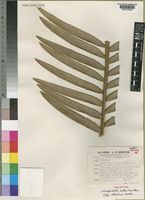
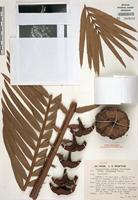
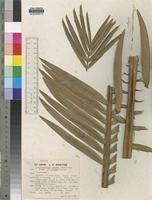
Holotype of Encephalartos barteri Carruth. ex Miq. subsp. allochrous L.E.Newton [family ZAMIACEAE]
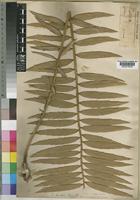
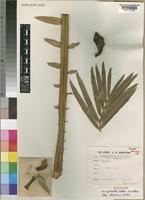
Encephalartos barteri Carruth. ex Miq. [family ZAMIACEAE]
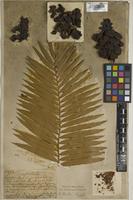
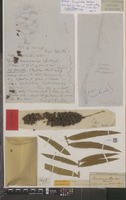
Isotype of Encephalartos barteri subsp allochorus L.E. Newton [family CYCADACEAE]
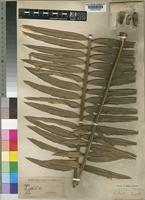
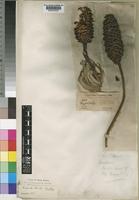
Type? of Encephalartos barteri Carruth. ex Miq. [family CYCADACEAE]
Holotype of Encephalartos barteri Carruth. ex Miq. subsp. allochrous L.E.Newton [family ZAMIACEAE]
Type of Encephalartos barteri Carruth. ex Miq. subsp. allochrous L.E.Newton [family ZAMIACEAE]
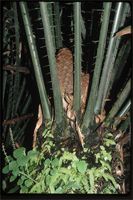
Encephalartos barteri Carruth. ex Miq. from Cameroon
Encephalartos barteri Carruthers [family ZAMIACEAE]
Encephalartos barteri Carruth. ex Miq. [family ZAMIACEAE]
Previous
Next

Name

Identification
Encephalartos barteri Carruth. ex Miq. [family ZAMIACEAE ]
Related name
  • Encephalartos barteri
Common name
  • TWI mamponmerε (FRI; E&A) (GHANA, AKAN-), Burkill, H.M. 1985. The useful plants of west tropical Africa, Vol. 5
  • kaldo (Wimbush) (NIGERIA, ANGAS), Burkill, H.M. 1985. The useful plants of west tropical Africa, Vol. 5
  • cycad, ghost palm, Hosanna palm., Burkill, H.M. 1985. The useful plants of west tropical Africa, Vol. 5
  • kpadei-atã = ghost's palm (FRI; E&A) (GHANA, ADANGME-KROBO), Burkill, H.M. 1985. The useful plants of west tropical Africa, Vol. 5

Flora

Entry for ENCEPHALARTOS Barteri Carruth. ex Miq. [family ZAMIACEAE]
Herbarium
Royal Botanic Gardens, Kew (K)
Collection
Flora of Tropical Africa
Resource Type
Reference Sources
Entry From
Flora of Tropical Africa, Vol 6, Part 2, page 344, (1917) Author: (By D. PRAIN.)
Names
ENCEPHALARTOS Barteri Carruth. ex Miq. [family ZAMIACEAE], in Arch. Neérl. iii. 243, as to Barter's plant only. —Miq. Nieuwe Bijdr. Cycad. 46, and Adansonia, ix. 61; Aschers. in Verh. Bot. Ver. Brand. xx. (1878), xxxv.; Moloney, For. W. Afr. 214; De Wild. l.c. Hort. Then. iv. 180; Engl. Pflanzenw. Afr. ii. 84; Prain in Bot. Mag. t. 8232; Chipp, Herb. Pl. Gold Coast, 39.
Information
Stem very short, ellipsoid, rarely over 1 ft. high, 9 in. thick, hardly rising above the soil, closely covered with alternating scales and persistent imbricating leaf-bases clothed with grey cottony tomentum. Leaves 3 1/2–5 1/2 ft. long, 8–10 in. wide above the middle, bright green; petiole and rhachis subcylindric, clothed at first with deciduous grey tomentum; pinnules rather thinly coriaceous, about 80 pairs, linear-lanceolate, very slightly falcate, 5–6 in. long, 1/2– 3/4 in. wide, somewhat unequally attenuated to the base, apex acutely acuminate, pungent, margin with about 4 ascending small teeth along either edge. Male cone peduncled, pale green, narrow cylindric, 5–9 in. long, 2 in. wide; peduncles 4–7 in. long, at first sparsely tomentose, soon glabrous; scales spreading, deltoid, fertile portion 1/2 in. long, not much longer than broad, apex triangular, 3/4 in. across, the lateral angles acute, the lower very obtuse, umbonate. Female cone subsessile, dark olive-green, oblong-ellipsoid, 8–10 in. long, 5 in. wide; apex of scales wide rhomboid, 2 1/4 in. across, 1 1/4 in. deep, lateral angles explanate, upper very obtuse, lower obtuse, umbonate. Seeds ovoid-oblong, faintly angled, 1 1/4 in. long; outer coat crimson.
Distribution
Gold Coast Upper Guinea Odumasi; Krobo, Rumsey ! Kwahu; west of Abene, Chipp, 624! Volta River; Anum, Schönfeld! Moloney ! Drome, Schönfeld ! Labo-labo, Anderson ! Aburi, Johnson !Dahomey Upper Guinea Borgou, about 300 miles from the coast, Poisson !Nigeria Upper Guinea near Jeba, 800 ft., Barter, 1692!
Notes
The Pardi Attar, “Ghost Palm,” of the Adangme Krobo (R.umsey), so named because it has no economic value (Schönfeld). It is common on dry rocky hill-sides or river-banks (Barter, Schönfeld) and on rocky savannah where the soil is scanty (Chipp). Chipp's specimens suggest that, at least in savannah tracts, the leaves are deciduous; the young foliage appears in December and January.

Related Materials

  • Terms and Conditions
  • Privacy Policy
  • Cookie Policy
  • Cookie Settings
  • Accessibility
  • Help
  • Contact Us
  • Facebook
  • Twitter
ITHAKA

JSTOR is part of ITHAKA, a not-for-profit organization helping the academic community use digital technologies to preserve the scholarly record and to advance research and teaching in sustainable ways.

©2000-2026 ITHAKA. All Rights Reserved. JSTOR®, the JSTOR logo, JPASS®, Aluka®, and ITHAKA® are registered trademarks of ITHAKA.

╳