JSTOR Global Plants Home
  • Home
  • Browse
  • About
  • Access
  • Account
    • Saved Items
    • Profile
  • Log in

Global Plants

Skip to Main Content
  • JSTOR Global Plants Home
  • Global Plants

    • Browse
    • About
    • Access
    • Account
      • Saved Items
      • Profile
Log in
  • Browse
  • About
  • Access
  • Account
    • Saved Items
    • Profile
Advanced Search

Compilation
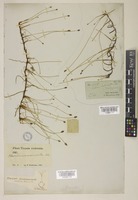
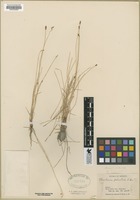
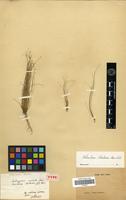
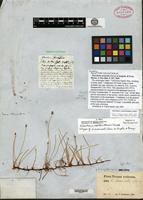
Eleocharis arenicola

10 Images see all

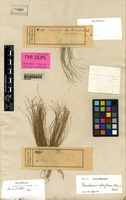
Eleocharis nodulosa (Roth) Schult. [family CYPERACEAE]
Filed as Eleocharis arenicola Torr. [family CYPERACEAE]
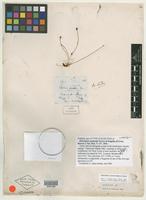
Type? of Eleocharis arenicola Torrey [family CYPERACEAE]
Type of Eleocharis arenicola Torr. ex Engelm. & A.Gray [family CYPERACEAE]
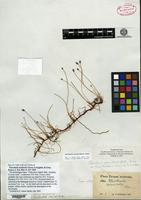
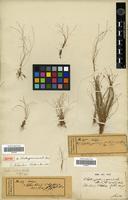
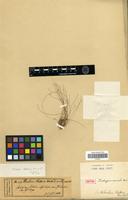
Isotype of Chaetocyperus arenicola Steud. [family CYPERACEAE]
Type of Eleocharis arenicola Torr. [family CYPERACEAE]
Type of Chaetocyperus arenicola Steud. [family CYPERACEAE]
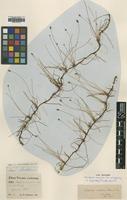
Type? of Eleocharis arenicola Torrey [family CYPERACEAE]
Type of Chaetocyperus arenicola Steud. [family CYPERACEAE]
Isotype of Chaetocyperus arenicola Steud. [family CYPERACEAE]
Previous
Next

Name

Identification
Eleocharis arenicola Torr. ex Engelm. & A.Gray [family CYPERACEAE ] (stored under name); Eleocharis montana (Kunth) Roem. & Schult. [family CYPERACEAE ] Verified by Charles Baron Clarke,
Related name
  • Eleocharis montana
  • Eleocharis arenicola
  • Eleocharis montevidensis

Flora

Entry for Eleocharis montevidensis Kunth [family CYPERACEAE]
Herbarium
Flora of North America (FNA)
Collection
Flora of North America
Resource Type
Reference Sources
Entry From
Flora of North America, Vol 23,
Names
Eleocharis montevidensis Kunth [family CYPERACEAE], Enum. Pl., 2: 144. 1837
Eleocharis arenicola Torrey [family CYPERACEAE]
Eleocharis montana (Kunth) Roemer & Schultes subsp. montevidensis ( Kunth) Osten [family CYPERACEAE]
Eleocharis palmeri Svenson [family CYPERACEAE]
Treatment Author(s)
S. Galen Smith*
Jeremy J. Bruhl*
M. Socorro González-Elizondo*
Francis J. Menapace*
Information
Plants perennial, mat-forming; rhizomes evident, long, 0.7–2 mm thick, firm, cortex persistent, longer internodes 1–2 cm, scales often fugaceous, 6–8 mm, membranous, not fibrous. Culms terete or cross section elliptic or rectangular, with 5–10 blunt ridges when dry, 25–50 cm × 0.5–1.2 mm, firm to hard, spongy. Leaves: distal leaf sheaths persistent, not splitting, mostly proximally dark red, distally red to brown or green, thinly papery, apex usually red-brown, often callose, subtruncate to obtuse, tooth usually present on some or all culms, to 0.9 mm. Spikelets usually ovoid or ellipsoid to subcylin-dric, rarely lanceoloid, 4–12 × (1.5–)2–3 mm, apex rounded to acute; proximal scale amplexicaulous or clasping over 3/4 of culm, entire; subproximal scale empty or with flower; floral scales appressed in fruit, 30–100, 6–10 per mm of rachilla, orange-brown, midrib regions often greenish, oblong to ovate, 1.5–2.5 × 1–1.5 mm, apex entire, broadly rounded, sometimes acute in distal part of spikelet, usually horizontally wrinkled and recurved, often carinate in distal part of spikelet. Flowers: perianth bristles 5–6(–7), stramineous to medium brown, stout, often unequal, much shorter than to equaling achene, rarely all rudimentary; stamens 3; anthers dark yellow to stramineous, 0.8–1.5 mm; styles 3-fid or some 2-fid. Achenes falling with scales, dark brown, obovoid to obpyriform, compressed trigonous, angles evident to obscure, 0.7–1 × 0.65–0.8 mm, neck absent to sometimes long, finely rugulose at 10–30X, over 20 horizontal ridges in vertical series, and/or minutely cancellate at 20–30X. Tubercles brown to whitish, pyramidal, as high as wide or sometimes greatly depressed, (0.1–)0.25–0.3 × 0.2–0.3 mm. 2n = 20.
Phenology Fruiting
spring
mar
apr
may
summer
jun
jul
aug
fall
sep
oct
nov
Altitude range
0–2300 m;
Distribution
MexicoSouth America.USA Ala.USA Ariz.USA Calif.USA Fla.USA Kans.USA La.USA Miss.USA N.Mex.USA N.C.USA Okla.USA S.C.USA Tex.
Discussion
The name Eleocharis montana was long misapplied to E. montevidensis. The type of E. palmeri, recognized as a species (H. K. Svenson 1957), is indistinguishable from specimens of E. montevidensis. Eleocharis montevidensis is extremely variable; the broadly rounded, usually wrinkled and recurved floral scales are diagnostic. Achenes often fail to form. Eleocharis montevidensis is apparently closely related to E. parishii, in which the floral scales are less densely placed on the rachilla and acute to rounded, and the spikelets are narrowly lanceoloid to cylindric. In the absence of achenes and rhizomes, some specimens of E. montevidensis are easily mistaken for E. tricostata.

Related Materials

  • Terms and Conditions
  • Privacy Policy
  • Cookie Policy
  • Cookie Settings
  • Accessibility
  • Help
  • Contact Us
  • Facebook
  • Twitter
ITHAKA

JSTOR is part of ITHAKA, a not-for-profit organization helping the academic community use digital technologies to preserve the scholarly record and to advance research and teaching in sustainable ways.

©2000-2026 ITHAKA. All Rights Reserved. JSTOR®, the JSTOR logo, JPASS®, Aluka®, and ITHAKA® are registered trademarks of ITHAKA.

╳