JSTOR Global Plants Home
  • Home
  • Browse
  • About
  • Access
  • Account
    • Saved Items
    • Profile
  • Log in

Global Plants

Skip to Main Content
  • JSTOR Global Plants Home
  • Global Plants

    • Browse
    • About
    • Access
    • Account
      • Saved Items
      • Profile
Log in
  • Browse
  • About
  • Access
  • Account
    • Saved Items
    • Profile
Advanced Search

Compilation
Elaphoglossum deckenii

12 Images see all

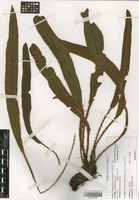
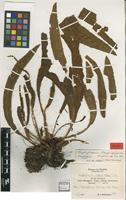
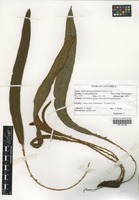
Filed as Elaphoglossum deckenii (Kuhn) C. Chr. [family LOMARIOPSIDACEAE]
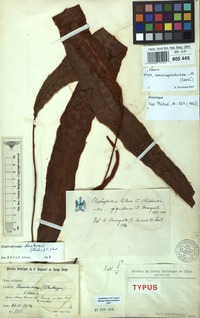
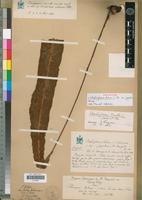
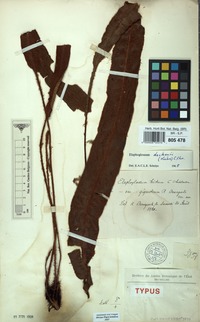
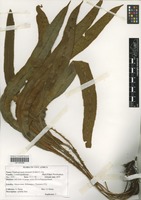
Holotype of Elaphoglossum hirtum C.Chr. var. giganteum Bonap. [family LOMARIOPSIDACEAE]
Type of Acrostichum deckenii Kuhn [family PTERIDACEAE]
Holotype of Elaphoglossum hirtum C.Chr. var. giganteum Bonap. [family PTERIDOPHYTA]
Holotype of Elaphoglossum hirtum C.Chr. var. giganteum Bonap. [family LOMARIOPSIDACEAE]
Elaphoglossum deckenii
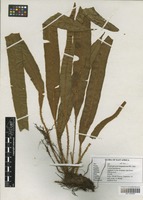
Filed as Elaphoglossum deckenii (Kuhn) C. Chr. [family LOMARIOPSIDACEAE]
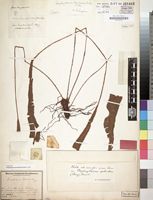
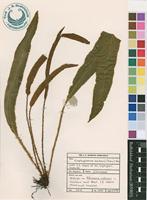
Isotype of Elaphoglossum tanganjicense Krajina ex Pic.Serm. [family LOMARIOPSIDACEAE]
Filed as Elaphoglossum deckenii (Kuhn) C.Chr. [family ELAPHOGLOSSACEAE]
Filed as Elaphoglossum deckenii (Kuhn) C. Chr. [family LOMARIOPSIDACEAE]
Previous
Next

Name

Identification
Elaphoglossum deckenii (Kuhn)C.Chr. [family PTERIDOPHYTA ]
Related name
  • Elaphoglossum deckenii

Flora

Entry for ELAPHOGLOSSUM deckenii (Kuhn) C. Chr. [family LOMARIOPSIDACEAE]
Herbarium
Royal Botanic Gardens, Kew (K)
Collection
Flora of Tropical East Africa
Resource Type
Reference Sources
Entry From
Flora of Tropical East Africa, page 1, (2002) Author: JOHN T. MICKEL
Names
ELAPHOGLOSSUM deckenii (Kuhn) C. Chr. [family LOMARIOPSIDACEAE], Ind. Fil.: 305 (1905); Hieron. in Z.A.E. 2: 35 (1910); F.D.-O.A.: 24 (1929); Tardieu, Fl. Madag. 5(2): 54 (1960); Pic. Serm in Webbia 23: 235, fig. 4 (1968); Schelpe in Contr. Bolus Herb. 1: 35 (1969) & F.Z., Pterid.: 215 (1970); J.E. Burrows, S. Afr. Ferns: 288, fig. 68/293, t. 48/6, map (1990); Faden in U.K.W.F. ed. 2: 34 (1994). Type: Tanzania, Moshi District, towards the foot of Mt Kilimanjaro, Kilema, Kersten 5 (B, holo.)
Acrostichum deckenii Kuhn [family PTERIDACEAE], Fil. Deck.: 16 (1867) & Fil. Afr.: 16, 44 (1868); P.O.A. C: 80 (1895)
Elaphoglossum ruwenzorii Pirotta [family LOMARIOPSIDACEAE], Ann. di Bot. [Roma] 7: 174 (1908). Type: Uganda, Mt. Ruwenzori, 18 July 1906, Duke of Abruzzi Expedition s.n. (P, syn., US, photo!) & Mobuku Valley, Duke of Abruzzi Expedition s.n. (RO, syn.)
Elaphoglossum hirtum Bonap. var. giganteum [family LOMARIOPSIDACEAE], Not. Ptérid. 14: 337 (1923). Type: Congo (Kinshasa), Ruwenzori, Becquaert 3851 (BR, holo.)
Information
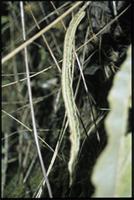
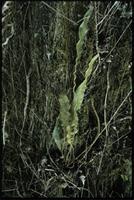
Rhizome compact, to 10 mm diameter; rhizome scales linear-lanceolate, dark reddish-brown to black, 3–5 mm long, concolorous, lustrous, with rigid (rarely weak and irregular) hair-like teeth that may be deciduous with age; phyllopodia distinct, 6–10 mm long, dark brown. Sterile fronds clumped, 18–85 cm long; stipe 1/8–1/3 of frond length, stramineous to brown, 1–1.5 mm diameter, densely clothed with spreading, linear-lanceolate, ciliate, orange-tan scales, often with dark red-brown to black margins and/or teeth, 2–5 mm long; blade narrowly elliptic to oblanceolate,12–75 cm long, 2–4 cm wide, chartaceous, apex acuminate to subcaudate, base cuneate; costa prominent; veins obscured by scales, free, simple or once-forked, ± 1 mm apart, at ± 70° angle to costa; hydathodes absent; blade scales scattered to imbricate, linear-lanceolate, ± 3 mm long, long hair-toothed, concolorous orange-tan abaxially, whitish adaxially, more thinly adaxially and those with narrower scale body and longer cilia surfaces, costal scales with concolorous or dark hairs. Fertile fronds (uncommon) shorter and narrower than the sterile; stipe 1/2 of frond length; blade linear-lanceolate, 10–24 cm long, 1–2 cm wide, apex rounded to acuminate, base cuneate to truncate or rounded, orange-tan scales present beneath on costa only, densely covering upper surface; intersporangial scales absent. Fig. 9/1–5 (page 25).
Range
DISTR. U 2, 3; K 3–5; T 2, 6, 7
Altitude range
2100–3500 m
Distribution
KENYA Nakuru District Endabarra, Mau forest, 15 Jan. 1946, Bally 4897!KENYA Fort Hall District Murang’a, road between Kimakia Forest Station & Gatare Forest Station, at Thika R. crossing, 28 Feb. 1971, Faden 71/198!;KENYA Meru District NE side Mt Kenya, Ithanguni, Kirui, 28 Feb. 1970, Faden 70/99!TANZANIA Arusha District Mt Meru, S slope, 23 June 1946, Greenway 7813!;TANZANIA Kilosa District Ukaguru Mts, Mamiwa Forest Reserve, 16 Aug. 1972, Mabberley 1492!;TANZANIA Morogoro District Uluguru Mts, summit of Bondwa, 3 Apr. 1974, Faden & Faden 74/410!UGANDA Toro District Ruwenzori, Rigo, Jan. 1951, Osmaston 3712 & Nyinabitaba [Nyabitaba]–Kichuchu, July 1951, Osmaston 3863!;UGANDA Mbale District Elgon, N Bugisu [Bugishu], near Sasa, 24 Mar. 1951, Wood 270!
Distribution (external)
; Congo (Kinshasa)
Rwanda
Ethiopia
Malawi
Zimbabwe
Madagascar
Comoro Is
Réunion
Notes
Elaphoglossum deckenii is distinct among the African species by its scattered to only slightly imbricate vs. densely imbricate laminar scales and dark reddish brown to black rhizome scales. E. deckenii belongs to the complex of E. paleaceum (Hook. & Grev.) Sledge of Madeira and the Azores, which has many representatives in the New World and only a few in Africa and eastward. The group is characterized by the abundant ciliate-denticulate scales on the stipe, blade, and rhizome. The closest relative in Africa, and the only other species of the group in tropical East Africa is the less common E. tanganjicense; see there for distinctions. E. hirtum var. giganteum is included only tentatively as I have not seen the type.Another species in this complex, E. kuhnii Hieron., is limited to western and southern Africa. It is distinguished from E. deckenii by its pale rhizome scales with dark reddish cilia. Laminar scales seem to be more abundant and imbricate than in E. deckenii .

Related Materials

  • Terms and Conditions
  • Privacy Policy
  • Cookie Policy
  • Cookie Settings
  • Accessibility
  • Help
  • Contact Us
  • Facebook
  • Twitter
ITHAKA

JSTOR is part of ITHAKA, a not-for-profit organization helping the academic community use digital technologies to preserve the scholarly record and to advance research and teaching in sustainable ways.

©2000-2026 ITHAKA. All Rights Reserved. JSTOR®, the JSTOR logo, JPASS®, Aluka®, and ITHAKA® are registered trademarks of ITHAKA.

╳