JSTOR Global Plants Home
  • Home
  • Browse
  • About
  • Access
  • Account
    • Saved Items
    • Profile
  • Log in

Global Plants

Skip to Main Content
  • JSTOR Global Plants Home
  • Global Plants

    • Browse
    • About
    • Access
    • Account
      • Saved Items
      • Profile
Log in
  • Browse
  • About
  • Access
  • Account
    • Saved Items
    • Profile
Advanced Search

Compilation
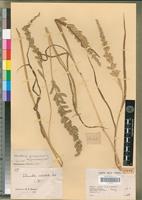
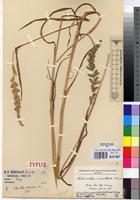
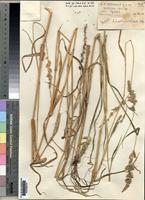
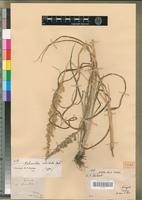
Echinochloa verticillata

5 Images see all

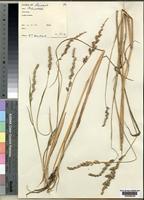
Type of Echinochloa verticillata Berhaut [family POACEAE]
Echinochloa pyramidalis (Lam.) Hitchc. & Chase [family POACEAE]
Type of Echinochloa verticillata Berhaut [family POACEAE]
Echinochloa pyramidalis (Lam.) Hitchc. & Chase [family POACEAE]
Previous
Next

Name

Identification
Echinochloa verticillata Berhaut [family POACEAE ] Verified by Not on sheet, Echinochloa pyramidalis (Lam.) Hitchc. & Chase [family POACEAE ] (stored under name); Verified by Not on sheet,
Related name
  • Echinochloa verticillata
  • Echinochloa pyramidalis

Flora

Entry for ECHINOCHLOA pyramidalis (Lam.) Hitchc. & Chase [family POACEAE]
Herbarium
Royal Botanic Gardens, Kew (K)
Collection
Flora of Tropical East Africa
Resource Type
Reference Sources
Entry From
Flora of Tropical East Africa, page 451, (1982) Author: W. D. CLAYTON and S.A. RENVOIZE
Names
ECHINOCHLOA pyramidalis (Lam.) Hitchc. & Chase [family POACEAE], in Contr. U.S. Nat. Herb. 18: 345 (1917); F.T.A. 9: 615 (1920); E.A. Pasture Plants 2: 22 (1927); Fl. Agrost. Congo Belge 2: 141 (1934); Ann. list grasses Ug.: 16 (1947); Imp. Grassl. Pl. Kenya: 52 (1951); Troupin, Fl. Garamba 1: 34 (1956); F.P.S. 3: 441 (1956); R.K.G.: 42 (1958); Ann. list Nyasaland grasses: 37 (1958); I.G.U.: 27 (1960); G.T.: 65 (1965); Clayton in F.W.T.A., ed. 2, 3: 439 (1972). Type: Senegal, Roussillon (P, holo.)
Panicum pyramidale Lam. [family POACEAE], Tab. Encycl. Méth. Bot. 1: 171 (1791)
Panicum quadrifarium A. Rich. [family POACEAE], Tent. Fl. Abyss. 2: 367 (1851). Types: Ethiopia, Adoa, Schimper 206 (K, isosyn.!) & Quartin Dillon (P, syn.)
Panicum atroviolaceum A. Rich. [family POACEAE], Tent, Fl. Abyss. 2: 368 (1851). Type: Ethiopia, without locality, Petit (P, holo.)
Panicum crus-galli Aschers. & Schweinf. var. polystachyum [family POACEAE], Ill. Fl. Egypte: 159 (1887) & Suppl. Fl. Egypte: 777 (1889). Types: Sudan, Nabumbisso, Schweinfurth 3730 (K, isosyn.!) & Monboutto, Schweinfurth 3497 (whereabouts uncertain)
Panicum holubii Stapf [family POACEAE], in Fl. Cap. 7: 394 (1899). Types: South Africa, Transvaal, Holub (K, syn.!) & several other syntypes
Panicum pyramidale Stapf var. hebetatum [family POACEAE], in Fl. Cap. 7: 396 (1899). Types: South Africa, Uitenhage, Ecklon & Zeyer (K, syn.!) & Umgeni R., Drège 4242 (K, syn.!)
Panicum pyramidale (A. Rich.) Chiov. var. quadrifarium [family POACEAE], in Ann. 1st. Bot. Roma 8: 298 (1908)
Echinochloa senegalensis Mez [family POACEAE], in N.B.G.B. 7: 56 (1917). Type: Senegambia, Roussillon (apparently a fragment of Lamarck’s specimen)
Echinochloa holubii (Stapf) Stapf [family POACEAE], in F.T.A. 9: 606 (1920)
Panicum spadiciferum Peter [family POACEAE], in Abh. K. Gess. Wiss. Gött. Math.-Phys. Kl., n.f. 13, 2: 110 (1928) & in E.J. 68: 140 (1937), nom. nud.
Panicum pyramidale Peter var. spadiceum [family POACEAE], F.D.O.-A. 1, Anh.: 33, fig. 21/2 (1930). Types: Tanzania, Mbulu, Peter 43698 & 43718 (both B, syn.†)
Panicum crus-galli Peter var. molle [family POACEAE], F.D.O.-A. 1: 179 (1930). Type: Tanzania, Ruvuma [Rovuma], Busse 1068 (EA, holo., K, iso.!)
Echinochloa quadrifaria (A. Rich.) Chiov. [family POACEAE], in Malpighia 34: 537 (1937)
Echinochloa quadrifaria (A. Rich.) Chiov. var. atroviolacea [family POACEAE], in Miss. Biol. Borana, Racc. Bot.: 275 (1939)
Echinochloa verticillata Berhaut [family POACEAE], in Mém. Soc. Bot. Fr. 1953–54: 9 (1954). Type: Senegal, Tiaroy, Berhaut 617 (P, holo.!)
Information
Reed-like rhizomatous perennial; culms robust, 1–4 m. high, firm, erect. Leaf-blades 8–60 cm. long or more, 2–25 mm. wide, stiff, glaucous; ligule a line of hairs; sheaths glabrous or hispid. Inflorescence ovate to narrowly lanceolate with the racemes overlapping, or linear with the racemes ± distant, 8–40 cm. long, their rhachis glabrous or pilose; racemes simple or compound, 3–20 cm. long, straight, ascending, coarsely spiculate. Spikelets narrowly ovate to broadly elliptic, plump, 2.5–3.5(–4) mm. long, glabrous to hispid; lower lemma acute to acuminate, rarely with a subulate awn-point up to 3 mm. long; upper lemma 2–3 mm. long.
Range
DISTR. U1–4; K1–6; T1–8 tropical and South Africa
Altitude range
0–2400 m.
Distribution
KENYA Trans-Nzoia District Kitale, 12 July 1952, Bogdan 3494!KENYA Uasin Gishu District Eldoret, 11 June 1951, G.R. Williams 230!KENYA Masai District Mara Bridge, 15 Apr. 1961, Glover, Gwynne & Samuel 545!TANZANIA Pare District 14 Jan. 1930, Greenway 2054!TANZANIA Mpanda District Katisunga, 19 Jan. 1950, Bullock 2269!TANZANIA Kondoa District Lake Serya, 6 Apr. 1929, B.D. Burtt 2019!UGANDA Karamoja District W. of Toror, 3 June 1940, A.S. Thomas 3697!UGANDA Rwenzoli [Queen Elizabeth] National Park, 3 Feb. 1964, Buechner 58!UGANDA Mbale District near Mt. Elgon, 1 June 1927, Snowden 1092!
Distribution (external)
Madagascar
Notes
E. pyramidalis, though variable, can usually be recognized by its robust stature with stout erect culms and firm leaves; also by the plump awnless spikelets. There is some tendency to intergrade with adjacent species, and the rare awned specimens are difficult to allocate; the lower lemma is abruptly subulate rather than gradually tapering as in E. stagnina, and the spikelets are larger and more coarsely disposed along the raceme than in E. haploclada. A few specimens without a ligule, but with spikelets too large for E. haploclada seem best accommodated in E. pyramidalis. E. holubii has short distant racemes in a linear inflorescence. It is more frequent in the southern part of the range, and seems characteristic of impoverished plants growing away from water. This type of inflorescence grades into the typical form of waterside habitats and it seems impractical to attempt a separation.Yabuno (in Jap. Journ. Genet. 45: 189–192 (1970)) reports that whereas most members of the genus are fully self-fertile, E. pyramidalis is partially self-incompatible.

Related Materials

  • Terms and Conditions
  • Privacy Policy
  • Cookie Policy
  • Cookie Settings
  • Accessibility
  • Help
  • Contact Us
  • Facebook
  • Twitter
ITHAKA

JSTOR is part of ITHAKA, a not-for-profit organization helping the academic community use digital technologies to preserve the scholarly record and to advance research and teaching in sustainable ways.

©2000-2026 ITHAKA. All Rights Reserved. JSTOR®, the JSTOR logo, JPASS®, Aluka®, and ITHAKA® are registered trademarks of ITHAKA.

╳