JSTOR Global Plants Home
  • Home
  • Browse
  • About
  • Access
  • Account
    • Saved Items
    • Profile
  • Log in

Global Plants

Skip to Main Content
  • JSTOR Global Plants Home
  • Global Plants

    • Browse
    • About
    • Access
    • Account
      • Saved Items
      • Profile
Log in
  • Browse
  • About
  • Access
  • Account
    • Saved Items
    • Profile
Advanced Search

Compilation
Echinocereus apachensis

2 Images see all

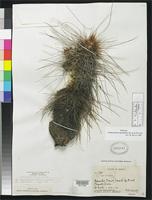
Holotype of Echinocereus apachensis Blum, W. & Rutow, J. 1998 [family CACTACEAE]
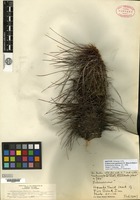
Isotype of Echinocereus apachensis W. Blum & Rutow [family CACTACEAE]
Previous
Next

Name

Identification
Echinocereus apachensis Blum, W. & Rutow, J. 1998 [family CACTACEAE ] (stored under name); Verified by Not on sheet,
Related name
  • Echinocereus apachensis

Flora

Entry for Echinocereus bonkerae Thornber & Bonker [family CACTACEAE]
Herbarium
Flora of North America (FNA)
Collection
Flora of North America
Resource Type
Reference Sources
Entry From
Flora of North America, Vol 4,
Names
Echinocereus bonkerae Thornber & Bonker [family CACTACEAE], Fantast. Clan, 71, 85, plates opposite 23, 72. 1932
Echinocereus apachensis Blume & Rutow [family CACTACEAE]
Echinocereus fasciculatus (Engelmann ex B. D. Jackson) L. D. Benson var. bonkerae (Thornber & Bonker) L. D. Benson [family CACTACEAE]
Echinocereus fendleri (Engelmann) Sencke ex J. N. Haage var. bonkerae (Thornber & Bonker) L. D. Benson [family CACTACEAE]
Treatment Author(s)
Allan D. Zimmerman
Bruce D. Parfitt
Information
Plants 5–35-branched, ultimately forming clumps, branching at or before sexual maturation. Stems mostly erect, ovoid to cylindric, 15–30(–50) × 3.5–7 cm; ribs (11–)12–18(–20), crests slightly undulate; areoles 8–20 mm apart. Spines (9–)12–17 per areole, straight in short-spined forms, sometimes curved or twisted in long-spined forms, appressed (radial spines) or porrect to spreading or descending (central spines when present), dull yellowish to brown or white to gray, often brown to black especially at bases or tips; radial spines (9–)11–16 per areole, 5–18 mm; central spines (0–)1(–3) per areole, 2–100 mm, white to yellow or brown, often becoming gray, all terete. Flowers 5–7 × 4–9 cm; flower tube 12–20 × 10–30 mm; flower tube hairs 1 mm; inner tepals deep magenta (to dark purple) with darker midstripes, proximally green (to very dark purple), 20–60 × 8.5–20 mm, tips relatively thin and delicate; anthers yellow; nectar chamber 2–4 mm. Fruits bright red or orange red, 15–25 mm, pulp white (or pale pink). 2n = 22.
Phenology
mar-may (spring)
Altitude range
700–2000 m;
Distribution
USA Ariz.
Discussion
Plants in most populations of Echinocereus bonkerae have radial spines almost pectinately arranged and central spines very short or absent, creating the superficial appearance of E. dasyacanthus, E. pectinatus, or similar species. Formerly, all short-spined plants in central and southern Arizona were treated as E. bonkerae, including unusually short-spined individuals of E. fendleri and E. fasciculatus. Today we recognize that E. bonkerae, E. fendleri, and E. fasciculatus all vary from short-spined to long-spined.
Populations at the lowest altitude for the species have taller stems and unusually long, slender central spines (to 10 cm); they have recently been named Echinocereus apachensis. Such plants were part of the basis for L. D. Benson’s polyphyletic concept (1969, 1982) of E. fasciculatus var. boyce-thompsonii (see 8. E. fasciculatus).
Echinocereus bonkerae is a poorly defined species, frequently lumped with E. fendleri or E. fasciculatus, and it is not always identifiable in the field. Although rib number, blooming season, habitat preference, and, in particular regions, spine length or central spine presence are helpful characteristics, ploidy level is the most objective criterion for distinguishing E. bonkerae from E. fasciculatus. Immature plants of E. bonkerae are like E. fasciculatus and unlike the immature plants of E. fendleri, which are tuberculate with their spines long, few, soft, and often curved or twisted.

Related Materials

  • Terms and Conditions
  • Privacy Policy
  • Cookie Policy
  • Cookie Settings
  • Accessibility
  • Help
  • Contact Us
  • Facebook
  • Twitter
ITHAKA

JSTOR is part of ITHAKA, a not-for-profit organization helping the academic community use digital technologies to preserve the scholarly record and to advance research and teaching in sustainable ways.

©2000-2026 ITHAKA. All Rights Reserved. JSTOR®, the JSTOR logo, JPASS®, Aluka®, and ITHAKA® are registered trademarks of ITHAKA.

╳