JSTOR Global Plants Home
  • Home
  • Browse
  • About
  • Access
  • Account
    • Saved Items
    • Profile
  • Log in

Global Plants

Skip to Main Content
  • JSTOR Global Plants Home
  • Global Plants

    • Browse
    • About
    • Access
    • Account
      • Saved Items
      • Profile
Log in
  • Browse
  • About
  • Access
  • Account
    • Saved Items
    • Profile
Advanced Search

Compilation
Eriocaulon decipiens

3 Images see all

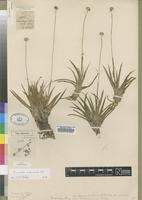
Type of Eriocaulon decipiens N.E.Br. [family ERIOCAULACEAE]
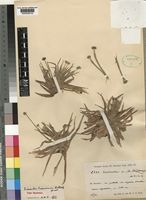
Type of Eriocaulon friesiorum Bullock [family ERIOCAULACEAE]
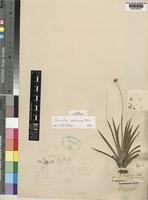
Eriocaulon sonderianum Körn. [family ERIOCAULACEAE]
Previous
Next

Name

Identification
Eriocaulon sonderianum Körn. [family ERIOCAULACEAE ] (stored under name); Verified by Phillips,S.M., Eriocaulon decipiens N.E.Br. [family ERIOCAULACEAE ]
Related name
  • Eriocaulon mesanthemoides
  • Eriocaulon decipiens
  • Eriocaulon unrecorded
  • Eriocaulon friesiorum
  • Eriocaulon sonderianum

Flora

Entry for ERIOCAULON decipiens N. E. Br. [family ERIOCAULACEAE]
Herbarium
Royal Botanic Gardens, Kew (K)
Collection
Flora of Tropical Africa
Resource Type
Reference Sources
Entry From
Flora of Tropical Africa, Vol 8, page 230, (1902) Author: (By N. E. Brown.)
Names
ERIOCAULON decipiens N. E. Br. [family ERIOCAULACEAE]
ERIOCAULON sonderianum Rendle [family ERIOCAULACEAE], in Trans. Linn. Soc. ser. 2, iv. 53; Engl. Pfl. Ost-Afr. C. 133; Ruhland in Engl. Jahrb. xxvii. 81, partly, not of Koernicke.
Information
Stemless, moderately robust, with stout roots. Leaves numerous, 3–4 in. long, 2–3 lin. broad, flat gradually tapering from the base to a very acute point, many-nerved, with the tessellate cross-veins very distinct in the basal part in the dried state, woolly in the sheathing part, otherwise glabrous. Peduncle solitary, twice as long as the leaves, 6-ribbed, glabrous; sheath 3 1/2 in. long, shortly oblique at the acute apex, glabrous. Heads 4 1/2 lin. in diam., hemispherical, unisexual in the 6 examples seen. Involucral-bracts about 2 lin. long, 1 lin. broad, obovate, acute, whitish, glabrous. Flowering-bracts 1 3/4–2 lin. long, 2/3– 3/4 lin. broad, cuneate-obovate, acute, concave, much incurved at the apex, very light straw-colour or faintly greenish-white, bearded with white hairs on the apical part. Receptacle pilose. Female flowers not seen. Male flowers pedicellate. Sepals 3, nearly equal, more or less connate at the base, 1–1 1/4 lin. long, 1/4– 1/2 lin. broad, obovate-oblong, obtuse, concave, entirely fuscous, bearded with white hairs at the apex. Petals separated from the sepals by a stipes of variable length, unequal, the largest 3/4–1 1/4 lin. long, oblong, oblanceolate or linear, and sometimes scarcely broader than the gland, white, densely bearded with white hairs, and with a linear black gland at the middle. Anthers black.
Distribution
Nyasaland Mozamb. Dist. Mount Mlanji, Whyte, 115!
Notes
This plant is so exceedingly like E. sonderianum, Koernicke, in external appearance as to have been mistaken for it, but it distinctly differs in the following particulars:—The flowering-bracts are much longer, broader, without the fuscous spot on each side of the less pronounced keel, and are less rigid and more membranous; the sepals of the male flowers are larger, much more membranous, not keeled, and are fuscous quite to the apex, whilst in E. sonderianum the apical part of the sepals of the male flowers is white with a whitish mid-line line running half-way down the keel. Other differences may, perhaps, be found in the female flowers when known. From E. Dregei, Hochst, it differs in its very acute leaves, and much shorter cilia on the sepals, &c.

Related Materials

  • Terms and Conditions
  • Privacy Policy
  • Cookie Policy
  • Cookie Settings
  • Accessibility
  • Help
  • Contact Us
  • Facebook
  • Twitter
ITHAKA

JSTOR is part of ITHAKA, a not-for-profit organization helping the academic community use digital technologies to preserve the scholarly record and to advance research and teaching in sustainable ways.

©2000-2026 ITHAKA. All Rights Reserved. JSTOR®, the JSTOR logo, JPASS®, Aluka®, and ITHAKA® are registered trademarks of ITHAKA.

╳