JSTOR Global Plants Home
  • Home
  • Browse
  • About
  • Access
  • Account
    • Saved Items
    • Profile
  • Log in

Global Plants

Skip to Main Content
  • JSTOR Global Plants Home
  • Global Plants

    • Browse
    • About
    • Access
    • Account
      • Saved Items
      • Profile
Log in
  • Browse
  • About
  • Access
  • Account
    • Saved Items
    • Profile
Advanced Search

Compilation
Erica urna-viridis

10 Images see all

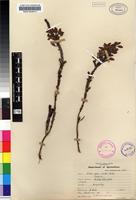
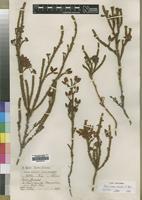
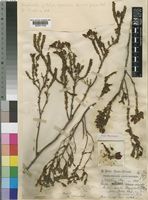
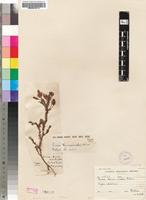
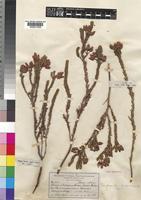
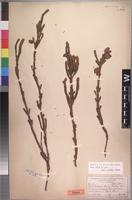
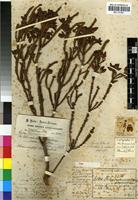
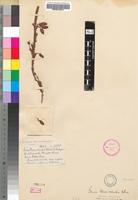
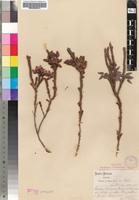
Isosyntype of Erica urna-viridis Bolus [family ERICACEAE]
Type of Erica urna-viridis Bolus [family ERICACEAE]
Isotype of Erica urna-viridis Bolus [family ERICACEAE]
Type of Erica urna-viridis Bolus [family ERICACEAE]
Lectotype of Erica urna-viridis Bolus [family ERICACEAE]
Holotype of Erica urna-viridis Bolus [family ERICACEAE]
Erica urna-viridis Bolus
Isotype of Erica urna-viridis Bolus [family ERICACEAE]
Previous
Next

Name

Identification
Erica urna-viridis Bolus [family ERICACEAE ]
Related name
  • Erica urna-viridis

Flora

Entry for ERICA Urna-viridis Bolus [family ERICACEAE]
Herbarium
Royal Botanic Gardens, Kew (K)
Collection
Flora Capensis
Resource Type
Reference Sources
Entry From
Flora Capensis, Vol 4, page 2, (1909) Author: By H. BOLUS, F. GUTHRIE, and N. E. BROWN.
Names
ERICA Urna-viridis Bolus [family ERICACEAE], in Journ. Linn. Soc. xxiv. 180
Information
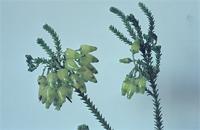
erect, 3–5 ft. high; stem unbranched and leafless below for about half its height; branches few and spreading, straggling, leafy, puberulous; leaves and flowers as in the preceding species; pedicels viscidulous, 3–4 lin. long; bracts remote, small; sepals as in the preceding; corolla ovoid or narrow-ovoid, subobtuse, viscid, bright green, 4–6 lin. long; segments erect, connivent; anthers as in the preceding species, but larger, about 1 lin. long; the rest as in the preceding. null
Distribution
COAST REGION Cape Div.; Muizenberg Mountain, Zeyher, 3194! 4997! Bolus, 3355! MacOwan & Bolus, Herb. Norm. Aust.-Afr., 42! Guthrie, 350! Wolley Dod, 573! Cape Flats, Burke!
Notes
Dried specimens of this are not easily distinguished from the preceding. In the living state it is at once known by its habit and green flowers. The pedicels in this are longer; the corolla larger, with no tendency towards a globular shape. It is worthy that while this species has a flowering season from September to March, and a zone of growth in altitude of from 600 to 2300 ft., E. physodes flowers from June to Sept., and has a zone of from 2300–2800 ft. So far as is known to us the two species do not grow on the same mountain.

Related Materials

  • Terms and Conditions
  • Privacy Policy
  • Cookie Policy
  • Cookie Settings
  • Accessibility
  • Help
  • Contact Us
  • Facebook
  • Twitter
ITHAKA

JSTOR is part of ITHAKA, a not-for-profit organization helping the academic community use digital technologies to preserve the scholarly record and to advance research and teaching in sustainable ways.

©2000-2026 ITHAKA. All Rights Reserved. JSTOR®, the JSTOR logo, JPASS®, Aluka®, and ITHAKA® are registered trademarks of ITHAKA.

╳