JSTOR Global Plants Home
  • Home
  • Browse
  • About
  • Access
  • Account
    • Saved Items
    • Profile
  • Log in

Global Plants

Skip to Main Content
  • JSTOR Global Plants Home
  • Global Plants

    • Browse
    • About
    • Access
    • Account
      • Saved Items
      • Profile
Log in
  • Browse
  • About
  • Access
  • Account
    • Saved Items
    • Profile
Advanced Search

Compilation
Duosperma quadrangulare

12 Images see all

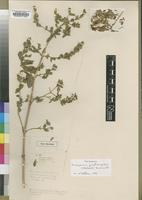
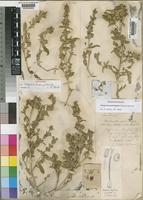
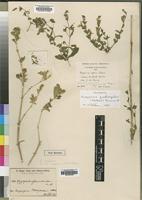
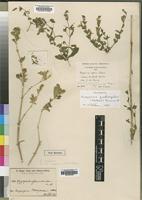
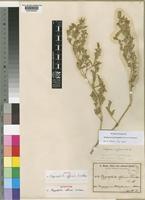
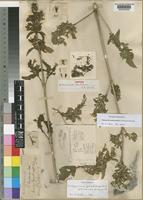
Holotype of Disperma viscidissimum S.Moore [family ACANTHACEAE]
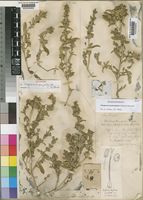
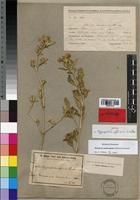
Lectotype of Disperma angolense C.B.Clarke [family ACANTHACEAE]
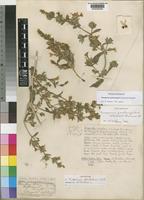
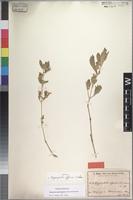
Lectotype of Disperma dentatum C.B.Clarke [family ACANTHACEAE]
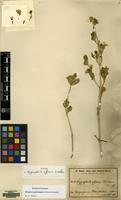
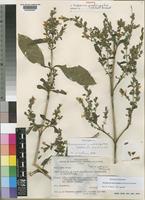
Isotype of Hygrophila affinis Lindau [family ACANTHACEAE]
Duosperma quadrangulare (Klotzsch) Brummitt [family ACANTHACEAE]
Holotype of Disperma affine S.Moore [family ACANTHACEAE]
Type? of Disperma affine S.Moore [family ACANTHACEAE]
Isotype of Hygrophila affinis Lindau [family ACANTHACEAE]
Syntype of Disperma dentatum C.B.Clarke [family ACANTHACEAE]
Type of Hygrophila affinis Lindau [family ACANTHACEAE]
Isotype of Hygrophila affinis Lindau [family ACANTHACEAE]
Neotype of Duosperma quadrangulare (Klotzsch) Brummitt [family ACANTHACEAE]
Previous
Next

Name

Identification
Disperma viscidissimum S.Moore [family ACANTHACEAE ] Duosperma quadrangulare (Klotzsch) Brummitt [family ACANTHACEAE ] (stored under name); Verified by Vollesen,K.,
Related name
  • Disperma dentatum
  • Disperma viscidissimum
  • Disperma quadrangulare
  • Disperma affine
  • Duosperma quadrangulare
  • Disperma angolense
  • Hygrophila affinis

Flora

Entry for Duosperma quadrangulare (Klotzsch) Brummitt [family ACANTHACEAE]
Herbarium
Royal Botanic Gardens, Kew (K)
Collection
Flora of Tropical East Africa
Resource Type
Reference Sources
Entry From
Flora of Tropical East Africa, page 1, (2008) Author: Kaj Vollesen
Names
Duosperma quadrangulare (Klotzsch) Brummitt [family ACANTHACEAE], in K.B. 29: 412 (1974); Vollesen in Opera Bot. 59: 80 (1980); Ruffo, Cat. Lushoto Herb. Tanzania: 4 (1996); Lebrun & Stork, Enum. Pl. Afr. Trop. 4: 479 (1997); Welman in Strelitzia 14: 98 (2003); Mapura & Timberlake, Checklist Zimb. Vasc. Pl.: 13 (2004); Champluvier in Syst. Geogr. Pl. 75: 56 (2005); Phiri, Checklist Zamb. Vasc. Pl.: 18 (2005); Setshogo, Prelim. Checklist Botswana: 18 (2005); Vollesen in K.B. 62: 300, fig. 3 (2006). Type: Mozambique, Rios de Sena, Peters s.n. (B†, holo.). Neotype: Mozambique, Gaza, Lago M’fucue, Barbosa & de Lemos 8585 (K!, neo, selected by Vollesen, l.c.; COI!, LISC!, PRE!, SRGH!, iso.)
Nomaphila quadrangularis Klotzsch [family ACANTHACEAE], in Peters, Reise Mossamb., Bot.: 197 (1861)
Hygrophila quadrangularis (Klotzsch) Lindau [family ACANTHACEAE], in P.O.A. C: 367 (1895)
Disperma quadrangulare (Klotzsch) C.B.Clarke [family ], in F.T.A. 5: 81 (1899); T.T.C.L.: 7 (1949); Binns, Checklist Herb. Fl. Malawi: 13 (1968); Fanshawe, Checklist Woody Pl. Zambia: 19 (1970)
Disperma dentatum C.B.Clarke [family ], in F.T.A. 5: 81 (1899); Binns, Checklist Herb. Fl. Malawi: 13 (1968). Type: Malawi, Whyte s.n. (K!, lecto., selected by Vollesen, l.c.)
Hygrophila sessilifolia [family ACANTHACEAE], [sensu Lindau in Schwed.Rhod.-Kongo-Exped. 1: 305 (1916), non Lindau (1903)]
Hygrophila glutinifolia [family ACANTHACEAE], [sensu Björnstad in Serengeti Res. Inst. Publ. 215: 25 (1976) p.p. non Lindau (1903)]
Information
Erect (rarely decumbent) viscid glandular aromatic (when crushed) perennial or shrubby herb (often pyrophytic) from creeping rootstock and tuberous roots, or shrub; stems to 1(–1.5) m tall, usually much branched, quadrangular, when young sparsely to densely glandular-puberulous and with scattered longer glands (to 1 mm) intermixed, often also with long pilose non-glandular hairs up to 3 mm and with puberulous non-glandular hairs. Leaves often immature at time of flowering, elliptic to slightly obovate, largest (mature) 3–15≈1.3–5.5(–6.5) cm, apex subacute to rounded, base long-decurrent, without distinct petiole, margin subentire to dentate, glabrous or with scattered broad long glossy hairs on veins, more rarely uniformly puberulous. Flowers solitary or in 3-flowered cymules, aggregated into racemiform cymes which are again aggregated into branched panicles, indumentum as young stems but with denser glands; bracts foliacaeous towards base, gradually smaller upwards; peduncles of cymules to 10(–30) mm long; pedicels 0–2 mm long; bracteoles elliptic to orbicular or obovate, 3–11 mm long, with recurved tip. Calyx 6–11(–14 in fruit) mm long, glandular-puberulous or densely so, usually also with long pilose hairs; tube 5–6.5 mm long; teeth narrowly triangular to lanceolate, acute, dorsal 1–4.5 mm long, ventral 1.5–4 mm long with the free part 1–3 mm. Corolla white to mauve or purple, with darker patches on lower lip and with orange-brown palate, 14–23 mm long, finely sericeous or sparsely so and with scattered capitate glands outside; tube 8–13 mm long of which the throat 2–4 mm; lips 5–10 mm long; lobes oblong-obovate, 1.5–3.5 mm wide, retuse to truncate; palate on lower lip with numerous long stiff hairs directed down into throat. Filaments 2–5 mm long, sparsely puberulous at base and with scattered capitate glands towards apex; anthers 1.5–2 mm long, connective with usually dense captate glands. Stigma lobes subequal. Capsule 7–10 mm long, obovoid, glabrous or with scattered glands near apex. Seed 3–4 mm long. Fig. 37, p. 243.
Range
DISTR. T 5–8
Altitude range
(50–)200–1500 m
Distribution
TANZANIA Dodoma District Kazikazi, 12 June 1932, Burtt 3670!TANZANIA Rufiji District 12 km W of Lake Utunge, 6 Aug. 1976, Vollesen MRC 3880!TANZANIA Kilwa District Lungonya Plain, Kingupira Forest, 11 Sep. 1977, Vollesen MRC 4681!
Distribution (external)
Congo-Kinshasa
Angola
Zambia
Malawi
Mozambique
Zimbabwe
Botswana
Namibia

Related Materials

  • Terms and Conditions
  • Privacy Policy
  • Cookie Policy
  • Cookie Settings
  • Accessibility
  • Help
  • Contact Us
  • Facebook
  • Twitter
ITHAKA

JSTOR is part of ITHAKA, a not-for-profit organization helping the academic community use digital technologies to preserve the scholarly record and to advance research and teaching in sustainable ways.

©2000-2026 ITHAKA. All Rights Reserved. JSTOR®, the JSTOR logo, JPASS®, Aluka®, and ITHAKA® are registered trademarks of ITHAKA.

╳