JSTOR Global Plants Home
  • Home
  • Browse
  • About
  • Access
  • Account
    • Saved Items
    • Profile
  • Log in

Global Plants

Skip to Main Content
  • JSTOR Global Plants Home
  • Global Plants

    • Browse
    • About
    • Access
    • Account
      • Saved Items
      • Profile
Log in
  • Browse
  • About
  • Access
  • Account
    • Saved Items
    • Profile
Advanced Search

Compilation
Duosperma crenatum

6 Images see all

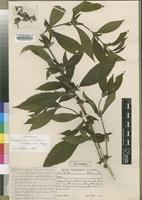
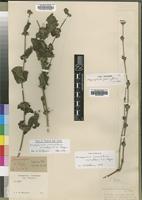
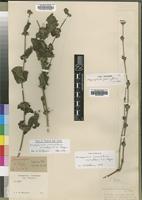
Holotype of Disperma quadrisepalum S.Moore var. grandifolium [family ACANTHACEAE]
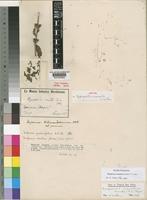
Isotype of Duosperma crenata Lindau [family ACANTHACEAE]
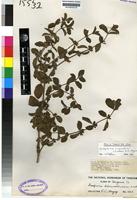
Isotype of Duosperma crenatum (Lindau) P. C. Meyer [family ACANTHACEAE]
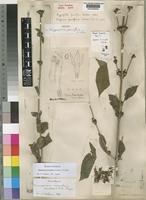
Isotype of Hygrophila parviflora Lindau [family ACANTHACEAE]
Type of Hygrophila parviflora Lindau [family ACANTHACEAE]
Filed as Duosperma crenatum (Lindau) P.G.Mey. [family ACANTHACEAE]
Previous
Next

Name

Identification
Disperma quadrisepalum S.Moore [family ACANTHACEAE ] Duosperma crenatum (Lindau) P.G.Mey. [family ACANTHACEAE ] (stored under name);
Related name
  • Hygrophila crenata
  • Duosperma crenata
  • Disperma quadrisepalum
  • Disperma kilimandscharicum
  • Hygrophila parviflora
  • Strobilanthes unrecorded
  • Disperma crenatum
  • Disperma parviflorum
  • Duosperma crenatum

Flora

Entry for Duosperma crenatum (Lindau) P.G.Meyer [family ACANTHACEAE]
Herbarium
Royal Botanic Gardens, Kew (K)
Collection
Flora of Tropical East Africa
Resource Type
Reference Sources
Entry From
Flora of Tropical East Africa, page 1, (2008) Author: Kaj Vollesen
Names
Duosperma crenatum (Lindau) P.G.Meyer [family ACANTHACEAE], in Mitt. Bot. Staatssaml. München 3: 602 (1960) & in Prodr. Fl. SW. Afr. 130. Acanthaceae: 28 (1968); Brummitt in K.B. 29: 411 & 414 (1974); Björnstad in Serengeti Res. Inst. Publ. 215: 25 (1976); Grignon & Johnsen, Checklist Vasc. Pl. Botswana: 4 (1986); U.K.W.F., ed. 2: 270 (1994); Lebrun & Stork, Enum. Pl. Afr. Trop. 4: 479 (1997); Mapura & Timberlake, Checklist Zimb. Vasc. Pl.: 13 (2004); Phiri, Checklist Zamb. Vasc. Pl.: 18 (2005); Vollesen in K.B. 62: 326, fig. 11 A–L (2006). Type: Tanzania, Mpwapwa, Stuhlmann 287 (B†, holo.; K!, iso.)
Hygrophila crenata Lindau [family ACANTHACEAE], in E.J. 20: 6 (1894) & in P.O.A. C: 366 (1895)
Hygrophila parviflora Lindau [family ACANTHACEAE], in E.J. 20: 7 (1894) & in P.O.A. C: 366 (1895). Type: Malawi, no locality, Buchanan 556A (B†, holo.; BM!, K!, iso.)
Disperma quadrisepalum C.B.Clarke [family ], in F.T.A. 5: 80 (1899), nom. illeg. superf.
Disperma parviflorum (Lindau) C.B.Clarke [family ], in F.T.A. 5: 81 (1899); Binns, Checklist Herb. Fl. Malawi: 13 (1968)
Dyschoriste quadrisepala (C.B.Clarke) Lindau [family ACANTHACEAE], in Wiss. Ergebn. Schwed. Rhod.-Kongo-Exped. 1: 306 (1914)
Disperma crenatum (Lindau) Milne-Redh. [family ], in K.B. 1933: 477 (1933) & in K.B. 1935: 283 (1935); T.T.C.L.: 7 (1949); Binns, Checklist Herb. Fl. Malawi: 13 (1968); Fanshawe, Checklist Woody Pl. Zambia: 19 (1970); Ruffo, Cat. Lushoto Herb. Tanzania: 4 (1996)
Information
Erect to decumbent or scrambling aromatic (when crushed) shrubby herb or shrub, to 2(?–3) m tall; bark peeling in papery strips; young stems glabrous to strigose-pubescent or sericeous-puberulous to -pubescent with broad shiny sometimes curly hairs. Leaves ovate to elliptic or slightly obovate, largest (2.5–)4–10.5≈1.5–5.5 cm, normally over twice as long as wide, apex drawn out into an acute to acuminate tip or acute to acuminate (rarely rounded), base attenuate to cuneate with a more or less distinct petiole to 1(–2) cm long, subglabrous to sparsely sericeous-puberulous or -pubescent (below densest along veins, above uniformly) with broad shiny hairs, margin crenate to dentate (rarely subentire); petiole sheath to 1(–2) mm long. Flowers in few- to many-flowered condensed axillary cymes, upwards gradually with fewer flowers and near apex often with some solitary flowers; outer bracts leafy, to 2.5 cm long; inner bracts to 1.5 cm long, constricted above a hyaline base and with widened apical part or lanceolate to narrowly ovate, glabrous or with scattered to dense broad shiny hairs along midrib and glabrous to sericeous or puberulous lamina, ciliate; bracteoles lanceolate to narrowly ovate or oblanceolate, to 1 cm long, acute to acuminate. Calyx 4–8(–11 in fruit) mm long, indumentum as bracts and bracteoles; tube 2.5–6 mm long; teeth narrowly triangular, acute to acuminate, dorsal 1–3 mm long, ventral 1–3 mm long of which the free part 0.5–1 mm long. Corolla white or creamy white with two red to purple patches on lower lip, 7–11 mm long, minutely sericeous-puberulous; tube 4–6 mm long of which the throat 1–2 mm; lips 2–5 mm long; lobes oblong, 1–1.5 mm wide, truncate to retuse; palate indistinctly pleated, without long stiff hairs. Filaments 2–4 mm long, with a few hairs near base; anthers 1–1.5 mm long, rounded, connective glabrous or with scattered glands. Dorsal stigma lobe about half as long as ventral. Capsule 6–8 mm long, obovoid. Seed ± 4 mm long. Fig. 38, 1–11, p. 250.
Range
DISTR. K 4, 6, 7; T 1–3, 5–7
Altitude range
600–1450(–1700) m
Distribution
KENYA Meru District Meru National Park, Muguongo, 14 June 1963, Mathenge 143!KENYA Machakos District near Kibwezi, Athi River, 23–25 May 1959, Napper 1253!KENYA Masai District Nguruman Escarpment, 5 Aug. 1962, Glover & Samuel 3244!TANZANIA Masai District W of Lake Natron, Saleh, 24 July 1962, Newbould 6211!TANZANIA Mpwapwa District 5 km on Mpwapwa-Gulwe track, 9 Apr. 1988, Bidgood et al. 947!TANZANIA Iringa District Ruaha National Park, 10 km on Msembe–Causeway track, 23 March 1970, Greenway & Kanuri 14186!
Distribution (external)
Ethiopia
Zambia
Malawi
Mozambique
Zimbabwe
Botswana
Namibia
South Africa
Notes
In the dry central parts of Tanzania this is often a common thicket-forming species inAcacia-Commiphora bushland. It seems hardly ever to be eaten by cattle, and is therefore favoured by slight to moderate overgrazing.

Related Materials

  • Terms and Conditions
  • Privacy Policy
  • Cookie Policy
  • Cookie Settings
  • Accessibility
  • Help
  • Contact Us
  • Facebook
  • Twitter
ITHAKA

JSTOR is part of ITHAKA, a not-for-profit organization helping the academic community use digital technologies to preserve the scholarly record and to advance research and teaching in sustainable ways.

©2000-2026 ITHAKA. All Rights Reserved. JSTOR®, the JSTOR logo, JPASS®, Aluka®, and ITHAKA® are registered trademarks of ITHAKA.

╳