JSTOR Global Plants Home
  • Home
  • Browse
  • About
  • Access
  • Account
    • Saved Items
    • Profile
  • Log in

Global Plants

Skip to Main Content
  • JSTOR Global Plants Home
  • Global Plants

    • Browse
    • About
    • Access
    • Account
      • Saved Items
      • Profile
Log in
  • Browse
  • About
  • Access
  • Account
    • Saved Items
    • Profile
Advanced Search

Compilation
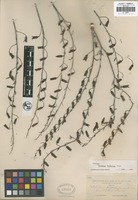
Dudleya pulverulenta

5 Images see all

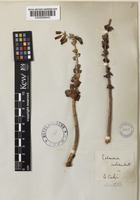
Dudleya pulverulenta (Nutt.) Britton & Rose [family CRASSULACEAE]
Type of Echeveria pulverulenta Nutt. [family CRASSULACEAE]
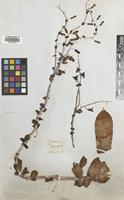
Dudleya pulverulenta (Nutt.) Britton & Rose [family CRASSULACEAE]
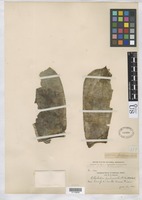
Type? of Dudleya anthonyi Rose [family CRASSULACEAE]
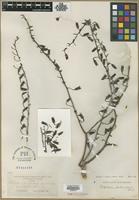
Isotype of Dudleya anthonyi Rose [family CRASSULACEAE]
Previous
Next

Name

Identification
Dudleya pulverulenta (Nutt.) Britton & Rose [family CRASSULACEAE ] (stored under name); Echeveria pulverulenta Nutt. [family CRASSULACEAE ]
Related name
  • Dudleya pulverulenta
  • Echeveria pulverulenta
Common name
  • Arizona dudleya, Flora of North America Vol. 8
  • Chalk dudleya, Flora of North America Vol. 8

Flora

Entry for Dudleya arizonica Rose [family CRASSULACEAE]
Herbarium
Flora of North America (FNA)
Collection
Flora of North America
Resource Type
Reference Sources
Entry From
Flora of North America, Vol 8,
Names
Dudleya arizonica Rose [family CRASSULACEAE], Addisonia, 8: 35, plate 274. 1923 ,
Dudleya pulverulenta (Nuttall) Britton & Rose subsp. arizonica (Rose) Moran [family CRASSULACEAE]
Dudleya pulverulenta var. arizonica (Rose) S. L. Welsh [family CRASSULACEAE]
Treatment Author(s)
Reid V. Moran
Information
Caudices simple, 1–15 × 1–4 cm, axillary branches absent. Leaves: rosettes solitary, not in clumps, 10–35-leaved, 5–30(–60) cm diam.; blade ± chalky white, in age often red, oblong to oblong-obovate, 3–17[–30] × 1–7 cm, 2–4 mm thick, base 1–3.5 cm wide, apex acute or usually long-acuminate, surfaces not farinose, chalky. Inflorescences: cyme 3–6-branched, cylindric; branches (mostly ascending), twisted at base (flowers on underside), simple, (3–7 cm wide); cincinni 2–5, 4–20-flowered, circinate, 4–27 cm; floral shoots 15–60 × 0.2–0.6 cm; leaves 5–25, spreading, cordate-ovate to almost deltate, 10–35 × 5–25 mm, apex acute to acuminate. Pedicels mostly erect or ascending from bud to fruit, rarely spreading to pendent, in fruit often bent upward near or above middle, 5–20 mm. Flowers: calyx 4–7 × 4–7 mm; petals connate 4.5–8 mm, red to apricot yellow, 9–15 × 1.5–2 mm, apex obtuse to sharply acute, tips outcurved; pistils connivent, erect. Unripe follicles erect. 2n = 34.
Phenology
Flowering spring
Altitude range
100–1100[–1500] m
Distribution
Mexico (Baja California, Sonora).USA Ariz.USA Calif.USA Nev.USA Utah
Discussion
The diploid Dudleya arizonica is closest to the diploid D. pulverulenta, looking like a reduced desert form, smaller in most parts, or sometimes like a seedling. Northward, the ranges are well separated, and southward in Baja California, where both are more sporadic, the ranges and the plants seem mainly distinct. Southward, D. pulverulenta makes large plants like those in the far northern part of its range, whereas southward D. arizonica generally is smaller and less like D. pulverulenta and more like just any old dudleya. In eastern San Diego County, California, the two intergrade and it is hard to draw a line between them. In coastal San Diego County, California, the type region, plants of D. pulverulenta are generally smaller and less extreme than those to the north and south and a little more like D. arizonica. For these reasons, I formerly treated D. arizonica as a subspecies (R. V. Moran 1943b), and something may still be said for that treatment. Because they are generally quite different through much of their broad ranges, it seems better to treat them as different species.
The inflorescence of Dudleya pulverulenta and D. anthonyi Rose is approached in some plants of D. arizonica. The mostly ascending branches are sometimes twisted at the base, putting the flowers on the abaxial side, the flowers are sometimes spreading or even pendent, and the fruiting pedicels commonly are more or less bent upward. Because the leaves are fewer and, with the thinner caudex, narrow at the base, seedlings of D. pulverulenta may closely resemble adult plants of D. arizonica.

Related Materials

  • Terms and Conditions
  • Privacy Policy
  • Cookie Policy
  • Cookie Settings
  • Accessibility
  • Help
  • Contact Us
  • Facebook
  • Twitter
ITHAKA

JSTOR is part of ITHAKA, a not-for-profit organization helping the academic community use digital technologies to preserve the scholarly record and to advance research and teaching in sustainable ways.

©2000-2026 ITHAKA. All Rights Reserved. JSTOR®, the JSTOR logo, JPASS®, Aluka®, and ITHAKA® are registered trademarks of ITHAKA.

╳