JSTOR Global Plants Home
  • Home
  • Browse
  • About
  • Access
  • Account
    • Saved Items
    • Profile
  • Log in

Global Plants

Skip to Main Content
  • JSTOR Global Plants Home
  • Global Plants

    • Browse
    • About
    • Access
    • Account
      • Saved Items
      • Profile
Log in
  • Browse
  • About
  • Access
  • Account
    • Saved Items
    • Profile
Advanced Search

Compilation
Dudleya cymosa

10 Images see all

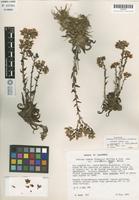
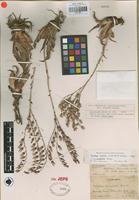
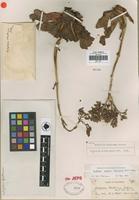
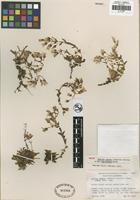
Holotype of Dudleya cymosa (Lem.) Britton & Rose subsp. agourensis K. M. Nakai [family CRASSULACEAE]
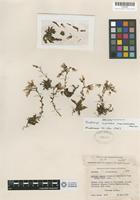
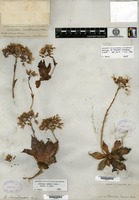
Isotype of Dudleya cymosa (Lem.) Britton & Rose subsp. marcescens Moran [family CRASSULACEAE]
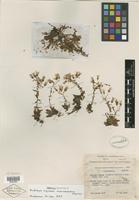
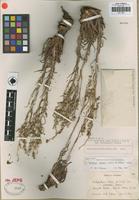
Isotype of Dudleya cymosa subsp. marcescens Moran [family CRASSULACEAE]
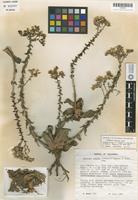
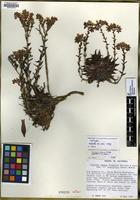
Holotype of Dudleya cymosa (Lem.) Britton & Rose subsp. crebrifolia K. M. Nakai & Verity [family CRASSULACEAE]
Holotype of Echeveria lanceolata Nutt. var. incerta Jeps. [family CRASSULACEAE]
Syntype of Cotyledon nevadensis S. Watson [family CRASSULACEAE]
Holotype of Cotyledon laxa S. Watson var. setchellii Jeps. [family CRASSULACEAE]
Dudleya cymosa (Lemaire) Britton & Rose ssp. agourensis K.M.Nakai [family CRASSULACEAE]
Holotype of Cotyledon plattiana Jeps. [family CRASSULACEAE]
Holotype of Dudleya cymosa (Lem.) Britton and Rose subsp. marcescens Moran [family CRASSULACEAE]
Previous
Next

Name

Identification
Dudleya cymosa (Lem.) Britton & Rose [family CRASSULACEAE ] (stored under name); Verified by Nakai, K., 1984
Related name
  • Cotyledon plattiana
  • Echeveria lanceolata
  • Dudleya cymosa
  • Cotyledon laxa
Common name
  • Pierpont Springs liveforever, Flora of North America Vol. 8
  • Canyon liveforever or dudleya, Flora of North America Vol. 8
  • Santa Clara Valley dudleya, Flora of North America Vol. 8
  • rock-lettuce, Flora of North America Vol. 8
  • Lance-leaved dudleya, Flora of North America Vol. 8

Flora

Entry for Dudleya cymosa (Lemaire) Britton & Rose [family CRASSULACEAE]
Herbarium
Flora of North America (FNA)
Collection
Flora of North America
Resource Type
Reference Sources
Entry From
Flora of North America, Vol 8,
Names
Dudleya cymosa (Lemaire) Britton & Rose [family CRASSULACEAE], New N. Amer. Crassul., 21. 1903 ,
Echeveria cymosa Lemaire [family CRASSULACEAE], Rev. Hort., 7: 439. 1858
Treatment Author(s)
Reid V. Moran
Information
Caudices mostly simple or sometimes branched apically and cespitose, 0.1–5 × (0.2–)1–3.5 cm, axillary branches absent. Leaves persistent (withering in early summer in subsp. marcescens); rosettes 1–3, in clumps or not, 5–25-leaved, (3–)6–15(–35) cm diam.; blade green or gray-blue, usually oblanceolate or oblong-oblanceolate, rhombic-oblanceolate, oblong, elliptic, or ovate, to spatulate, sometimes oblong-triangular, 1.5–12(–17) × 0.5–4(–6) cm, 1–5 mm thick, base 0.5–3 cm wide, apex acute to acuminate or cuspidate or subobtuse, surfaces sometimes farinose, mostly glaucous. Inflorescences: cyme 2–4-branched, mostly obpyramidal; branches not twisted (flowers on topside), simple or 1–3 times bifurcate, less often also with lateral branches; cincinni 1–2(–3+), 1–6(–20)-flowered, circinate, 1–5(–17) cm; floral shoots 4–30(–50) × 0.1–0.8 cm; leaves 5–25(–50), spreading to ascending, blade cordate-ovate to triangular-lanceolate, 4–20(–50) × 4–10(–15) mm, apex acute to acuminate. Pedicels erect, not bent in fruit, usually 5–15 mm. Flowers: calyx 3–6 × 3–6 mm; petals connate 1–2.5 mm, pale or bright yellow, mustard yellow, or red, 7–14 × 1.5–4.5 mm, apex mostly narrowly acute, tips often outcurved; pistils connivent, erect. Unripe follicles erect. 2n = 34.
Distribution
USA California.
Discussion
Dudleya cymosa, a widespread diploid, is the only species of the genus in most parts of inland central and northern California; it also extends into the mountains of southern California. It forms clumps to 7 dm in diameter. Early floras misapplied to it the name Echeveria laxa Lindley (or Cotyledon laxa). It is clearly distinct from other species but is highly variable locally as well as from one area to another. Although some narrowly endemic subspecies seem almost distinct, most subspecies are ill-defined and their circumscriptions arbitrary. Much more study is needed.

Related Materials

  • Terms and Conditions
  • Privacy Policy
  • Cookie Policy
  • Cookie Settings
  • Accessibility
  • Help
  • Contact Us
  • Facebook
  • Twitter
ITHAKA

JSTOR is part of ITHAKA, a not-for-profit organization helping the academic community use digital technologies to preserve the scholarly record and to advance research and teaching in sustainable ways.

©2000-2026 ITHAKA. All Rights Reserved. JSTOR®, the JSTOR logo, JPASS®, Aluka®, and ITHAKA® are registered trademarks of ITHAKA.

╳