JSTOR Global Plants Home
  • Home
  • Browse
  • About
  • Access
  • Account
    • Saved Items
    • Profile
  • Log in

Global Plants

Skip to Main Content
  • JSTOR Global Plants Home
  • Global Plants

    • Browse
    • About
    • Access
    • Account
      • Saved Items
      • Profile
Log in
  • Browse
  • About
  • Access
  • Account
    • Saved Items
    • Profile
Advanced Search

Compilation
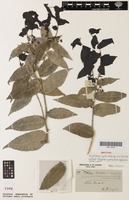
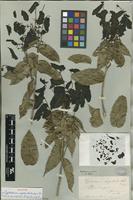
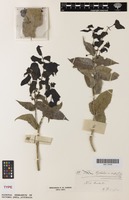
Drypetes arguta

8 Images see all

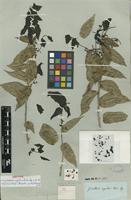
Isotype of Cyclostemon argutus Müll.Arg. [family EUPHORBIACEAE]
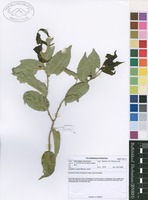
Syntype of Drypetes arguta (Müll.Arg.) Hutch. [family EUPHORBIACEAE]
Filed as Drypetes arguta (Müll.Arg.) Hutch. [family PUTRANJIVACEAE]
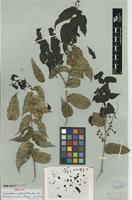
Isotype of Cyclostemon argutus Müll.Arg. [family EUPHORBIACEAE]
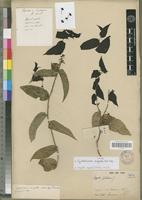
Type of Cyclostemon argutus Müll. Arg. [family EUPHORBIACEAE]
Isotype of Cyclostemon argutus Müll.Arg. [family EUPHORBIACEAE]
Holotype of Cyclostemon argutus Müll.Arg. [family EUPHORBIACEAE]
Isotype of Cyclostemon argutus Müll.Arg. [family EUPHORBIACEAE]
Previous
Next

Name

Identification
Drypetes arguta (Müll.Arg.) Hutch. [family EUPHORBIACEAE ] (stored under name); Verified by Not on sheet, Drypetes gerrardii Hutch. [family EUPHORBIACEAE ] Verified by Not on sheet,
Related name
  • Drypetes arguta
  • Drypetes gerrardii
  • Cyclostemon argutus

Flora

Entry for DRYPETES arguta Hutchinson [family EUPHORBIACEAE]
Herbarium
Royal Botanic Gardens, Kew (K)
Collection
Flora Capensis
Resource Type
Reference Sources
Entry From
Flora Capensis, Vol 5, Part 2, page 216, (1925) Author: (By N. E. BROWN, J. HUTCHINSON and D. PRAIN.)
Names
DRYPETES arguta Hutchinson [family EUPHORBIACEAE]
Cyclostemon argutus Müll. Arg. [family EUPHORBIACEAE], in DC. Prodr. xv. ii. 485.
Information
branchlets slender, grooved or angular, pubescent, at length becoming nearly glabrous; leaves oblong-lanceolate or rarely ovate-lanceolate, long and acutely more or less gradually acuminate, rounded, subcordate and slightly unequal-sided at the base, 2–3 1/2 in. long, 3/4–1 1/2 in. broad, sharply dentate, chartaceous, glabrous on both surfaces, slightly shining; lateral nerves 7–11 on each side, looped and much branched some distance from the margin, like the tertiary nerves prominent on both surfaces; petiole 1–1 1/2 lin. long, shortly pubescent; stipules lanceolate or linear-lanceolate, acute, about 1/4 in. long, scarious, slightly ciliate, otherwise glabrous; flowers axillary on the young shoots, solitary or the males sometimes in pairs; male flowers: pedicel 1/3– 3/4 in. long, shortly pubescent; sepals 5, broadly ovate, obtuse, up to 1 3/4 lin. long and broad, unequal, coriaceous, puberulous on both surfaces, shortly and rather densely ciliate; stamens 15, inserted around the disc; filaments 1 1/2 lin. long, glabrous; anthers 2/3 lin. long; disc undulately lobed, rather thin, lobes projecting between the filaments, pubescent; female flowers: pedicel about 1/2 in. long, shortly pubescent; sepals similar to those of the male but larger; disc fleshy, densely rusty-tomentose; ovary 2-celled, densely rusty-hirsute; styles 2, spreading, puberulous, split down the inner face and with two broad spreading fleshy lobes; fruits 2-celled, ellipsoid, about 3/4 in. long, brown, tomentulose; seeds 6 lin. long, longitudinally striate. null
Distribution
EASTERN REGION Pondoland; St. Johns, Flanagan, 2518! Natal; near Durban, Gueinzius, 88! Westville, Wood! Inanda, Wood, 631! 632! 1125! Tongaat, Gerrard, 19! Cooper, 3479! Tugela, Gerrard, 1630! Delagoa Bay; Lorenzo Marques, Schlechter, 11638!

Related Materials

  • Terms and Conditions
  • Privacy Policy
  • Cookie Policy
  • Cookie Settings
  • Accessibility
  • Help
  • Contact Us
  • Facebook
  • Twitter
ITHAKA

JSTOR is part of ITHAKA, a not-for-profit organization helping the academic community use digital technologies to preserve the scholarly record and to advance research and teaching in sustainable ways.

©2000-2026 ITHAKA. All Rights Reserved. JSTOR®, the JSTOR logo, JPASS®, Aluka®, and ITHAKA® are registered trademarks of ITHAKA.

╳