JSTOR Global Plants Home
  • Home
  • Browse
  • About
  • Access
  • Account
    • Saved Items
    • Profile
  • Log in

Global Plants

Skip to Main Content
  • JSTOR Global Plants Home
  • Global Plants

    • Browse
    • About
    • Access
    • Account
      • Saved Items
      • Profile
Log in
  • Browse
  • About
  • Access
  • Account
    • Saved Items
    • Profile
Advanced Search

Compilation
Drymaria molluginea

4 Images see all

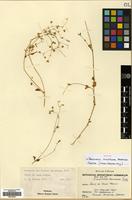
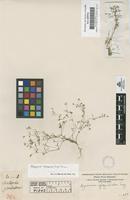
Isotype of Drymaria multiflora BRANDEGEE [family CARYOPHYLLACEAE]
Isotype of Drymaria molluginea (Ser.) Didr. [family CARYOPHYLLACEAE]
Filed as Drymaria molluginea (Ser.) Didr. [family CARYOPHYLLACEAE]
Previous
Next

Name

Identification
Drymaria molluginea (Ser.) Didr. [family CARYOPHYLLACEAE ] (stored under name); Verified by Not On Sheet, 1961 Drymaria sperguloides A. Gray [family CARYOPHYLLACEAE ] Verified by Not On Sheet,
Related name
  • Drymaria multiflora
  • Drymaria molluginea
  • Stellaria glandulosa
  • Drymaria sperguloides

Flora

Entry for Drymaria molluginea (Seringe) Didrichsen [family CARYOPHYLLACEAE]
Herbarium
Flora of North America (FNA)
Collection
Flora of North America
Resource Type
Reference Sources
Entry From
Flora of North America, Vol 5,
Names
Drymaria molluginea (Seringe) Didrichsen [family CARYOPHYLLACEAE], Linnaea, 29: 738. 1858 
Arenaria molluginea Seringe [family CARYOPHYLLACEAE], in A. P. de Candolle and A. L. P. P. de Candolle, Prodr., 1: 400. 1824
Alsine molluginea Lagasca [family ], Gen. Sp. Pl., 13. 1816,. not Hornemann 1813
Drymaria sperguloides A. Gray [family CARYOPHYLLACEAE]
Treatment Author(s)
Ronald L. Hartman
Information
Plants annual, herbaceous, glabrous or sparsely glandular, not glaucous. Stems erect, simple or dichotomously branched, 3–25(–30) cm. Leaves mostly appearing whorled; stipules ± persistent, simple, filiform to subulate, 0.5–2 mm; petiole absent or nearly so; blade linear, 1–3(–3.5) cm × 0.5–1.5(–2) mm, base attenuate, apex rounded, sometimes apiculate. Inflorescences terminal or racemose, open, 3–30+-flowered cymes. Pedicels shorter to longer than subtending bracts at maturity. Flowers: sepals with midvein prominent, lateral pair often evident, then arcing outward at midsection and confluent apically, broadly ovate to ± orbiculate (herbaceous portion elliptic to oblong or lanceolate), 2–3.5 mm, subequal, apex obtuse (herbaceous portion similar), hood oblique or at right angles to apex, formed in part by scarious margins, glabrous; petals 4-fid for 1/2 or less their length, 1.7–2.5 mm, subequal to sepals, lobes 1-veined, vein unbranched, linear, outer pair 1/3–1/2 as long as petal trunk, inner pair slightly shorter or, sometimes, greatly reduced or absent, trunk laterally denticulate, base abruptly tapered, apex rounded. Seeds dark brown to purplish, horseshoe-shaped, 0.8–0.9 mm; tubercles minute, rounded.
Phenology
jun-aug (summer), sep-nov (fall)
Altitude range
2100–2400 m;
Distribution
Mexico.USA Ariz.USA N.Mex.USA Tex.

Related Materials

  • Terms and Conditions
  • Privacy Policy
  • Cookie Policy
  • Cookie Settings
  • Accessibility
  • Help
  • Contact Us
  • Facebook
  • Twitter
ITHAKA

JSTOR is part of ITHAKA, a not-for-profit organization helping the academic community use digital technologies to preserve the scholarly record and to advance research and teaching in sustainable ways.

©2000-2026 ITHAKA. All Rights Reserved. JSTOR®, the JSTOR logo, JPASS®, Aluka®, and ITHAKA® are registered trademarks of ITHAKA.

╳