JSTOR Global Plants Home
  • Home
  • Browse
  • About
  • Access
  • Account
    • Saved Items
    • Profile
  • Log in

Global Plants

Skip to Main Content
  • JSTOR Global Plants Home
  • Global Plants

    • Browse
    • About
    • Access
    • Account
      • Saved Items
      • Profile
Log in
  • Browse
  • About
  • Access
  • Account
    • Saved Items
    • Profile
Advanced Search

Compilation
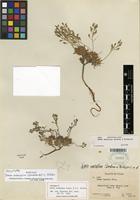
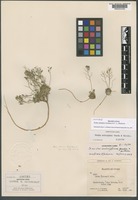
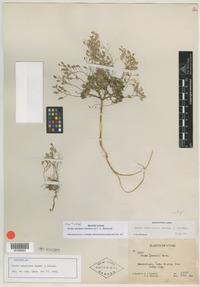
Draba subalpina

3 Images see all

Holotype of Draba subalpina Goodman & C.L. Hitchc. [family BRASSICACEAE]
Isotype of Draba subalpina Goodman & C. L. Hitchc. [family BRASSICACEAE]
Previous
Next

Name

Identification
Draba subalpina Goodman & C.L. Hitchc. [family BRASSICACEAE ] (stored under name); Verified by C.L. Hitchcock,, Draba lemmonii S. Watson [family BRASSICACEAE ] Verified by Not on sheet,
Related name
  • Draba subalpina
  • Draba lemmonii

Flora

Entry for Draba subalpina Goodman & C. L. Hitchcock [family CRUCIFERAE]
Herbarium
Flora of North America (FNA)
Collection
Flora of North America
Resource Type
Reference Sources
Entry From
Flora of North America, Vol 7,
Names
Draba subalpina Goodman & C. L. Hitchcock [family CRUCIFERAE], Ann. Missouri Bot. Gard., 19: 77. 1932
Treatment Author(s)
Ihsan A. Al-Shehbaz
Michael D. Windham
Reidar Elven
Information
Perennials; (cespitose); caudex simple or branched (with some persistent leaf bases); scapose. Stems unbranched, 0.3–1(–1.3) dm, often glabrous throughout, sometimes sparsely pubescent proximally, trichomes simple and stalked, 2-rayed, 0.2–1 mm. Basal leaves rosulate; sessile; blade (fleshy), oblanceolate to linear, (0.4–)0.5–1.4(–2) cm × (1–)1.5–3(–4) mm, margins entire, (ciliate at least apically, trichomes simple and 2-rayed), surfaces usually glabrous, rarely sparsely pubescent with simple and stalked, 2- (or 3-)rayed trichomes, 0.2–1 mm, (midvein obscure). Cauline leaves 0. Racemes (6–)10–28(–40)-flowered, ebracteate, elongated in fruit; rachis not flexuous, glabrous. Fruiting pedicels divaricate-ascending, straight, (3–)5–10(–17) mm, glabrous. Flowers: sepals broadly ovate, 1.7–2.5 mm, usually glabrous, rarely pubescent, (trichomes simple and short-stalked, 2-rayed); petals white, spatulate to obovate, 3–5 × 2–3 mm; anthers oblong, 0.5–0.7 mm. Fruits ovoid to lanceolate, plane, inflated at least basally, 4–8(–10) × 2.5–4 mm; valves glabrous or sparsely puberulent, trichomes simple, 0.02–0.1 mm; ovules 6–12 per ovary; style 0.2–0.9 mm. Seeds ovoid, 1–1.5 × 0.7–1.1 mm. 2n = 26.
Phenology
may (spring), jun (summer)
Altitude range
1800–3400 m;
Distribution
USA Utah.
Discussion
Molecular studies (M. A. Beilstein and M. D. Windham 2003) and chromosomal data (Windham 2000, 2004) suggest that Draba subalpina is most closely related to D. cusickii and D. sobolifera. From those, it is easily distinguished by having white (versus yellow) petals, glabrous (versus pubescent) rachises and stems distally, and glabrous or, rarely, sparsely pubescent (versus always pubescent) abaxial leaf blade surfaces. Draba subalpina is known from Garfield, Iron, Kane, and Wayne counties in south-central Utah.

Related Materials

  • Terms and Conditions
  • Privacy Policy
  • Cookie Policy
  • Cookie Settings
  • Accessibility
  • Help
  • Contact Us
  • Facebook
  • Twitter
ITHAKA

JSTOR is part of ITHAKA, a not-for-profit organization helping the academic community use digital technologies to preserve the scholarly record and to advance research and teaching in sustainable ways.

©2000-2026 ITHAKA. All Rights Reserved. JSTOR®, the JSTOR logo, JPASS®, Aluka®, and ITHAKA® are registered trademarks of ITHAKA.

╳