JSTOR Global Plants Home
  • Home
  • Browse
  • About
  • Access
  • Account
    • Saved Items
    • Profile
  • Log in

Global Plants

Skip to Main Content
  • JSTOR Global Plants Home
  • Global Plants

    • Browse
    • About
    • Access
    • Account
      • Saved Items
      • Profile
Log in
  • Browse
  • About
  • Access
  • Account
    • Saved Items
    • Profile
Advanced Search

Compilation
Draba megasperma

8 Images see all

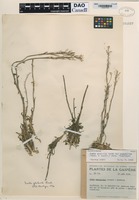
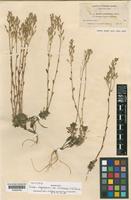
not on sheet of Draba megasperma Fernald & Knowlton [family BRASSICACEAE]
Isotype of Draba laurentiana Fernald [family BRASSICACEAE]
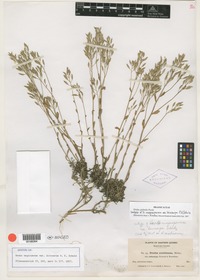
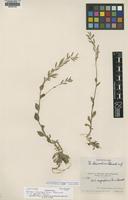
Isotype of Draba megasperma var. leiocarpa Schulz, O.E. 1927 [family BRASSICACEAE]
Isotype of Draba megasperma Fernald & Knowlt. var. leiocarpa O.E.Schulz [family BRASSICACEAE]
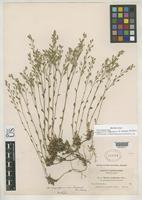
Isotype of Draba laurentiana Fernald [family BRASSICACEAE]
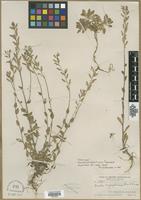
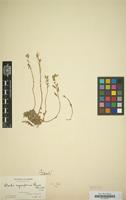
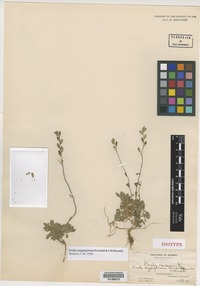
Isotype of Draba megasperma Fernald & C.H.Knowlt. [family CRUCIFERAE]
Isotype of Draba megasperma var. leiocarpa O. E. Schulz [family BRASSICACEAE]
Isotype of Draba megasperma Fernald & Knowlt. [family BRASSICACEAE]
Previous
Next

Name

Identification
Draba megasperma Fernald & Knowlt. [family BRASSICACEAE ] Draba laurentiana Fernald [family BRASSICACEAE ] Isotype of Draba laurentiana Fernald [family BRASSICACEAE ] Verified by I.A. Al-Shehbaz, Draba glabella Pursh [family BRASSICACEAE ] (stored under name); Verified by I.A. Al-Shehbaz,
Related name
  • Draba megasperma
  • Draba incana
  • Draba laurentiana
  • Draba glabella
  • Draba arabisans

Flora

Entry for Draba glabella Pursh [family CRUCIFERAE]
Herbarium
Flora of North America (FNA)
Collection
Flora of North America
Resource Type
Reference Sources
Entry From
Flora of North America, Vol 7,
Names
Draba glabella Pursh [family CRUCIFERAE], Fl. Amer. Sept., 2: 434. 1813
Draba arabisans Michaux var. canadensis (Brunet) Fernald & Knowlton [family CRUCIFERAE]
Draba arabisans var. orthocarpa Fernald & Knowlton [family CRUCIFERAE]
Draba canadensis Brunet [family CRUCIFERAE]
Draba canadensis var. pycnosperma (Fernald & Knowlton) O. E. Schulz [family CRUCIFERAE]
Draba daurica de Candolle [family CRUCIFERAE]
Draba glabella var. megasperma (Fernald & Knowlton) Fernald [family CRUCIFERAE]
Draba glabella var. orthocarpa (Fernald & Knowlton) Fernald [family CRUCIFERAE]
Draba glabella var. pycnosperma (Fernald & Knowlton) G. A. Mulligan [family CRUCIFERAE]
Draba henneana Schlechtendal [family CRUCIFERAE]
Draba hirta Linnaeus var. laurentiana (Fernald) B. Boivin [family CRUCIFERAE]
Draba hirta var. pycnosperma (Fernald & Knowlton) B. Boivin [family CRUCIFERAE]
Draba laurentiana Fernald [family CRUCIFERAE]
Draba megasperma Fernald & Knowlton [family CRUCIFERAE]
Draba norvegica Gunnerus var. pleiophylla Fernald [family CRUCIFERAE]
Draba pycnosperma Fernald & Knowlton [family CRUCIFERAE]
Draba sornborgeri Fernald [family CRUCIFERAE]
Treatment Author(s)
Ihsan A. Al-Shehbaz
Michael D. Windham
Reidar Elven
Information
Perennials; (sometimes cespitose); caudex simple or branched; not scapose. Stems branched or unbranched, (0.4–)1–3.5(–4.7) dm, often pubescent throughout (sometimes sparsely so distally), sometimes glabrous, trichomes simple and 2-rayed, (non-crisped), 0.2–1 mm, or subsessile, stellate-pectinate, and 3–8-rayed, 0.1–0.3 mm. Basal leaves rosulate; petiolate; petiole ciliate, (trichomes simple, 0.1–0.8 mm); blade oblanceolate to spatulate or linear-oblanceolate, (0.6–)1–3.5(–5) cm × 2–8(–10) mm, margins dentate or denticulate, (pubescent as petiole), surfaces pubescent with non-crisped, minutely stalked, 4–8(–12)-rayed, stellate-pectinate trichomes, 0.15–0.6 mm, (midvein obscure abaxially), adaxially sometimes also with simple trichomes, or glabrous. Cauline leaves 2–17(–25); sessile; blade ovate to oblong, margins dentate to subentire, surfaces often pubescent as basal, or predominantly with simple trichomes adaxially. Racemes (5–)8–26(–34)-flowered, ebracteate or proximalmost 1 or 2 flowers bracteate, elongated in fruit; rachis not flexuous, usually glabrous, rarely pubescent as stem. Fruiting pedicels divaricate-ascending to suberect, straight, (1–)3–10(–16) mm, glabrous or pubescent as stem. Flowers: sepals oblong, 2–3.5 mm, pubescent, (trichomes simple and short-stalked, 2–4-rayed); petals white, broadly obovate, 4–5.5 × 1.5–3 mm; anthers ovate, 0.3–0.5 mm. Fruits oblong to ovate or ovoid to lanceolate or linear-lanceolate, usually plane, rarely slightly twisted, flattened or inflated, (3–)5–12(–16) × 2–3.5 mm; valves glabrous or pubescent, trichomes simple or 2–4-rayed, 0.05–0.2(–0.4) mm; ovules (20–)24–36 per ovary; style 0.05–0.2(–0.5) mm. Seeds oblong, 0.9–1.1 × 0.5–0.7 mm. 2n = 64, 80.
Phenology
may (spring), jun-aug (summer)
Altitude range
0–1400 m;
Distribution
Greenlandn Europe (n Russia)e Asia (Russian Far East).e Asia (Siberia).USA AlaskaUSA MaineUSA Vt.USA Wis.Canada B.C.Canada Man.Canada N.B.Canada Nfld. and Labr.Canada N.W.T.Canada N.S.Canada NunavutCanada Ont.Canada Que.Canada Yukon
Discussion
Draba glabella was reported by J. V. Freudenstein and J. K. Marr (1986) from Michigan, but that record likely was based on plants of D. arabisans, a highly variable species that occurs in that state.
Draba glabella is extremely variable in indumentum, number of cauline leaves, fruiting pedicel length, fruit shape and size, style length, and seed number. M. L. Fernald (1934) divided it into five species and three varieties; R. C. Rollins (1993) recognized three species. Of these, G. A. Mulligan (1970, 1976) reduced D. laurentiana to synonymy of D. glabella and treated D. pycnosperma as a variety. Of all the segregates of D. glabella, var. pycnosperma might merit recognition. It is restricted to northwestern Newfoundland and northeastern Quebec, where var. glabella also grows. The main difference between the two varieties is the presence in var. pycnosperma of plump (versus flattened), ovoid to oblong fruits. Draba sornborgeri, recognized by Rollins as a distinct species, is merely a glabrescent form of D. glabella. Because of the tremendous morphological variability, wide distribution, extensive synonymy, and different chromosome numbers, D. glabella will require extensive molecular, cytological, and morphological studies to properly delimit the species and any potential infraspecific taxa.
Some forms of Draba glabella approach both D. borealis and D. praealta, but these can be distinguished by examining the trichomes on the abaxial surfaces of basal leaf blades. In D. glabella, these trichomes are minutely stalked or subsessile and have branched rays. In the other two species, the trichomes have long stalks and the rays are always unbranched.
The Linnaean name Draba hirta was applied to this species previously, and still is in Russia. The name is not typified, and the material at LINN is in bad condition and probably belongs to two species, D. glabella and D. norvegica, as recognized here. A typification of D. hirta may necessitate its re-introduction for this species.

Related Materials

  • Terms and Conditions
  • Privacy Policy
  • Cookie Policy
  • Cookie Settings
  • Accessibility
  • Help
  • Contact Us
  • Facebook
  • Twitter
ITHAKA

JSTOR is part of ITHAKA, a not-for-profit organization helping the academic community use digital technologies to preserve the scholarly record and to advance research and teaching in sustainable ways.

©2000-2026 ITHAKA. All Rights Reserved. JSTOR®, the JSTOR logo, JPASS®, Aluka®, and ITHAKA® are registered trademarks of ITHAKA.

╳