JSTOR Global Plants Home
  • Home
  • Browse
  • About
  • Access
  • Account
    • Saved Items
    • Profile
  • Log in

Global Plants

Skip to Main Content
  • JSTOR Global Plants Home
  • Global Plants

    • Browse
    • About
    • Access
    • Account
      • Saved Items
      • Profile
Log in
  • Browse
  • About
  • Access
  • Account
    • Saved Items
    • Profile
Advanced Search

Compilation
Draba longipes

7 Images see all

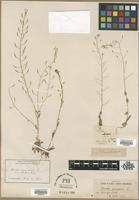
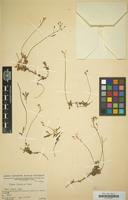
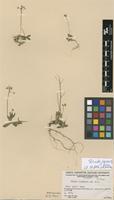
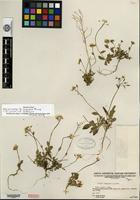
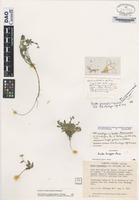
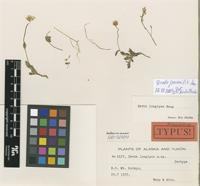
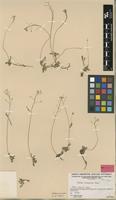
Type? of Draba nemorosa subsp. leiocarpa [family BRASSICACEAE]
Paratype of Draba longipes Raup [family CRUCIFERAE]
Isotype of Draba longipes Raup [family BRASSICACEAE]
Type of Draba longipes Raup [family BRASSICACEAE]
Isotype of Draba kananaskis Mulligan [family BRASSICACEAE]
Isotype of Draba longipes Raup [family BRASSICACEAE]
Paratype of Draba longipes Raup [family BRASSICACEAE]
Previous
Next

Name

Identification
Draba longipes Raup [family CRUCIFERAE ] (stored under name); Verified by Al-Shehbaz, I.A.,
Related name
  • Draba juvenilis
  • Draba nemorosa
  • Draba longipes

Flora

Entry for Draba juvenilis Komarov [family CRUCIFERAE]
Herbarium
Flora of North America (FNA)
Collection
Flora of North America
Resource Type
Reference Sources
Entry From
Flora of North America, Vol 7,
Names
Draba juvenilis Komarov [family CRUCIFERAE], Repert. Spec. Nov. Regni Veg., 13: 167. 1914
Draba hirta Linnaeus var. tenella Eastwood [family CRUCIFERAE]
Draba kananaskis G. A. Mulligan [family CRUCIFERAE]
Draba longipes Raup [family CRUCIFERAE]
Treatment Author(s)
Ihsan A. Al-Shehbaz
Michael D. Windham
Reidar Elven
Information
Perennials; (not pulvinate); caudex branched (branches slightly loose, with persistent leaf remains, sometimes terminating in sterile rosettes); often scapose. Stems unbranched, (0.3–)0.8–2.3(–3) dm, pubescent proximally, glabrous or sparsely pubescent distally, trichomes simple and 2–4-rayed, 0.07–0.4 mm. Basal leaves (loosely) rosulate; petiolate; petiole base ciliate, margin not ciliate, (midvein obscure, trichomes simple and 2-rayed, 0.2–0.7 mm); blade oblanceolate to lanceolate, (0.3–)0.6–2.5(–3.5) cm × (1–)2–7(–10) mm, margins entire or denticulate, surfaces pubescent, abaxially with stalked, cruciform trichomes, 0.2–0.5 mm, adaxially with cruciform and/or simple and 2-rayed ones. Cauline leaves 0–2 (or 3); sessile; blade elliptic to ovate or lanceolate, margins usually entire, rarely denticulate, surfaces pubescent as basal adaxially or trichomes predominantly simple. Racemes (2–)4–13(–18)-flowered, ebracteate, elongated in fruit; rachis not flexuous, glabrous or sparsely pubescent as stem. Fruiting pedicels divaricate-ascending or ascending, straight or often curved upward (not expanded basally), (3–)5–17(–22) mm, usually glabrous, rarely pubescent, trichomes simple and stalked, 2–4-rayed. Flowers: sepals ovate, 2.2–3 mm, glabrous or pubescent subapically, (trichomes simple and short-stalked, 2-rayed); petals pale yellow to creamy white, spatulate, 3–5 × 1.5–2.5 mm; anthers ovate, 0.4–0.5 mm. Fruits elliptic to oblong or linear-lanceolate, plane (not curved), flattened, 5–11(14) × 2–3 mm; valves usually glabrous, rarely margin pubescent, trichomes simple; ovules 16–30 per ovary; style 0.2–0.7 mm. Seeds oblong, 0.7–1.2(–1.5) × 0.4–0.7(–0.8) mm. 2n = 64.
Phenology
jun-jul (summer)
Altitude range
0–2700 m;
Distribution
e Asia (Russian Far East).e Asia (n Siberia).USA AlaskaCanada Alta.Canada B.C.Canada N.W.T.Canada Yukon
Discussion
Although Draba kananaskis and D. longipes have often been treated as distinct species, we find no basis for maintaining them. Both exhibit variations in petal color (white to pale yellow) and leaf trichomes (short-stalked to sessile) characteristic of D. juvenilis from the Russian Far East. Perhaps most importantly, all three are octoploids (2n = 64) with x = 8. We conclude that D. kananaskis is nothing more than a minor variant of D. juvenilis and it is treated herein, for the first time, as a synonym of that species.
Draba juvenilis is occasionally confused with D. borealis, which also has stalked, cruciform trichomes with unbranched rays. Typical D. juvenilis is easily distinguished from that species by having narrower (2–3 mm) fruits that are glabrous (rarely pubescent) and untwisted, and 0–2 (or 3)-leaved stems. By contrast, D. borealis has wider (2.5–4.5 mm) fruits that are usually pubescent and/or twisted (rarely neither) and (2 or) 3–7(–12)-leaved stems.

Related Materials

  • Terms and Conditions
  • Privacy Policy
  • Cookie Policy
  • Cookie Settings
  • Accessibility
  • Help
  • Contact Us
  • Facebook
  • Twitter
ITHAKA

JSTOR is part of ITHAKA, a not-for-profit organization helping the academic community use digital technologies to preserve the scholarly record and to advance research and teaching in sustainable ways.

©2000-2026 ITHAKA. All Rights Reserved. JSTOR®, the JSTOR logo, JPASS®, Aluka®, and ITHAKA® are registered trademarks of ITHAKA.

╳