JSTOR Global Plants Home
  • Home
  • Browse
  • About
  • Access
  • Account
    • Saved Items
    • Profile
  • Log in

Global Plants

Skip to Main Content
  • JSTOR Global Plants Home
  • Global Plants

    • Browse
    • About
    • Access
    • Account
      • Saved Items
      • Profile
Log in
  • Browse
  • About
  • Access
  • Account
    • Saved Items
    • Profile
Advanced Search

Compilation
Draba chrysantha

15 Images see all

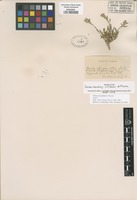
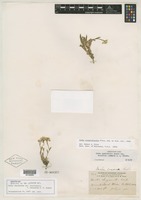
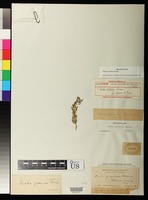
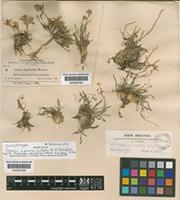
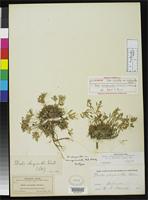
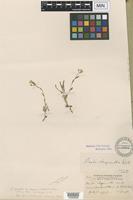
Type? of Draba chrysantha S. Watson [family BRASSICACEAE]
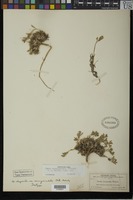
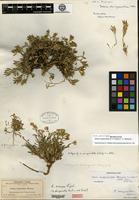
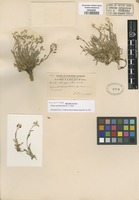
Lectotype of Draba chrysantha variety exunguiculata O.E. Schulz in Engl. [family BRASSICACEAE]
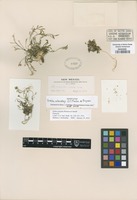
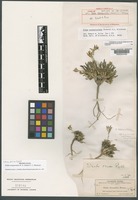
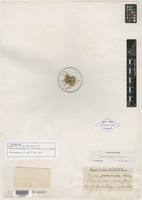
Paratype of Draba gilgiana Wooton & Standl. [family BRASSICACEAE]
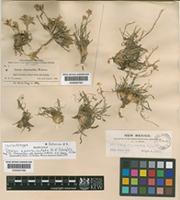
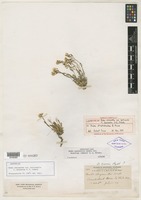
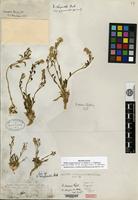
Isolectotype of Draba exunguiculata (O.E.Schulz) C.L.Hitchc. [family BRASSICACEAE]
Isolectotype of Draba chrysantha var. hirtacaulis O. E. Schulz [family BRASSICACEAE]
Isotype of Draba chrysantha S. Watson var. exunguiculata O. E. Schulz [family BRASSICACEAE]
Isolectotype of Draba chrysantha S. Watson var. exunguiculata O. E. Schulz [family BRASSICACEAE]
Lectotype of Draba chrysantha var. hirtacaulis O. E. Schulz [family BRASSICACEAE]
Type of Draba chrysantha var. hirticaulis Schulz, O. E. 1927 [family BRASSICACEAE]
Isolectotype of Draba streptobrachia R.A. Price [family BRASSICACEAE]
Isolectotype of Draba chrysantha var. hirtacaulis O. E. Schulz [family BRASSICACEAE]
Type of Draba chrysantha S. Watson [family BRASSICACEAE]
Draba exunguiculata (O.E.Schulz) C.L.Hitchc. [family BRASSICACEAE]
Isosyntype of Draba chrysantha var. exunguiculata Schulz, O.E. 1927 [family BRASSICACEAE]
Isotype of Draba chrysantha S. Watson f. dasycarpa Schulz [family BRASSICACEAE]
Previous
Next

Name

Identification
Draba chrysantha S. Watson [family BRASSICACEAE ] (stored under name); Verified by S. Watson, 1882
Related name
  • Draba streptobrachia
  • Draba chrysantha
  • Draba exunguiculata

Flora

Entry for Draba crassa Rydberg [family CRUCIFERAE]
Herbarium
Flora of North America (FNA)
Collection
Flora of North America
Resource Type
Reference Sources
Entry From
Flora of North America, Vol 7,
Names
Draba crassa Rydberg [family CRUCIFERAE], Mem. New York Bot. Gard., 1: 182. 1900
Draba chrysantha S. Watson var. crassa (Rydberg) O. E. Schulz [family CRUCIFERAE]
Treatment Author(s)
Ihsan A. Al-Shehbaz
Michael D. Windham
Reidar Elven
Information
Perennials; (cespitose); caudex simple or branched (well-developed, with persistent leaf bases); not scapose. Stems (decumbent to ascending), unbranched, (0.4–)0.6–1.3(–1.5) dm, usually glabrous proximally, rarely sparsely pubescent, pubescent distally, trichomes simple and short-stalked, 2-rayed, (crisped), 0.1–0.6(–0.8) mm. Basal leaves rosulate; petiolate; petiole ciliate, (trichomes mostly simple, 0.3–0.8 mm); blade oblanceolate, 2–6(–7) cm × 2.5–8(–10) mm, margins entire, (pubescent as petiole), surfaces glabrous. Cauline leaves 2–4(–6); sessile; blade ovate to oblong, margins entire, (ciliate, trichomes simple and stalked, 2-rayed). Racemes (4–)8–20(–25)-flowered, ebracteate, elongated in fruit; rachis not flexuous, pubescent, trichomes simple and short-stalked, 2-rayed, (crisped), (0.1–0.8 mm). Fruiting pedicels divaricate-ascending, straight, 5–10(–15) mm, pubescent as rachis. Flowers: sepals (green tinged purplish), ovate to oblong, 2–3(–3.3) mm, pubescent, (trichomes simple and 2-rayed); petals yellow, spatulate to subobovate, 3.5–5(–6) × (2–) 2.5–3.5(–4) mm; anthers ovate, 0.5–0.6 mm. Fruits lanceolate to ovate-lanceolate, slightly twisted, flattened, (7–)8–14 × 3–5 mm; valves glabrous; ovules 16–20 per ovary; style (0.4–)0.7–1.2(–1.5) mm. Seeds oblong, 1.2–1.7 × 0.8–1.1 mm. 2n = 24.
Phenology
jul-aug (summer)
Altitude range
2900–4300 m;
Distribution
USA Colo.USA Mont.USA N.Mex.USA UtahUSA Wyo.
Discussion
Draba crassa is easily recognized by its combination of fleshy, distinctly petiolate leaves with glabrous surfaces and mostly decumbent flowering/fruiting stems. N. H. Holmgren (2005b) indicated that it has 52 seeds per fruit (26 per locule), but in the plants we examined, the seed count did not exceed 20 per fruit.

Related Materials

  • Terms and Conditions
  • Privacy Policy
  • Cookie Policy
  • Cookie Settings
  • Accessibility
  • Help
  • Contact Us
  • Facebook
  • Twitter
ITHAKA

JSTOR is part of ITHAKA, a not-for-profit organization helping the academic community use digital technologies to preserve the scholarly record and to advance research and teaching in sustainable ways.

©2000-2026 ITHAKA. All Rights Reserved. JSTOR®, the JSTOR logo, JPASS®, Aluka®, and ITHAKA® are registered trademarks of ITHAKA.

╳