JSTOR Global Plants Home
  • Home
  • Browse
  • About
  • Access
  • Account
    • Saved Items
    • Profile
  • Log in

Global Plants

Skip to Main Content
  • JSTOR Global Plants Home
  • Global Plants

    • Browse
    • About
    • Access
    • Account
      • Saved Items
      • Profile
Log in
  • Browse
  • About
  • Access
  • Account
    • Saved Items
    • Profile
Advanced Search

Compilation
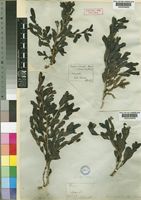
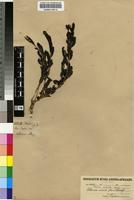
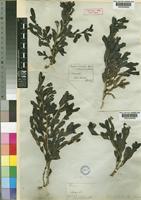
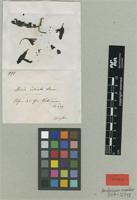
Doria ciliata

4 Images see all

Othonna ciliata L.f. [family COMPOSITAE]
Isosyntype of Doria ciliata Harv. [family ASTERACEAE]
Othonna ciliata L.f. [family COMPOSITAE]
Syntype of Doria ciliata Harv. [family ASTERACEAE]
Previous
Next

Name

Identification
Othonna ciliata L.f. [family COMPOSITAE ] (stored under name); Doria ciliata Harv. [family COMPOSITAE ]
Related name
  • Hertia ciliata
  • Othonna ciliata
  • Doria ciliata

Flora

Entry for DORIA ciliata Harv. [family ]
Herbarium
Royal Botanic Gardens, Kew (K)
Collection
Flora Capensis
Resource Type
Reference Sources
Entry From
Flora Capensis, Vol 3, page 44, (1894) Author: (By W. H. HARVEY).
Names
DORIA ciliata Harv. [family ]
Information
rigidly suffruticose, spreading, much branched; branches pale, angular; leaves sessile, half-clasping, cuneate-oblong, obsoletely 3–5-toothed at the extremity, cartilagineo-ciliolate, coriaceous, rigid, faintly three-nerved, glaucous (turning black when dry); pedicels short, one-headed, terminal or opposite the leaves; inv. scales 4–5, broadly oblong, connate at base, with membr. edges, acute; marg. achenes glabrous or nearly so (ripe not seen). Closely much branched, leafy; the pale twigs very rigid, but imperfectly ligneous. Leaves 1–1 1/2 inch long, 4–5 lines wide, with a deltoid extremity; in the specimens seen turning quite black in drying. Pedicel shorter than the leaves. Inv. sc. 4–5 lines long, 2 l. wide.
Distribution
SOUTH AFRICA Vet Rivier, Burke & Zeyher! Zey.! 995. (Herb., Hk., Sd.)

Related Materials

  • Terms and Conditions
  • Privacy Policy
  • Cookie Policy
  • Cookie Settings
  • Accessibility
  • Help
  • Contact Us
  • Facebook
  • Twitter
ITHAKA

JSTOR is part of ITHAKA, a not-for-profit organization helping the academic community use digital technologies to preserve the scholarly record and to advance research and teaching in sustainable ways.

©2000-2026 ITHAKA. All Rights Reserved. JSTOR®, the JSTOR logo, JPASS®, Aluka®, and ITHAKA® are registered trademarks of ITHAKA.

╳