JSTOR Global Plants Home
  • Home
  • Browse
  • About
  • Access
  • Account
    • Saved Items
    • Profile
  • Log in

Global Plants

Skip to Main Content
  • JSTOR Global Plants Home
  • Global Plants

    • Browse
    • About
    • Access
    • Account
      • Saved Items
      • Profile
Log in
  • Browse
  • About
  • Access
  • Account
    • Saved Items
    • Profile
Advanced Search

Compilation
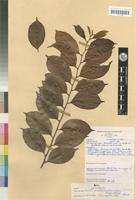
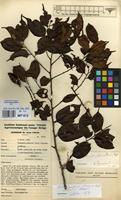
Donella pruniformis

3 Images see all

Donella pruniformis (Pierre ex Engl.) Aubrév.et Pellegr. [family SAPOTACEAE]
Filed as Donella pruniformis (Pierre ex Engl.) Aubrev. & Pellegr. [family SAPOTACEAE]
Chrysophyllum pruniforme Pierre ex Engl. [family SAPOTACEAE]
Previous
Next

Name

Identification
Donella pruniformis (Pierre ex Engl.) Aubrev. & Pellegr. [family SAPOTACEAE ] (stored under name); Verified by Liben L., 1989
Related name
  • Chrysophyllum pruniforme
  • Donella pruniformis
  • Donella welwitschii

Flora

Entry for CHRYSOPHYLLUM pruniforme Engl. [family SAPOTACEAE]
Herbarium
Royal Botanic Gardens, Kew (K)
Collection
Flora of Tropical East Africa
Resource Type
Reference Sources
Entry From
Flora of Tropical East Africa, page 1, (1968) Author: J. H. Hemsley
Names
CHRYSOPHYLLUM pruniforme Engl. [family SAPOTACEAE], E.M. 8: 42, t. 14/A (1904); Aubrév., Fl. For. Côte d’Ivoire 3: 122, t. 288/2–9 (1936) & ed. 2, 3: 146, t. 303/2–4 (1959); Heine in F.W.T.A., ed. 2, 2: 26 (1963). Type: Gabon, Klaine 283 (B, holo. †, K, iso.!)
Donella pruniformis (Engl.) Aubrév. & Pellegr. [family SAPOTACEAE], in Not. Syst. 16: 247 (1960), nom. non rite publ.; Aubrév., Fl. Gabon 1: 142, t. 25/6–8 (1961) & Fl. Cameroun 2: 121, t. 26/3–5 (1964)
Information
Small, medium or tall tree, height up to 30 m. Young shoots, buds and younger petioles with ferrugineous pubescence; older branches and petioles glabrescent or puberulous. Petiole 3–7 mm. long. Leaf-lamina elliptic to oblong-elliptic and tapering at each end, 4–11 (–13) cm. long including the acuminate apex, l.8–5(–6.3) cm. wide, subcoriaceous to coriaceous, apex with long narrow acumen, base cuneate and asymmetrical; upper and lower surfaces glabrous except on midrib beneath; lateral nerves very numerous and closely parallel, ± straight or slightly arcuate, ± ascending. Flowers very small and greenish, clustered in current leaf axils or at older nodes, pedicellate; pedicels 2–3.5 mm. long, glabrescent. Sepals ± free to base, suborbicular, up to 2 mm. long, puberulous or glabrescent. Corolla-tube up to 1 mm. long; lobes rounded or ± truncate, up to 1.5 mm. long, ciliate. Free part of filament up to 1.5 mm. long, flattened; staminodes absent. Ovary subconical, pilose, tapering into a short thick style, ±1.5 mm. long. Fruit shortly stalked, yellowish when ripe, subglobose to ± ovoid, up to 5 cm. long and 4 cm. in diameter, glabrous. Seeds shiny brown, broadly ellipsoid but ± straight along one margin, laterally compressed, up to 2.5 cm. long, 1.4 cm. wide; curved margin narrowly acute; scar lateral, linear and occupying ± complete length of straight margin.
Range
DISTR. U2;? T1 extending from Sierra Leone, Ivory Coast, Dahomey and Nigeria to Cameroun Republic, Gabon and Central African Republic; no specimens have been seen from the Congo Republic where it almost certainly occurs
Altitude range
± 1500 m.
Distribution
UGANDA Kigezi District Ishasha Gorge, 10 Feb. 1945 (fr.), Greenway & Eggeling 7103!
Notes
Known with certainty only from the extreme SW. corner of Uganda where it is said to be rare in the Ishasha Gorge. Procter 692 from T1, Bukoba District, Minziro Forest, appears to be this species, but fruits are necessary for confirmation of this additional provincial record. The species is closely related to C. viridifolium and differs only in a few details (see , above). C. pruniforme in the sense of I.T.U., ed. 2: 395 (1952) is a combination of the present species and C. pentagonocarpum; the description of the fruit appears to refer to the latter although the specimen Greenway & Eggeling 7103 is cited.

Related Materials

  • Terms and Conditions
  • Privacy Policy
  • Cookie Policy
  • Cookie Settings
  • Accessibility
  • Help
  • Contact Us
  • Facebook
  • Twitter
ITHAKA

JSTOR is part of ITHAKA, a not-for-profit organization helping the academic community use digital technologies to preserve the scholarly record and to advance research and teaching in sustainable ways.

©2000-2026 ITHAKA. All Rights Reserved. JSTOR®, the JSTOR logo, JPASS®, Aluka®, and ITHAKA® are registered trademarks of ITHAKA.

╳