JSTOR Global Plants Home
  • Home
  • Browse
  • About
  • Access
  • Account
    • Saved Items
    • Profile
  • Log in

Global Plants

Skip to Main Content
  • JSTOR Global Plants Home
  • Global Plants

    • Browse
    • About
    • Access
    • Account
      • Saved Items
      • Profile
Log in
  • Browse
  • About
  • Access
  • Account
    • Saved Items
    • Profile
Advanced Search

Compilation
Dombeya amaniensis

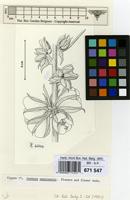
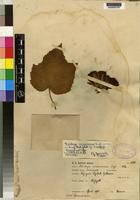
2 Images see all

Filed as Dombeya amaniensis Engl. [family MALVACEAE]
Isotype of Dombeya amaniensis Engl. [family STERCULIACEAE]
Previous
Next

Name

Identification
Dombeya amaniensis Engl. [family MALVACEAE ] (stored under name); Verified by Not on sheet,
Related name
  • Dombeya amaniensis

Flora

Entry for Dombeya amaniensis Engl. [family ]
Herbarium
Royal Botanic Gardens, Kew (K)
Collection
Flora of Tropical East Africa
Resource Type
Reference Sources
Entry From
Flora of Tropical East Africa, page 1, Author: MARTIN CHEEK AND LAURENCE DORR
Names
Dombeya amaniensis Engl. [family ], in E.J. 39: 581 (1907) & in V.E. 3 (2): 428, t. 198 (1921), T.T.C.L: 595 (1949); Seyani, Dombeya: 93 (1982) & Dombeya in Africa: 64 (1991). Type: Tanzania, Lushoto District: Amani, road to Sigi, Braun s.n. in Herb. Amani 668 (B†, syn.; EA, lecto., chosen by Seyani (1991) and locality unclear, Engler 3413a (B†, syn.)
Information
Small tree or shrub 3–5 m tall; stems angular at nodes, densely pubescent to glabrescent, hairs simple, stellate and subsessile-glandular. Leaves suborbicular, 20–23 cm long, 23–26 cm wide, shallowly 3–5-lobed, apex acute, margin dentate-crenate, base deeply cordate, upper and lower surface densely pubescent; petiole 18–27 cm long; stipules caducous, lanceolate, 1.2–1.6 cm long, 0.5–0.6 cm wide, acuminate, tomentose. Inflorescence axillary, 4–5 cm long, subumbellate, 4–7-flowered; peduncle 0.4–1 cm long, tomentose; bracts not seen; branches absent; pedicels 0.6–1.2 cm long; epicalyx bracts at calyx base, narrowly lanceolate, 2–2.4 cm long, 0.3 cm wide, long-acuminate, sparsely puberulous, persistent. Calyx lobes erect, narrowly triangular, 3–3.5 cm long, 0.4–0.5 cm wide, acute, stellate-pilose. Petals 3.1–4.7 cm long, (1.9–)2.6–3.2 cm wide; androecium 2.6–3 cm long; staminal tube cylindrical (0.9–)1.5–1.6 cm long, staminodes ± 1.6 cm long, longest stamen ± 1.9 cm long; anthers 0.4–0.6 cm long. Ovary subglobose, tomentose, style 2.1–2.9 cm long, 5–6-branched, pubescent. Fruit and seeds unknown.
Range
DISTR. T 2, 3, 6, 7 not known elsewhere
Altitude range
300–1000 m
Distribution
TANZANIA Masai District Makuyuni, Koritschoner 816TANZANIA Lushoto District Burwa Tea Estate, Aug. 1961, Ali Omari in Richards 153444!TANZANIA Tabora District Mahenge, May 1932, Schlieben 2169!
Notes
CONSERVATION Known from a few collections at five localities (area of occupancy estimated to be less than 500 km2); its habitat is threatened with a decline in quality at one of these localities by ongoing wood extraction (Luke and Vollesen, pers. comm. 2005). The taxon is accordingly here assessed as EN B2a, b(iii), i.e. Endangered. Further, on the ground assessment is needed at all four sites and may result in the species being assessed as Critically Endangered. Previously the taxon was assessed as VU B1+2b on the basis of a smaller altitudinal and geographical range (Lovett, J. & Clarke, G.P. 1998. Dombeya amaniensis. In: IUCN 2004. Red List of Threatened Species).   D. amaniensis is unlikely to be confused with any other species. The shortly peduncled subumbellate inflorescence with only 4–7 very large flowers is unique in African Dombeya, as is the long (1.5–1.6 cm) staminal tube. The record fromT7 is based on Luke (pers. comm) regarding Luke & Luke 4869 & 8745 (EA n.v.) from Udzungwa MNP. Luke also gives a sight record (outside Matundu FR) to support the lower altitudinal range.

Related Materials

  • Terms and Conditions
  • Privacy Policy
  • Cookie Policy
  • Cookie Settings
  • Accessibility
  • Help
  • Contact Us
  • Facebook
  • Twitter
ITHAKA

JSTOR is part of ITHAKA, a not-for-profit organization helping the academic community use digital technologies to preserve the scholarly record and to advance research and teaching in sustainable ways.

©2000-2026 ITHAKA. All Rights Reserved. JSTOR®, the JSTOR logo, JPASS®, Aluka®, and ITHAKA® are registered trademarks of ITHAKA.

╳