JSTOR Global Plants Home
  • Home
  • Browse
  • About
  • Access
  • Account
    • Saved Items
    • Profile
  • Log in

Global Plants

Skip to Main Content
  • JSTOR Global Plants Home
  • Global Plants

    • Browse
    • About
    • Access
    • Account
      • Saved Items
      • Profile
Log in
  • Browse
  • About
  • Access
  • Account
    • Saved Items
    • Profile
Advanced Search

Compilation
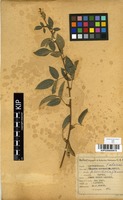
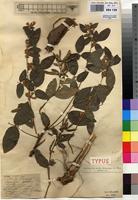
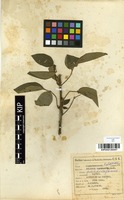
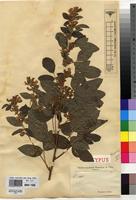
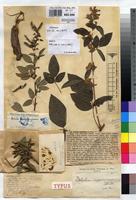
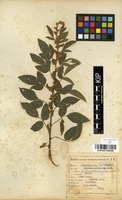
Dolichos saponarius

6 Images see all

Filed as Dolichos saponarius De Wild. [family FABACEAE]
Type of Dolichos saponarius De Wild. [family FABACEAE]
Filed as Dolichos saponarius De Wild. [family FABACEAE]
Type of Dolichos saponarius De Wild. [family FABACEAE]
Filed as Dolichos saponarius De Wild. [family FABACEAE]
Previous
Next

Name

Identification
Dolichos saponarius De Wild. [family FABACEAE ] Verified by Not on sheet, Dolichos pseudocajanus Welw. ex Baker [family FABACEAE ] (stored under name); Verified by Wilczek R., 1954
Related name
  • Dolichos pseudocajanus
  • Dolichos saponarius

Flora

Entry for Dolichos pseudocajanus Welw. ex Baker [family LEGUMINOSAE]
Herbarium
Royal Botanic Gardens, Kew (K)
Collection
Flora Zambesiaca
Resource Type
Reference Sources
Entry From
FZ, Vol 3, Part 5, (2001) Author: B. Mackinder, R. Pasquet, R. Polhill and B. Verdcourt
Names
Dolichos pseudocajanus Welw. ex Baker [family LEGUMINOSAE], in F.T.A. 2: 215 (1871). —E.G. Baker, Legum. Trop. Africa: 441 (1929). —Wilczek in F.C.B. 6: 310 (1954) pro parte excl. var. —Torre in C.F.A. 3: 289 (1966). —Verdcourt in F.T.E.A., Leguminosae, Pap.: 687 (1971). —Lock, Leg. Afr. Check-list: 395 (1989). Type from Angola.
Dolichos saponarius De Wild. [family LEGUMINOSAE], in Repert. Spec. Nov. Regni Veg. 13: 112 (1914). Type from Dem. Rep. Congo (Katanga Prov.).
Information
Erect herb 60–180 cm tall, arising from a perennial woody rootstock. Stems annual, ribbed, pubescent or with lines of appressed hairs along the ribs and pubescent in between. Leaves pinnately 3-foliolate; leaflets 1.8–7.2(11) × 1.6–4.2(5) cm, narrowly oblong-elliptic, subacute or rounded at the apex, mucronate and with an apical tuft of hairs, rounded at the base, appressed pubescent on both surfaces, more densely so on the veins of the lower surface, or sparsely pilose to velvety, discolorous; petiole 0.5–7 cm long; rhachis 0.3–5 cm long; petiolules 1.5–3 mm long; stipules 4–12 × 1–3 mm, lanceolate, striate, persistent. Flowers axillary, solitary, in pairs or in 3–4-flowered fascicles, the late or lack of development of the leaves giving these few-flowered fascicles the appearance of a terminal pseudoraceme; pedicels 5–10 mm long; bracts absent; bracteoles 1–2 mm long, lanceolate, persistent. Calyx pubescent; tube 3–5 mm long; lobes 2–5 mm long, triangular, upper pair completely fused. Standard purple, crimson inside at the base, greenish outside, sometimes mostly green or yellow, 11–14 × 10–12 mm, round or nearly so; wings mostly mauve or blue; keel green or cream-coloured. Ovary 6–9 mm long, linear-oblong, compressed, tomentose; style 3–5 mm long, stigma minute, terminal, capitate, penicillate. Pods 2.5–4.3 cm × 4–10 mm, oblanceolate, appressed pubescent with mixed short and very short hairs, 5–6-seeded. Seeds reddish-brown speckled black, 4–5 × 4–5 × 1–2 mm, square, compressed.
Habitat
In miombo woodland, often on rocky ground or outcrops
Range
with a variant in West Africa
Altitude range
1350–1600 m.
1600
1350
Distribution
Mozambique N Ngauma Distr., near the crossing at the Serra de Massangulo, fl. 25.ii.1964, Torre & Paiva 10836 (LISC).Zambia N Mbala Distr., Kasama–Mbala road, fl. 24.ii.1962, Richards 16161 (K); Mbala–Tunduma road, c. 49 km from frontier, fl. 15.ii.1961, Richards 14358 (K).
Distribution (external)
Tanzania
Burundi
Dem. Rep. Congo
Angola

Related Materials

  • Terms and Conditions
  • Privacy Policy
  • Cookie Policy
  • Cookie Settings
  • Accessibility
  • Help
  • Contact Us
  • Facebook
  • Twitter
ITHAKA

JSTOR is part of ITHAKA, a not-for-profit organization helping the academic community use digital technologies to preserve the scholarly record and to advance research and teaching in sustainable ways.

©2000-2026 ITHAKA. All Rights Reserved. JSTOR®, the JSTOR logo, JPASS®, Aluka®, and ITHAKA® are registered trademarks of ITHAKA.

╳