JSTOR Global Plants Home
  • Home
  • Browse
  • About
  • Access
  • Account
    • Saved Items
    • Profile
  • Log in

Global Plants

Skip to Main Content
  • JSTOR Global Plants Home
  • Global Plants

    • Browse
    • About
    • Access
    • Account
      • Saved Items
      • Profile
Log in
  • Browse
  • About
  • Access
  • Account
    • Saved Items
    • Profile
Advanced Search

Compilation
Dolichos brevidentatus

2 Images see all

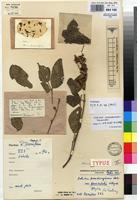
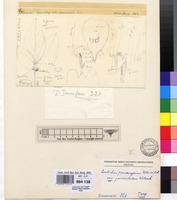
Holotype of Dolichos pseudocajanus Welw. ex Baker var. paniculatus R.Wilczek [family FABACEAE]
Filed as Dolichos brevidentatus Mackinder [family LEGUMINOSAE-PAPILIONACEAE]
Previous
Next

Name

Identification
Dolichos pseudocajanus Welw. ex Baker [family FABACEAE ] Verified by Not on sheet, Dolichos brevidentatus Mackinder [family FABACEAE ] (stored under name); Verified by Not on sheet,
Related name
  • Dolichos pseudocajanus
  • Dolichos brevidentatus

Flora

Entry for Dolichos brevidentatus Mackinder [family LEGUMINOSAE]
Herbarium
Royal Botanic Gardens, Kew (K)
Collection
Flora Zambesiaca
Resource Type
Reference Sources
Entry From
FZ, Vol 3, Part 5, (2001) Author: B. Mackinder, R. Pasquet, R. Polhill and B. Verdcourt
Names
Dolichos brevidentatus Mackinder [family LEGUMINOSAE], in Kew Bull. 54: 421, fig. 4 C–L (1999). Type from Dem. Rep. Congo (Katanga Prov.).
Dolichos pseudocajanus var. paniculatus R. Wilczek [family LEGUMINOSAE], in Bull. Jard. Bot. État 24: 426 (1954); in F.C.B. 6: 311 (1954). Type as above.
Information
Erect herb to 1.3 m tall, arising from a perennial tuberous or woody rootstock. Stems annual, angled, sometimes ribbed, sparsely to densely white or golden pilose, young stems pale green becoming dark grey. Leaves pinnately 3-foliolate; leaflets narrowly elliptic, elliptic or ovate, pubescent on both surfaces, reddish-black gland-dotted on the upper surface (×10 magnification), with black glands on the leaflet lower surface, hence the upper surface is paler; terminal leaflet 2–7.3 × 1.1–4 cm, lateral leaflets 1.6–6.6 × 0.8–3.2 cm; petiole 0.5–6.2 cm long; rhachis 0.5–2.5 cm long; petiolules 2–5 mm long; stipules 6–12 × 2–4 mm, lanceolate, pubescent, striate, usually caducous; stipels 2 mm long. Inflorescences consisting of short, lax axillary pseudoracemes, sometimes aggregated into axillary and terminal congested panicles; peduncle of the pseudoraceme 4–22 mm long; rhachis of the pseudoraceme 3–50 mm long; peduncle of the panicle 4–12 mm long; rhachis of the panicle 5–55 mm long; pedicels 1–6(8) mm long, white pilose; bracts absent; bracteoles minute, caducous. Calyx pilose with gold coloured or white hairs; tube 3 mm long; lobes minute, 1–1.5 mm long, upper pair fused along most of their length. Standard purple, sometimes tinged greenish or yellowish outside with deep purple veining inside, 5–9 × 5–8 mm, almost round; wings and keel pale green or yellow, tinged with purple. Ovary 4 mm long, linear-oblong, compressed, white pilose; style 3 mm long; stigma minute, terminal, capitate, penicillate. Pods 1.5–3.1 × 0.6–1.6 cm, narrowly oblong, falcate, densely golden pilose, 4–5-seeded. Seeds reddish-brown speckled black, 4 × 3 × 2 mm; aril narrowly elliptic, creamy-white.
Habitat
In miombo or Cryptosepalum woodland on Kalahari Sands
Altitude range
1200–1400 m.
1400
1200
Distribution
Zambia W Mwinilunga Distr., just west of Dobeka Bridge, fl. 20.ii.1938, Milne-Redhead 4641 (K).Zambia B Kaoma Distr., Luampa Mission, 21.ii.1952, F. White 2108 (K; NDO).
Distribution (external)
Dem. Rep. Congo (Katanga Prov.)
Notes
Formerly treated as a variety of D. pseudocajanus Welw. ex Baker, this taxon is more closely related to D. pseudocomplanatus R. Wilczek but differs in having paniculate and racemose (rather than solitary or fasciculate) inflorescences, a shortly lobed calyx not more than 1.5 mm long (instead of 2–10 mm long), reddish-black gland dots on the upper surface of the leaves (×10 magnification), black glands on lower leaf surface the calyx and peduncle, smaller flowers 6–10 mm long (instead of 13–20 mm long) and the vexillary stamen tooth absent.

Related Materials

  • Terms and Conditions
  • Privacy Policy
  • Cookie Policy
  • Cookie Settings
  • Accessibility
  • Help
  • Contact Us
  • Facebook
  • Twitter
ITHAKA

JSTOR is part of ITHAKA, a not-for-profit organization helping the academic community use digital technologies to preserve the scholarly record and to advance research and teaching in sustainable ways.

©2000-2026 ITHAKA. All Rights Reserved. JSTOR®, the JSTOR logo, JPASS®, Aluka®, and ITHAKA® are registered trademarks of ITHAKA.

╳