JSTOR Global Plants Home
  • Home
  • Browse
  • About
  • Access
  • Account
    • Saved Items
    • Profile
  • Log in

Global Plants

Skip to Main Content
  • JSTOR Global Plants Home
  • Global Plants

    • Browse
    • About
    • Access
    • Account
      • Saved Items
      • Profile
Log in
  • Browse
  • About
  • Access
  • Account
    • Saved Items
    • Profile
Advanced Search

Compilation
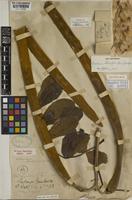
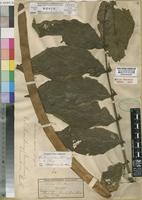
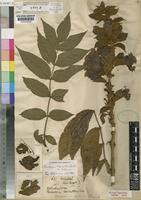
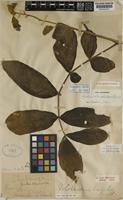
Dolichandrone tomentosa

4 Images see all

Markhamia obtusifolia (Baker) Sprague [family BIGNONIACEAE]
Markhamia tomentosa (Benth.) K.Schum. ex Engl. [family BIGNONIACEAE]
Markhamia obtusifolia (Baker) Sprague [family BIGNONIACEAE]
Previous
Next

Name

Identification
Dolichandrone tomentosa (Benth.) Benth. & Hook [family BIGNONIACEAE ] Markhamia tomentosa (Benth.) K.Schum. ex Engl. [family BIGNONIACEAE ] (stored under name); Verified by Diniz, M.A., Muenteria tomentosa (Benth.) Seem. [family BIGNONIACEAE ] Markhamia sessilis Sprague [family BIGNONIACEAE ]
Related name
  • Muenteria tomentosa
  • Markhamia obtusifolia
  • Markhamia sessilis
  • Dolichandrone tomentosa
  • Markhamia tomentosa
  • Dolichandrone obtusifolia

Flora

Entry for MARKHAMIA tomentosa K. Schum. ex Engl. [family BIGNONIACEAE]
Herbarium
Royal Botanic Gardens, Kew (K)
Collection
Flora of Tropical Africa
Resource Type
Reference Sources
Entry From
Flora of Tropical Africa, Vol IV, Part 2, page 516, (1905) Author: (By T. A. Sprague).
Names
MARKHAMIA tomentosa K. Schum. ex Engl. [family BIGNONIACEAE], Glied. Veg. Usambara, 34, 49, partly (as to the synonymy, excl. description and localities). —Engl. & Prantl, Pflanzenfam. iv. 3 B. 242, partly
Spathodea tomentosa Benth. [family BIGNONIACEAE], in Hook. Niger Fl. 462.
Dolichandrone tomentosa Benth. et Hook. f. [family BIGNONIACEAE], Gen. Pl. ii. 1046.
Information
A tree, 30 ft. high; branchlets tomentose or pubescent. Leaves 9–17 in. long; leaflets 9–13, ovate or ovate-oblong, acuminate, wedge shaped at the base, 3–6 1/2 in. long, 1 1/4–3 in. broad, entire or finely serrulate, thinly coriaceous or almost membranous, puberulous or glabrescent above (pubescent when young), tomentose or pubescent, rarely glabrescent, below; pseudostipules conical, 2–4 1/2 lin. long, tomentose. Raceme terminal, oblong, elongated, tomentose; lateral cymes 3 to many flowered. Peduncles 4–9 lin. long; pedicels 3–8 lin. long. Calyx 11–12 1/2 lin. long, uncinate, split down to within 1 1/2–2 1/2 lin. from the base, tomentose. Corolla pale yellow; tube 15–18 lin. long, campanulate above; basal cylindric portion 3–4 lin. long, 1 1/2–2 lin. in diam.; lobes 8–13 lin. long, conspicuously glandular. Stamens inserted 4–4 1/2 lin. above the base of the corolla-tube; filaments thickened and pilose at the base; anther-lobes 1 1/2–2 lin. long. Disc annular, 7/8–1 1/4 lin. high, 1/4– 3/8 lin. thick, contiguous with the ovary. Ovary 4–4 1/2 lin. long, glabrous, or minutely lepidote at the base; stigma-lobes elliptic-ovate, obtuse or retuse. Capsule falcate, 2–2 1/2 ft. long, 7–9 1/2 lin. broad, finely pubescent or puberulous; seeds 1 1/4–1 3/4 in. long, 3–4 lin. broad; nucleus 5–7 lin. long.
Distribution
Senegambia Upper Guinea Heudelot, 877!Sierra Leone Upper Guinea Talla Hills; near Ninia, Scott-Elliot, 4992! Sulimania, Scott-Elliot, 5281!Lagos Upper Guinea Phillips, 58!Nigeria Upper Guinea Mount Patteh, Barter, 555! Vogel, 176!Cameroons Upper Guinea Yaunde, Zenker, 1432! “Niger Expedition, probably Fernando Po,” Vogel!Upper Guinea “Niger Expedition, probably Fernando Po,” Vogel!
Notes
Muenteria tomentosa, Seem. in Journ. Bot. 1865, 330, partly (as regards the synonymy, excl. description, figure and Angolan locality). M. lutea, Seem. l.c. 1870, 338, partly (as regards Barter, 555).

Related Materials

  • Terms and Conditions
  • Privacy Policy
  • Cookie Policy
  • Cookie Settings
  • Accessibility
  • Help
  • Contact Us
  • Facebook
  • Twitter
ITHAKA

JSTOR is part of ITHAKA, a not-for-profit organization helping the academic community use digital technologies to preserve the scholarly record and to advance research and teaching in sustainable ways.

©2000-2026 ITHAKA. All Rights Reserved. JSTOR®, the JSTOR logo, JPASS®, Aluka®, and ITHAKA® are registered trademarks of ITHAKA.

╳