JSTOR Global Plants Home
  • Home
  • Browse
  • About
  • Access
  • Account
    • Saved Items
    • Profile
  • Log in

Global Plants

Skip to Main Content
  • JSTOR Global Plants Home
  • Global Plants

    • Browse
    • About
    • Access
    • Account
      • Saved Items
      • Profile
Log in
  • Browse
  • About
  • Access
  • Account
    • Saved Items
    • Profile
Advanced Search

Compilation
Dobera coriacea

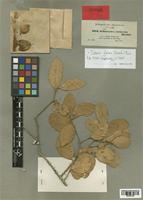
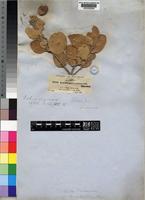
6 Images see all

Dobera glabra (Forssk.) Poir. [family SALVADORACEAE]
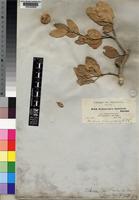
Isotype of Schizocalyx coriacea Hochst. [family RUBIACEAE]
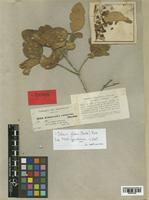
Isotype of Dobera coriacea A.DC. [family SALVADORACEAE]
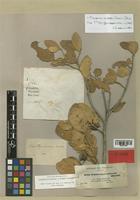
Isotype of Schizocalyx coriacea Hochst. [family RUBIACEAE]
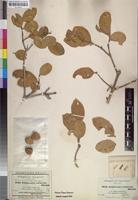
Dobera glabra (Forssk.) Poir. [family SALVADORACEAE]
Previous
Next

Name

Identification
Dobera glabra (Forssk.) Poir. [family SALVADORACEAE ] (stored under name); Schizocalyx coriaceus Hochst. [family SALVADORACEAE ] Dobera coriacea A.DC. [family SALVADORACEAE ]
Related name
  • Schizocalyx coriaceus
  • Dobera coriacea
  • Dobera glabra

Flora

Entry for DOBERA glabra (Forsk.) Poir. [family SALVADORACEAE]
Herbarium
Royal Botanic Gardens, Kew (K)
Collection
Flora of Tropical East Africa
Resource Type
Reference Sources
Entry From
Flora of Tropical East Africa, page 1, (1968) Author: B. Verdcourt
Names
DOBERA glabra (Forsk.) Poir. [family SALVADORACEAE], in Lam., Dict., Suppl. 2: 493 (1812); R. Br. in Salt, Voy. Abyss., app.: 63 (1814); A. DC, Prodr. 17: 31 (1873); Engl., V.E. 3(2): 249, fig. 123 (1921); Chiov., Fl. Somala 1: 215 (1929); F.P.S. 2: 287, fig. 102 (1952); E.P.A.: 486 (1958); K.T.S.: 496, fig. 90 (1961); Verde, in K.B. 19: 155 (1964). Type: Yemen, Wadi Surdûd, Forsskål (C, holo.)
Tomex glabra Forsk. [family SALVADORACEAE], Fl. Aegypt.-Arab.: 32 (1775)
Schizocalyx coriaceus Hochst. [family ], in Flora 27, Beibl.: 2 (1844); A. Rich., Tent. Fl. Abyss. 1: 108 (1847). Type: N. Ethiopia, Meda valley, Schimper 1744 (B, holo. †, K, iso. !)
Salvadora glabra (Forsk.) Baill. [family SALVADORACEAE], in Adansonia 9: 290 (1870)
Dobera coriacea (Hochst.) A. DC. [family SALVADORACEAE], Prodr. 17: 31 (1873)
Dobera macalusoi [family SALVADORACEAE], [sensu Fiori in Chiov., Result. Sc. Miss. Stef.-Paoli 1: 112, t. 24/A (1916), non Mattei]
Information
A much-branched evergreen shrub or tree, up to 1.8–7.5 m. tall; bark green to dark grey, fissured into rectangular patches; wood pale butter-yellow when cut. Leaves olive-green, opposite; lamina coriaceous, elliptic to ovate or obovate, rarely lanceolate or orbicular, 1.5–9 cm. long, 0.7–5.6 cm. wide, mostly obtuse but often acute, usually mucronulate, glabrous or if glands present, then extremely minute but dense; venation often obscure, though sometimes prominent and reticulate; petiole 3.5–4 mm. long. Flowers white, 3.5–5 mm. long (mostly large in the Flora area but smaller in India and Arabia), in axillary and terminal panicles. Calyx minutely papillate. Staminal tube sometimes with small teeth alternating with the upper free parts of the filaments. Ovule solitary in the ovary. Fruit oblong-ellipsoid, (1.8–)1.9–2.4 cm. long, 1–1.3 cm. across. Seeds ovoid, flattened, 12 mm. long, 7.5 mm. wide. Fig. 2/11–14.
Range
DISTR. U1; K1, 2, 4, 7 throughout the dry parts of NE. Africa to the Sudan Republic, Eritrea, Ethiopia and the Somali Republic, extending to S. Arabia and India (Bombay) where it is apparently rare
Altitude range
20–1100m.
Distribution
KENYA Northern Frontier Province Moyale, 30 July 1952, Gillett 13651 ! & Mandera, 31 May 1952, Gillett 13406 !KENYA Kitui District 24 km. E. of Endau, Dec. 1953, L. C. Edwards in E.A.H. 12315 !UGANDA Karamoja District Kidepo valley, Feb. 1960, J. Wilson 836 !
Notes
Dobera roxburghii Planch, (in Ann. Sci. Nat., sér. 3, 10: 191 (1848)), used by J. G. Baker in F.T.A. 4(1): 21 (1902) for this species, is based on some quite different plant which it has not been possible to identify (see K.B. 19: 155 (1964)).

Related Materials

  • Terms and Conditions
  • Privacy Policy
  • Cookie Policy
  • Cookie Settings
  • Accessibility
  • Help
  • Contact Us
  • Facebook
  • Twitter
ITHAKA

JSTOR is part of ITHAKA, a not-for-profit organization helping the academic community use digital technologies to preserve the scholarly record and to advance research and teaching in sustainable ways.

©2000-2026 ITHAKA. All Rights Reserved. JSTOR®, the JSTOR logo, JPASS®, Aluka®, and ITHAKA® are registered trademarks of ITHAKA.

╳