JSTOR Global Plants Home
  • Home
  • Browse
  • About
  • Access
  • Account
    • Saved Items
    • Profile
  • Log in

Global Plants

Skip to Main Content
  • JSTOR Global Plants Home
  • Global Plants

    • Browse
    • About
    • Access
    • Account
      • Saved Items
      • Profile
Log in
  • Browse
  • About
  • Access
  • Account
    • Saved Items
    • Profile
Advanced Search

Compilation
Diplopappus serrulatus

6 Images see all

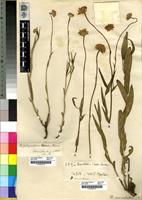
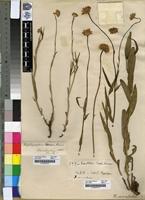
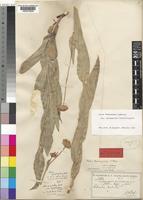
Type of Diplopappus serrulatus Harv. [family ASTERACEAE]
Lectotype of Aster harveyanus Kuntze [family ASTERACEAE]
Aster harveyanus Kuntze [family COMPOSITAE]
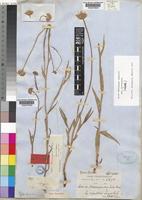
Filed as Diplopappus serrulatus Harv. [family ASTERACEAE]
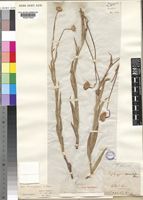
Isotype of Aster xylophyllus Klatt [family COMPOSITAE]
Previous
Next

Name

Identification
Aster harveyanus Kuntze [family COMPOSITAE ] (stored under name); Verified by Burtt Davy, J., Diplopappus serrulatus Harv. [family COMPOSITAE ]
Related name
  • Aster serrulatus
  • Aster xylophyllus
  • Aster harveyanus
  • Diplopappus serrulatus

Flora

Entry for DIPLOPAPPUS serrulatus Harv. [family COMPOSITAE]
Herbarium
Royal Botanic Gardens, Kew (K)
Collection
Flora Capensis
Resource Type
Reference Sources
Entry From
Flora Capensis, Vol 3, page 44, (1894) Author: (By W. H. HARVEY).
Names
DIPLOPAPPUS serrulatus Harv. [family COMPOSITAE], ;—Zey.! 800.
Information
stem herbaceous, ascending-erect, glabrous, rib-striate, ending in a 1-headed, 2–3 bracteate peduncle; leaves lanceolate or linear-lanceolate, acuminate, 3-nerved, half-amplexicaul, with a thickened, cartilagineo-serrulate margin, glabrous; invol. sc. acuminate, flat, glabrous; achenes thinly pilose. Similar to D. lævigatus, but with much more acuminate and narrower, scabro-serrate, rigid leaves, and much less hairy achenes. Leaves 2–3 1/2 inches long, 2–5 lines wide.
Distribution
SOUTH AFRICA Magalisberg, Burke and Zey.! (Herb. D., Hk., Sd.)

Related Materials

  • Terms and Conditions
  • Privacy Policy
  • Cookie Policy
  • Cookie Settings
  • Accessibility
  • Help
  • Contact Us
  • Facebook
  • Twitter
ITHAKA

JSTOR is part of ITHAKA, a not-for-profit organization helping the academic community use digital technologies to preserve the scholarly record and to advance research and teaching in sustainable ways.

©2000-2026 ITHAKA. All Rights Reserved. JSTOR®, the JSTOR logo, JPASS®, Aluka®, and ITHAKA® are registered trademarks of ITHAKA.

╳