JSTOR Global Plants Home
  • Home
  • Browse
  • About
  • Access
  • Account
    • Saved Items
    • Profile
  • Log in

Global Plants

Skip to Main Content
  • JSTOR Global Plants Home
  • Global Plants

    • Browse
    • About
    • Access
    • Account
      • Saved Items
      • Profile
Log in
  • Browse
  • About
  • Access
  • Account
    • Saved Items
    • Profile
Advanced Search

Compilation
Diplachne biflora

5 Images see all

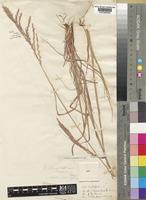
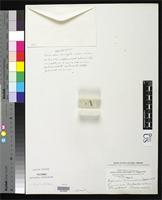
Type of Diplachne biflora Hack. ex Schinz var. buchananii Stapf. [family POACEAE]
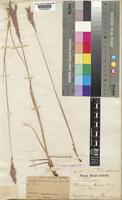
Type of Diplachne biflora Hack. ex Schinz [family POACEAE]
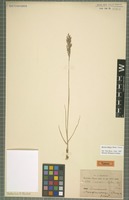
Type of Bewsia biflora (Hack.) Gooss. [family POACEAE]
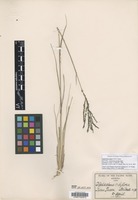
Isotype of Leptochloa pringlei Vasey ex Beal [family POACEAE]
Filed as Diplachne biflora Hackel, E. 1895 [family POACEAE]
Previous
Next

Name

Identification
Diplachne biflora Hack. ex Schinz [family POACEAE ] Verified by O. S., Diplachne biflora Hack. ex Schinz [family POACEAE ] Bewsia biflora (Hackel) Goossens [family POACEAE ] (stored under name);
Related name
  • Bewsia biflora
  • Diplachne biflora

Flora

Entry for DIPLACHNE biflora Hack. [family POACEAE]
Herbarium
Royal Botanic Gardens, Kew (K)
Collection
Flora Capensis
Resource Type
Reference Sources
Entry From
Flora Capensis, Vol 7, page 310, (1900) Author: (By O. STAPF.)
Names
DIPLACHNE biflora Hack. [family POACEAE], in Bull. Herb. Boiss. iii. 387
Information
perennial, almost glabrous; culms tufted on a short oblique rhizome, erect, 1–2 ft. long, terete, simple, slender, rough below the nodes, about 3-noded, internodes usually enclosed except the uppermost; leaves crowded near the base; sheaths tight, terete, scaberulous or smooth, firm, the lowest reduced to bladeless scales; ligule a membranous, ciliolate rim; blades linear, tapering to an acute point, 3–7 in. by 2–3 lin., rigidly erect, flat or convolute, with scattered stiff hairs, particularly near the base, rough on both sides, glaucous; panicle contracted, obovate to linear-oblong, 2–6 in. long, glaucous, purplish; rhachis scabrid, angular; branches simple, solitary or paired, subflexuous, bearing spikelets from the base or almost so, lowest up to 2 in. long; spikelets 2–3-flowered, subsecund, 2-ranked, lower slightly exceeding the internodes, upper closer, shortly but distinctly pedicelled, about 2 1/2 lin. long; glumes subequal, lanceolate, acute, 2–2 1/4 lin. long, minutely scabrid, margins and tips hyaline; valves up to 2 1/4 lin. long, entire, acute or very minutely 2-toothed, very shortly awned from below the readily splitting pruinose tips, nerves silky-ciliate to the middle (at least in the lower floret); callus minute, acute, bearded; pales obtuse, not quite 2 lin. long, keels scabrid; anthers 1 lin. long; grain oblong-linear, terete, 1 lin. long. null
Distribution
EASTERN REGION Natal; mountain slopes near Umpumulo, 2500 ft., Buchanan, 282!KALAHARI REGION Transvaal; Makapans Mountains, at Streyd Poort, Rehmann, 5386! Var. β: Basutoland; Leribe, Buchanan, 219!
Notes
Rather different from the other species of the genus, and perhaps not a true Diplachne.

Related Materials

  • Terms and Conditions
  • Privacy Policy
  • Cookie Policy
  • Cookie Settings
  • Accessibility
  • Help
  • Contact Us
  • Facebook
  • Twitter
ITHAKA

JSTOR is part of ITHAKA, a not-for-profit organization helping the academic community use digital technologies to preserve the scholarly record and to advance research and teaching in sustainable ways.

©2000-2026 ITHAKA. All Rights Reserved. JSTOR®, the JSTOR logo, JPASS®, Aluka®, and ITHAKA® are registered trademarks of ITHAKA.

╳