JSTOR Global Plants Home
  • Home
  • Browse
  • About
  • Access
  • Account
    • Saved Items
    • Profile
  • Log in

Global Plants

Skip to Main Content
  • JSTOR Global Plants Home
  • Global Plants

    • Browse
    • About
    • Access
    • Account
      • Saved Items
      • Profile
Log in
  • Browse
  • About
  • Access
  • Account
    • Saved Items
    • Profile
Advanced Search

Compilation
Diospyros whyteana

35 Images see all

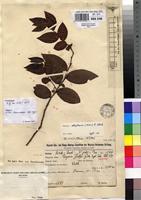
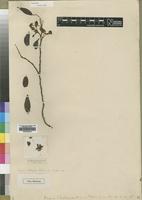
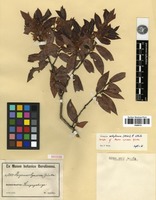
Diospyros whyteana (Hiern) F.White
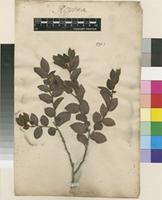
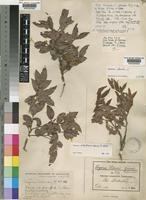
Isotype of Royena goetzei Gurke [family EBENACEAE]
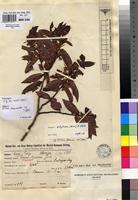
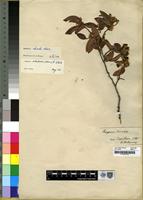
Isotype of Royena nyassae Gurke [family EBENACEAE]
Diospyros whyteana (Hiern) F.White
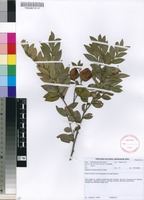
Diospyros whyteana (Hiern) F.White [family EBENACEAE]
Diospyros whyteana (Hiern) F.White
Filed as Diospyros whyteana (Hiern) F.White [family EBENACEAE]
Diospyros whyteana (Hiern) F.White [family EBENACEAE]
Diospyros whyteana (Hiern) F.White
Lectotype of Royena lucida L. [family EBENACEAE]
Diospyros whyteana (Hiern) F.White
Filed as Diospyros whyteana (Hiern) F. White [family EBENACEAE]
Type of Diospyros whyteana (Hiern) F.White [family EBENACEAE]
Diospyros whyteana (Hiern) F.White
Isotype of Royena nyassae Gürke [family EBENACEAE]
Diospyros whyteana (Hiern) F.White
Previous
Next

Name

Identification
Diospyros whyteana (Hiern) F.White [family EBENACEAE ]
Related name
  • Diospyros whyteana

Flora

Entry for Diospyros whyteana [family EBENACEAE]
Herbarium
South African National Biodiversity Institute, Compton Herbarium, Cape Town (SAM)
Collection
Flora of Southern Africa
Resource Type
Reference Sources
Entry From
Flora of South Africa, (2003) Author: Dr J.P. Roux
Names
Diospyros whyteana [family EBENACEAE]
Common names
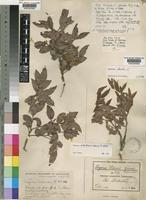
Rovena whyteana Hiern in Trans. Linn. Soc. Bot. 2, 4: 25 (1895). R. lucida L., Sp. PI. ed. 1: 397 (1753) non Diospyros lucida Loud. (1841); Jacq., Fragrn. t. 1, f. 6: 3 (1800-1809); A.DC. in DC, Prodr. 8: 24(1844); Hiern. in F.C. 4, 1: 447 (1906); Marloth, Fl. S. Afr. 3: 40(1932). Type: Linn. Herb, specimen No. 570 .1 (LINN, holo.!). R. wilmsii Guerke in Bot. Jahrb. 26: 60 (1898). Type; Transvaal, Pretoria, Wilms 923 (B, holo.t; K!) R.goetzeiGuerke, I.e. 30: 372(1901). Type: Tanganyika Goetze 1344 (B, holo.t; BM!). R. nyassae Guerke, I.e. 30: 373 (1901). Type: Kingagebirge, Goetzi 1203 (B, holo.t; BM!).
Information
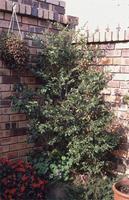
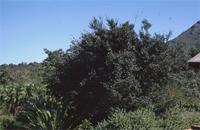
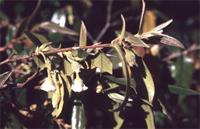
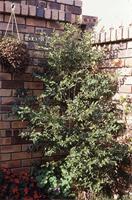
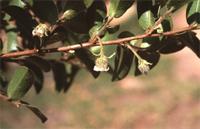
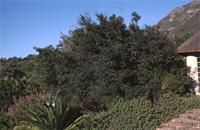
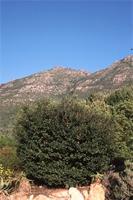
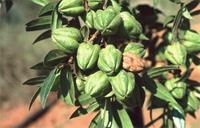
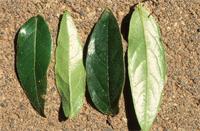
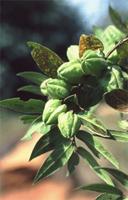
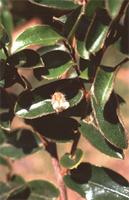
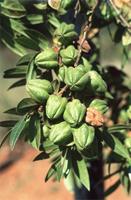
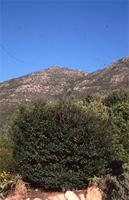
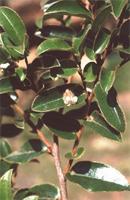
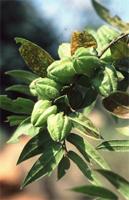
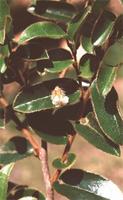
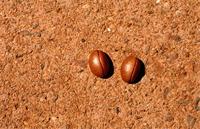
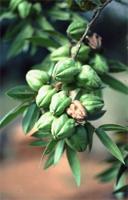
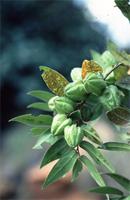
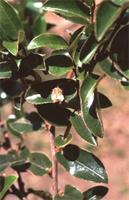
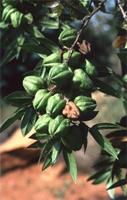
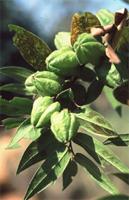
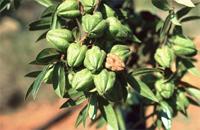
An erect dense evergreen shrub 0-5-2 m high or tree up to 6 m high; trunks up to 30 cm thick with a dark-coloured often almost black bark; branches somewhat spreading; young twigs densely tawny pubescent. Leaves borne in two ranks, alternate, shortly petioled; leaf-blade narrowly elliptic to ovate-oblong, deep green and glossy, glabrous or hairy above, pale dull and hairy below (drying a rich reddish-brown); nerves somewhat prominent to inconspicuous, midrib prominent below, somewhat impressed above; margin entire, fimbriate. Flowers dioecious, female or functionally male, borne in small pseudo-racemes which develop into leafy twigs, pendulous. 5-10 mm long, pentamerous, urceolate with spreading eventually reflexed corolla, creamy white; peduncle 0-5-2 cm long, densely hairy with ferruginous one-celled hairs mixed with many-celled short gland-tipped hairs which also occur on the calyx and bracts; bracts 2, separated by an internode, lanceolate to ovate-cordate, subsessile, often glabrous above and hairy below with the margins fimbriate, early deciduous. Calyx urceolate, densely hairy, shortly 5-lobed at apex of tube. Corolla deeply 5-lobed, campanulate, with lobes reflexed, thinly hairy outside and on inner surface at apex of lobes; lobes about equal to the tube. Ovary conical, hairy with a mixture of one-celled hairs and short glandular many-celled hairs, 4-6-celled with one ovule in each cell. Fruit subglobose, up to 2 cm in diam., glabrescent, red, completely enclosed in the inflated bladder-shaped calyx. Seeds 2-4 per fruit, pale brown, 8 mm long, circumvented by a thin line. Fig. 10: 4.
Habitat
This species is fairly variable as may be expected when its wide distribution and the different habitats in which it is found are considered. The plants from the winter rainfall area tend to have large flowers and rather wide leaves, which become progressively smaller and narrower towards the north. The narrow-leaved and small-flowered form occurring on the Magaliesberg in the Transvaal was described as a distinct species but completely grades into the Cape as well as into the tropical forms, for which two more names are available. 1 have not considered that the separation of subspecies or varieties is justifiable, since there does not seem to be much constancy about the differences between the plants from the different areas. Related to D. scabrida and often difficult to distinguish in the vegetative state, but easily recognised by the urceolate calyx which becomes bladder-shaped in fruit.
Use
14. Diospyros whyteana (Hiern) F, White in Bothalia 7: 458 (1961). Type: Nyasa-land, Milanje, Whyte s.n. (BM, holo.!).
Range
A very widespread species occurring from the eastern part of the Cape into the Transvaal and the eastern part of tropical Africa to Ethiopia. Mainly found on mountain slopes and ridges, often in rocky situations.

Related Materials

  • Terms and Conditions
  • Privacy Policy
  • Cookie Policy
  • Cookie Settings
  • Accessibility
  • Help
  • Contact Us
  • Facebook
  • Twitter
ITHAKA

JSTOR is part of ITHAKA, a not-for-profit organization helping the academic community use digital technologies to preserve the scholarly record and to advance research and teaching in sustainable ways.

©2000-2026 ITHAKA. All Rights Reserved. JSTOR®, the JSTOR logo, JPASS®, Aluka®, and ITHAKA® are registered trademarks of ITHAKA.

╳