JSTOR Global Plants Home
  • Home
  • Browse
  • About
  • Access
  • Account
    • Saved Items
    • Profile
  • Log in

Global Plants

Skip to Main Content
  • JSTOR Global Plants Home
  • Global Plants

    • Browse
    • About
    • Access
    • Account
      • Saved Items
      • Profile
Log in
  • Browse
  • About
  • Access
  • Account
    • Saved Items
    • Profile
Advanced Search

Compilation
Diospyros squarrosa

5 Images see all

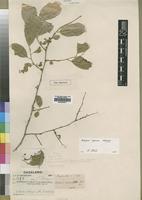
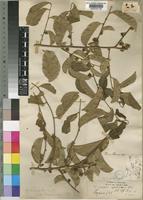
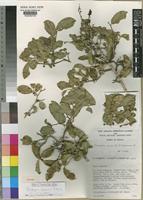
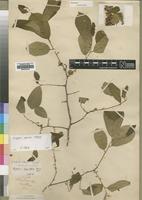
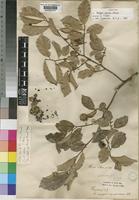
Type of Diospyros madandana Hiern [family EBENACEAE]
Diospyros squarrosa Klotzsch [family EBENACEAE]
Isotype of Diospyros kanurii F.White [family EBENACEAE]
Type of Diospyros teneriflora Hiern [family EBENACEAE]
Neotype of Diospyros squarrosa Klotzsch [family EBENACEAE]
Previous
Next

Name

Identification
Diospyros teneriflora Hiern [family EBENACEAE ] Verified by Hiern,W.P., Diospyros squarrosa Klotzsch [family EBENACEAE ] (stored under name); Verified by White,F.,
Related name
  • Diospyros kanurii
  • Diospyros bicolor
  • Diospyros squarrosa
  • Diospyros madandana
  • Diospyros teneriflora

Flora

Entry for DIOSPYROS squarrosa Klotzsch [family EBENACEAE]
Herbarium
Royal Botanic Gardens, Kew (K)
Collection
Flora Somalia
Resource Type
Reference Sources
Entry From
Flora Somalia, Vol 3, (2006) Author: by I. Friis [updated by M. Thulin 2008]
Names
DIOSPYROS squarrosa Klotzsch [family EBENACEAE], (1861).
Information
Small deciduous tree or shrub 2–10 m tall; bark grey or brown, smooth or with close and shallow longitudinal fissures; young shoots pale ferruginous pubescent. Leaves: petiole 1.4–5 mm long, glabrescent; blade often red when young, drying pale green or brown with pale yellow nerves above and beneath, obovate, 5.5–12 x 3–6.5 cm, cuneate to truncate at the base, shortly cuspidate at the apex, somewhat leathery, lower surface densely setulose on the midrib, sparsely so elsewhere, very young leaves usually velvety on both surfaces and mature leaves sometimes entirely glabrous; lateral nerves in 6–9 pairs, prominent beneath, tertiary nerves ± ladder-like, with the venation closely reticulate, prominent above and more so beneath. Male flowers (1–)3(–7), in lax cymes borne towards the base of the current year's shoot in the axils of fallen reduced leaves and the first-formed foliage leaves; peduncle c. 6 mm long; pedicels 1–3 mm long, fulvous-tomentellous; calyx c. 2.5 mm long, strigulose-tomentellous outside, glabrous inside, 4-lobed ± to the middle, the lobes rounded; corolla subrotate, c. 7 mm long, strigulose on midpetaline lines but otherwise glabrous; corolla-tube 1.5 mm long; corolla-lobes 4, ovate-ligulate; stamens 24–28, 4–5 mm long; filaments 1–1.5 mm long, glabrous, inserted singly or in pairs on the corolla-tube; anthers linear-lanceolate, apiculate, glabrous or strigulose; rudimentary ovary 1 x 1 mm, sparsely setulose. Female flowers solitary, borne as in male; pedicel c. 4 mm. long; calyx c. 6 mm long, more deeply lobed than in male, the lobes markedly imbricate; corolla greenish, 7–8.5 mm long; staminodes 4, inserted on the corolla-tube and alternating with the lobes, c. 2 mm long, glabrous save for a single apical seta; ovary subglobose, c. 2.5 x 2.5 mm, 8–10-celled; styles 4(–5), as long as the ovary, ascending, expanding towards apex, fleshy and stigmatic on inner surface. Fruit dark yellow, subglobose, c. 2 cm in diam., glabrous, with calyx slightly enlarging, c. 1.2 cm long, the lobes c. 8 x 6 mm, reflexed, with conspicuous, flabellately arranged longitudinal veins. Seeds 8–10 or sometimes fewer by abortion, often only 1 developing, dark brown, segmentoid, c. 1.2 x 0.6 x 0.5 cm, with wrinkled surface.
Range
S1, 3 Kenya, Tanzania and southwards to Zimbabwe.
Altitude range
30–300 m.
Distribution
SOMALIA Thulin & Bashir Mohamed 6767; Friis & al. 4860, 4894.
Notes
Thulin & Warfa 4504 from S3 was associated with the Kenyan species D. kanurii F. White by White in Bull. Jard. Bot. Nat. Belg. 58: 364 (1988) and in Fl. Trop. E. Afr. (1996), but the collection seems rather to represent a form of D. squarrosa.

Related Materials

  • Terms and Conditions
  • Privacy Policy
  • Cookie Policy
  • Cookie Settings
  • Accessibility
  • Help
  • Contact Us
  • Facebook
  • Twitter
ITHAKA

JSTOR is part of ITHAKA, a not-for-profit organization helping the academic community use digital technologies to preserve the scholarly record and to advance research and teaching in sustainable ways.

©2000-2026 ITHAKA. All Rights Reserved. JSTOR®, the JSTOR logo, JPASS®, Aluka®, and ITHAKA® are registered trademarks of ITHAKA.

╳