JSTOR Global Plants Home
  • Home
  • Browse
  • About
  • Access
  • Account
    • Saved Items
    • Profile
  • Log in

Global Plants

Skip to Main Content
  • JSTOR Global Plants Home
  • Global Plants

    • Browse
    • About
    • Access
    • Account
      • Saved Items
      • Profile
Log in
  • Browse
  • About
  • Access
  • Account
    • Saved Items
    • Profile
Advanced Search

Compilation
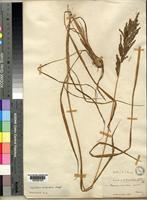
Digitaria uniglumis

13 Images see all

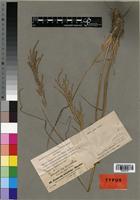
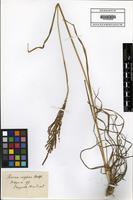
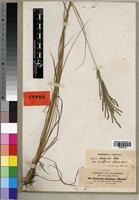
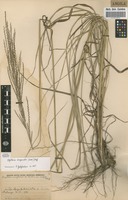
Syntype of Panicum uniglume A. Rich. [family GRAMINEAE]
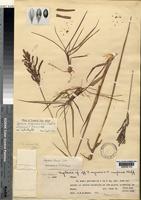
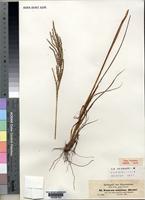
Digitaria diagonalis (Nees) Stapf [family POACEAE]
Filed as Digitaria diagonalis (Nees) Stapf [family POACEAE]
Syntype of Panicum uniglume A. Rich. [family GRAMINEAE]
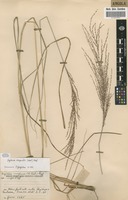
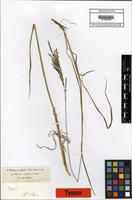
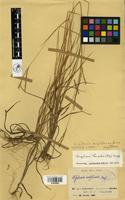
Isotype of Digitaria uniglumis (Hochst. ex A.Rich) Stapf [family POACEAE]
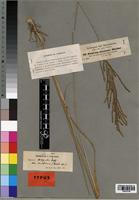
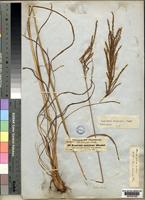
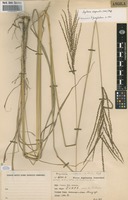
Syntype of Panicum uniglume A. Rich. [family GRAMINEAE]
Filed as Digitaria diagonalis (Nees) Stapf [family POACEAE]
Filed as Digitaria argillacea A. Camus [family GRAMINEAE]
Isosyntype of Panicum uniglume Hochst. [family POACEAE]
Filed as Digitaria diagonalis (Nees) Stapf [family POACEAE]
Isosyntype of Panicum uniglume Hochst. [family POACEAE]
Isotype of Digitaria uniglumis (Hochst. ex A.Rich) Stapf [family POACEAE]
Digitaria diagonalis (Nees) Stapf [family POACEAE]
Previous
Next

Name

Identification
Isotype of Digitaria uniglumis (Hochst. ex A.Rich) Stapf [family POACEAE ] (stored under name); Verified by Conert, H. J., Isotype of Panicum uniglume Hochst. ex A.Rich. [family POACEAE ] Verified by Not on sheet,
Related name
  • Digitaria grantii
  • Digitaria argillacea
  • Digitaria diagonalis
  • Digitaria lecardii
  • Digitaria myurus
  • Digitaria uniglumis
  • Panicum uniglume

Flora

Entry for DIGITARIA uniglumis Stapf [family ]
Herbarium
Royal Botanic Gardens, Kew (K)
Collection
Flora of Tropical Africa
Resource Type
Reference Sources
Entry From
Flora of Tropical Africa, Vol 9, page 1, (1917) Author: (By O. STAPF.)
Names
DIGITARIA uniglumis Stapf [family ]
Panicum uniglume A. Rich. [family POACEAE], Tent. Fl. Abyss. ii. 370, and in Walp. Ann. iii. 717; Schweinf. Beitr. Fl. Aethiop. 301.
Panicum diagonale Hack. var. uniglume [family POACEAE], in Engl. Hochgebirgsfl. Trop. Afr. 117; Durand & Schinz, Consp. Fl. Afr. v. 747 (partly); Schweinf. in Bull. Herb. Boiss. ii. App. ii. 18; Chiov. in Ann. Istit. Bot. Roma, viii. 294.
Information
Perennial, compactly cæspitose, with intravaginal innovations and a short præmorse rhizome. Culms erect, rather firm, coated at the base with the fibrous remains of the old sheaths, simple, 2–4 ft. high, glabrous or sparingly hairy below the inflorescence, 1–3-noded, the uppermost internode by far the longest. Leaves mostly crowded near the base; lowest sheaths rather firm, strongly striate, appressedly hairy to densely silky-tomentose at the base, persistent, at length breaking up into fibres, the following usually glabrous except at the nodes which are either densely bearded or more rarely finely pubescent or very rarely quite glabrous, uppermost very long, rather loose; ligules short or sometimes up to 1 1/2 lin. long, scarious, obtuse or truncate, glabrous; blades linear, tapering to a fine point, up to 9 in. (rarely more) by 1 1/2–2 1/2 lin., flat or with involute margins, firm, glabrous, flexuous, green, slightly rough above and on the margins, midrib slender, primary lateral nerves 3–4 on each side, prominent above. Racemes usually very numerous, gathered into an oblong-panicle 5–7 (rarely 9) in. long, simple or the lowest compound, solitary or fascicled on a scabrid or hirsute angular common axis of variable length (mostly exceeding the lower racemes), sessile or the lower bare at the base with traces of arrested spikelets, slender, straight or flexuous, erect or more or less spreading, 2–5 in. long, dense or more or less loose; rhachis very slender, sometimes wavy, triquetrous, 1/7– 1/5 lin. wide, lateral angles scabrid or setosely ciliate, internodes up to 1 1/2 lin. long; pedicels in fascicles of 3–6, unequal, the longest up to 1 1/2 lin. long, angular, scabrid and more or less copiously setose upwards, the uppermost setæ usually equalling the spikelets. Spikelets oblong to ovate-oblong, subacute, 7/10– 8/10 (rarely 9/10) lin. long, greyish- or brownish-green on the flat, chestnut-to black-brown on the convex side, quite glabrous. Lower glume suppressed, very rarely represented by a minute hyaline truncate scale; upper a tightly appressed delicate hyaline scale, rotundate-ovate, very obtuse, nerveless or faintly 1-nerved, 2/10– 3/10 lin. long. Lower floret oblong, as long as the spikelet or slightly shorter, tightly appressed to the face of the upper floret, hyaline, 3-nerved, quite glabrous; valvule a very delicate narrow scale up to 1/6 lin. long; lodicules very minute. Upper floret corresponding in outline and size to the spikelet, chestnut-brown or at length almost black, somewhat shining, chartaceous, very tough; valve with distant margins. Anthers up to 1/2 lin. long.
Distribution
Nyasaland Mozamb. Dist. Zomba, 2900 ft., Manning, 98! 4000–6000 ft., Whyte ! Cholo Mountain, Adamson, 196!Rhodesia Mozamb. Dist. Salisbury, Mundy ! Allen, 698! Bulawayo, Appleton, 4!Eritrea Nile Land Amasen; grassy northern slopes of Mount Bizen, 5900 ft., Schweinfurth, 2017; Mount Koubé, east of Mount Bizen, 6050 ft., Schweinfurth, 1536! Mount Savour, 5900 ft., Pappi, 5402! Matcallat, Pappi, 4783. Ocule Cusai; in bush on Mount Metatée, 8200 ft., Pappi, 1585; Halai, 8500 ft., Pappi, 1670.Abyssinia Nile Land Tigre; among rocks on the upper part of Mount Scholoda, Schimper, 97! Amba Harres, 8200 ft., Schimper, 991! Samen, “montes Cojetani,” Schimper, 1820! between Maigoigoi and Debra Sina, Quartin-Dillon & Petit ! and without precise locality, Schimper, 1063! Quartin-Dillon & Petit, 200!Uganda Nile Land Ruwenzori; Kasamaga, 5300 ft., Scott Elliot, 7596! Entebbe, Fyffe, 184! Kipayo, 4000 ft., Dummer, 2450!British East Africa Nile Land without precise locality, Powell, 13!

Related Materials

  • Terms and Conditions
  • Privacy Policy
  • Cookie Policy
  • Cookie Settings
  • Accessibility
  • Help
  • Contact Us
  • Facebook
  • Twitter
ITHAKA

JSTOR is part of ITHAKA, a not-for-profit organization helping the academic community use digital technologies to preserve the scholarly record and to advance research and teaching in sustainable ways.

©2000-2026 ITHAKA. All Rights Reserved. JSTOR®, the JSTOR logo, JPASS®, Aluka®, and ITHAKA® are registered trademarks of ITHAKA.

╳