JSTOR Global Plants Home
  • Home
  • Browse
  • About
  • Access
  • Account
    • Saved Items
    • Profile
  • Log in

Global Plants

Skip to Main Content
  • JSTOR Global Plants Home
  • Global Plants

    • Browse
    • About
    • Access
    • Account
      • Saved Items
      • Profile
Log in
  • Browse
  • About
  • Access
  • Account
    • Saved Items
    • Profile
Advanced Search

Compilation
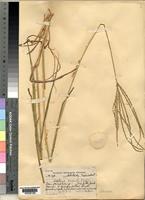
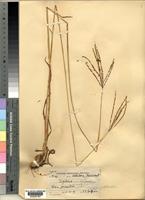
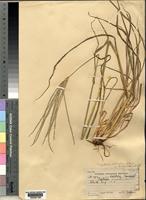
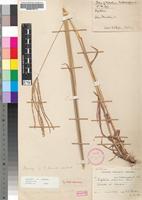
Digitaria setivalva

11 Images see all

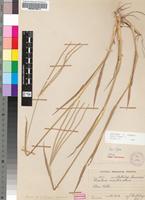
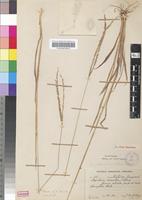
Digitaria milanjiana (Rendle) Stapf [family POACEAE]
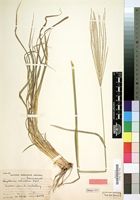
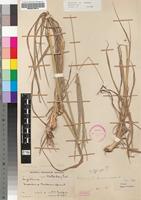
Syntype of Digitaria setivalva Stent [family POACEAE]
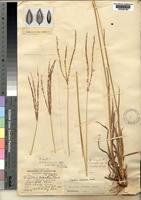
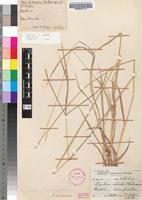
Type of Digitaria setivalva Stent [family GRAMINEAE]
Digitaria milanjiana (Rendle) Stapf [family POACEAE]
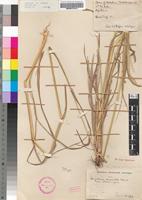
Syntype of Digitaria setivalva Stent [family POACEAE]
Previous
Next

Name

Identification
Digitaria setivalva Stent [family GRAMINEAE ] (stored under name); Verified by Not on sheet.,
Related name
  • Digitaria eriantha
  • Digitaria milanjiana
  • Digitaria setivalva

Flora

Entry for DIGITARIA milanjiana (Rendle) Stapf [family ]
Herbarium
Royal Botanic Gardens, Kew (K)
Collection
Flora of Tropical East Africa
Resource Type
Reference Sources
Entry From
Flora of Tropical East Africa, page 451, (1982) Author: W. D. CLAYTON and S.A. RENVOIZE
Names
DIGITARIA milanjiana (Rendle) Stapf [family ], in F.T.A. 9: 430 (1919); Fl. Agrost. Congo Belge 2: 20 (1934); Imp. Grassl. Pl. Kenya: 54 (1951); R.K.G.: 48 (1958); Ann. list Nyasaland grasses: 35 (1958); I.G.U.: 26 (1960); G.T.: 77 (1965). Type: Malawi, Mulanje [Mlanje], Whyte (BM, holo.!)
Panicum milanjianum Rendle [family POACEAE], in Trans. Linn. Soc, Bot., ser. 2, 4: 56 (1894)
Panicum sanguinale Hack. var. scabriglume [family POACEAE], in Denkschr. Akad. Wiss., Wien, Math.-Nat. Kl. 78: 399 (1905). Type: Mozambique, Chiramba, Menyhart (whereabouts uncertain, not W, Z)
Digitaria swynnertonii Rendle [family ], in J.L.S. 40: 227 (1911). Type: Zimbabwe, Zinyumbo Hills, Swynnerton (BM, holo.!)
Digitaria gallaensis Chiov. [family ], Result. Sci. Miss. Stef.-Paoli, Coll. Bot. 1: 226 (1916). Type: Ethiopia, Galla Arussi, Negri 1550 (FI, holo.!)
Digitaria fusca Chiov. [family ], in Nuov. Giorn. Bot. Ital., n.s.,26: 62(1919); Fl. Agrost. Congo Belge 2: 19 (1934). Type: Zaire, Shaba, Ditunguro, Bovone 8 (TO, holo.)
Digitaria endlichii Mez [family ], in E.J. 57: 194 (1921). Type: Tanzania, Kilimanjaro, Endlicher 751 (B, holo., K, photo.!)
Digitaria kilimandscharica Mez [family ], in E.J. 57: 194 (1921). Type: Tanzania, Moshi, Merker 338 (B, holo.)
Digitaria setivalva Stent [family ], in Bothalia 1: 268 (1924); Ann. list Nyasaland grasses: 36 (1958); G.T.: 76 (1965). Types: South Africa, Springbok flats, Burtt-Davy 1122 (K, isosyn.!) and several other syntypes
Digitaria mombasana C.E. Hubbard [family ], in K.B. 1926: 247 (1926); Imp. Grassl. Pl. Kenya: 56 (1951); R.K.G.: 48 (1958); G.T.: 77 (1965). Type: Kenya, Mombasa, Grant in Battiscombe 881 (K, holo.!)
Digitaria bulbosa Peter [family ], F.D.O.-A. 1, Anh. 57, fig. 18/4 (1930). Type: Tanzania, N. Pare, Peter 41647 (B, holo.†)
Digitaria endlichii Henr. subsp. meziana [family ], in Blumea 1: 93 (1934). Type: Tanzania, Kilimanjaro, Endlicher 751 (L, holo.)
Digitaria boivinii Henr. [family ], Monogr. Digitaria: 79 (1950); G.T.: 76 (1965). Type: Zanzibar, Boivin (L, holo.!)
Digitaria polevansii Henr. subsp. peterana [family ], Monogr. Digitaria: 101 (1950);G.T.: 76(1965). Based on D. bulbosa Peter
Digitaria exasperata Henr. [family ], Monogr. Digitaria: 236 (1950). Type: Zanzibar, Reichenbach 128871 (W, holo.!)
Digitaria gracilenta Henr. [family ], Monogr. Digitaria: 296 (1950). Type: Kenya, Mombasa District, Kilindini, Hitchcock 25176 (L, holo., K, iso.!)
Digitaria milanjiana Henr. var. abscondita [family ], Monogr. Digitaria: 458 (1950). Type: Zimbabwe, Bulawayo, Gardner 2 (W, holo.!)
Digitaria milanjiana Henr. subsp. eylesiana [family ], Monogr. Digitaria: 459 (1950). Type: Kenya, Machakos District, Kibwezi, Scheffler 152 (K, holo.!)
Digitaria stapfii Henr. [family ], Monogr. Digitaria: 705 (1950). Type: Tanzania, Tanga, Sacleux 1668 (P, iso.!)
Information
Loosely tufted rhizomatous perennial; basal sheaths glabrous or pubescent, rarely tomentose or bulbously swollen; culms 50–250 cm. high, erect or geniculately ascending, sometimes rooting at the lower nodes and occasionally forming stolons; nodes glabrous (with rare exceptions, see notes). Leaf-blades 15–30 cm. long, 3–13 mm. wide. Inflorescence of 2–18 digitate or subdigitate (axis up to 6 cm.) racemes; racemes 5–25 cm. long, slender, stiff, brownish or purplish, the spikelets paired on a triquetrous winged rhachis, this occasionally bearing a few long stiff hairs. Spikelets lanceolate, (1.7–)2.5–3(–3.5) mm. long; lower glume distinct, ovate or triangular, 0.2–0.5 mm. long; upper glume 1/3–2/3 as long as the spikelet, 3-nerved, ciliate on the margins; lower lemma as long as the spikelet, 7-nerved (evenly spaced or with the central interspaces up to 1/2 the width of the spikelet), pubescent to glabrescent with shortly ciliate margins, ± scabrid on the nerves and often pectinate with stiff spreading or appressed yellowish or brown glassy bristles; fruit ellipsoid, grey to greyish or pallid brown, as long as or shorter than the lower lemma.
Range
DISTR. U1–4; K1–7; T1–8; Z; P Ethiopia, Somalia, Zaire (Shaba), Zambia and southward to South Africa; introduced as a fodder grass to other tropical countries
Altitude range
0–2000 m.
Distribution
KENYA Kwale District Buda Mafisini Forest, 16 Aug. 1956, Drummond & Hemsley 3825! & Shimba Hills, 14 Mar. 1968, Magogo & Glover 296!KENYA Tana River District Galole, Nov. 1965, Makin 298!TANZANIA Tanga, 26 Apr. 1968, Renvoize & Abdallah 1787!TANZANIA Mpanda District Sonta, 3 Nov. 1963, Vesey-FitzGerald 4217!TANZANIA Iringa District Magangwe, 10 Apr. 1970, Greenway & Kanuri 14315!TANZANIA Zanzibar I., E. of Chaani, 1 Dec. 1930, Greenway 2616!UGANDA Karamoja District Moruangaberu [Emoruangaberru], 13 July 1956, Dyson-Hudson 23! & Aug. 1960, J. Wilson 1026! & Nabugut, Harker 468!
Notes
A variable species, being usually loosely tufted and rhizomatous, but with forms ranging from geniculate or stoloniferous to erect and caespitose. A number of indistinct variants may be recognized, the principal being:1. D. milanjiana. Spikelets sparsely hairy with scabrid nerves; sheaths mostly glabrous; nodes glabrous. The scabrid nerves distinguish it from other East African species, but this is not an easy character to see; it is often easier to recognize the long (8–25 cm.) stiff subdigitate racemes of inconspicuously hairy spikelets.2. D. setivalva. Nerves of the upper lemma bearing stiff glassy bristles. In all other respects the range of variation, geographical distribution and frequency is matched by D. milanjiana, and the distinction seems to be rather artificial. It is often difficult to see the scabridity of the nerves among the bristles, and it might be confused with D. macroblephara which sometimes has a few hairs; the villous spikelets and bushy habit of the latter help to distinguish it.3. D. mombasana. Leaf sheaths villous; nodes glabrous or pilose; spikelets with or without bristles. This minor variant is commonest in coastal districts, but there are all degrees of intermediate hairiness and it is difficult to define its limits precisely.4. D. endlichii. Racemes short (5–11 cm.); plants small (up to 60 cm.); nodes glabrous or pilose; spikelets nearly always bristly. Occurs in scattered localities throughout East Africa and Zambia. An ill-defined entity representing a downward extension of raceme length and a tendency to pilose nodes, which is not matched by plants with bristleless spikelets; it intergrades so completely with D. setivalva that it is impractical to attempt its segregation.The scabrid nerves separate D. milanjiana from its allies in South Africa. The distinction is perhaps arbitrary, but at least it serves to isolate the strictly tropical element. The southern species are intergrading and imperfectly defined, the commonest being D. eriantha Steud. (caespitose) and D. pentzii Stent (stoloniferous). A particularly rampant form (apparently the progeny of 2 or 3 plants selected from the wild) of the latter with almost glabrous spikelets has been extensively grown for fodder under the name of D. decumbens Stent or Pangola grass. D. swazilandensis Stent is another member of the complex. It is a mat-forming perennial with slender creeping stolons; racemes 2–5, each 3–9 cm. long; spikelets 1.7–2.5 cm. long, indistinctly pubescent; upper glume 1/3–2/3 as long as the spikelet. A native of South Africa, it intergrades with the more robust D. pentzii; and also with D. seriata Stapf (hairier spikelets, the upper glume 1/2–2/3 as long) from Zimbabwe and its neighbours. It has been introduced to East Africa as a lawn grass. It is difficult to distinguish from D. didactyla Willd., a more delicate trailing perennial with 2–3 racemes up to 6 cm. long and the upper glume 1/2–3/4 as long as the spikelet. D. didactyla is a native of the Mascarene Islands, and has been introduced to several tropical countries as a lawn grass under the name Blue Couch.

Related Materials

  • Terms and Conditions
  • Privacy Policy
  • Cookie Policy
  • Cookie Settings
  • Accessibility
  • Help
  • Contact Us
  • Facebook
  • Twitter
ITHAKA

JSTOR is part of ITHAKA, a not-for-profit organization helping the academic community use digital technologies to preserve the scholarly record and to advance research and teaching in sustainable ways.

©2000-2026 ITHAKA. All Rights Reserved. JSTOR®, the JSTOR logo, JPASS®, Aluka®, and ITHAKA® are registered trademarks of ITHAKA.

╳