JSTOR Global Plants Home
  • Home
  • Browse
  • About
  • Access
  • Account
    • Saved Items
    • Profile
  • Log in

Global Plants

Skip to Main Content
  • JSTOR Global Plants Home
  • Global Plants

    • Browse
    • About
    • Access
    • Account
      • Saved Items
      • Profile
Log in
  • Browse
  • About
  • Access
  • Account
    • Saved Items
    • Profile
Advanced Search

Compilation
Digitaria seriata

14 Images see all

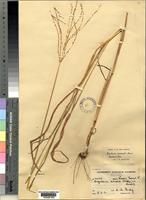
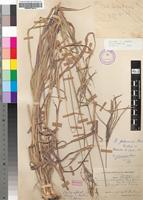
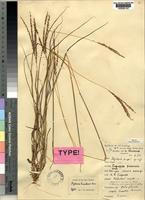
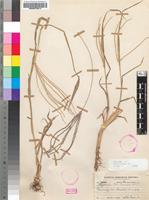
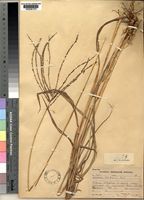
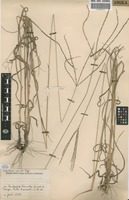
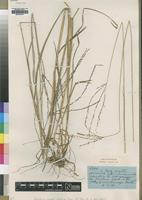
Isotype of Digitaria nemoralis Henrard [family POACEAE]
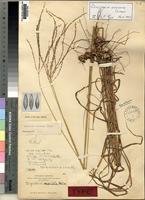
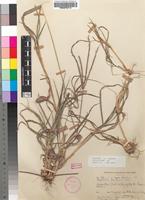
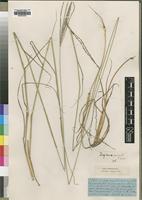
Syntype of Digitaria seriata Stapf [family POACEAE]
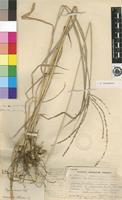
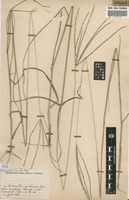
Syntype of Digitaria polevansii Stent [family POACEAE]
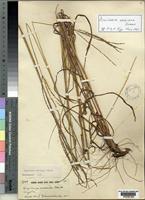
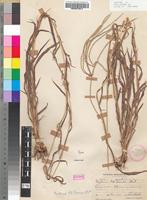
Syntype of Digitaria seriata Stapf [family POACEAE]
Syntype of Digitaria polevansii Stent [family POACEAE]
Digitaria milanjiana (Rendle) Stapf [family POACEAE]
Filed as Digitaria seriata Stapf [family POACEAE]
Syntype of Digitaria polevansii Stent [family POACEAE]
Holotype of Digitaria lunularis Henrard [family POACEAE]
Filed as Digitaria seriata Stapf [family POACEAE]
Syntype of Digitaria polevansii Stent [family POACEAE]
Syntype of Digitaria seriata Stapf [family POACEAE]
Previous
Next

Name

Identification
Digitaria seriata Stapf [family POACEAE ] (stored under name);
Related name
  • Digitaria pole-evansii
  • Digitaria maitlandii
  • Digitaria seriata
  • Digitaria eriantha
  • Digitaria lunularis
  • Digitaria polevansii
  • Digitaria milanjiana
  • Digitaria nemoralis

Flora

Entry for DIGITARIA seriata Stapf [family ]
Herbarium
Royal Botanic Gardens, Kew (K)
Collection
Flora of Tropical Africa
Resource Type
Reference Sources
Entry From
Flora of Tropical Africa, Vol 9, page 1, (1917) Author: (By O. STAPF.)
Names
DIGITARIA seriata Stapf [family ]
Information
Perennial with a creeping branched rhizome emitting serially arranged culms in close or loose succession from extravaginal innovations, covered by strigillose-tomentose cataphylls. Culms erect, rather slender, up to over 4 ft. high, glabrous, 4–6-noded, simple, rarely with a branch from near the base. Leaf-blades rather tight, terete, striate, the upper much shorter than the internodes, glabrous, smooth, moderately firm, the basal breaking down with the dying culms, not forming persistent coats; ligules scarious, rounded, usually very short, rarely up to 1 lin. long, glabrous; blades linear, tapering to a fine point, about 6 in. by 1 1/2 to almost 2 lin., flat with straight or sometimes crisp subscaberulous margins, flexuous, finely pubescent or quite glabrous and smooth, nerves numerous, very fine and close, the primary (3 or 4 on each side) hardly standing out from the others, midrib very slender. Racemes 3–6, sessile or subsessile, digitate or subdigitate on a slender angular common rhachis, up to 3/4 in. long, suberect or spreading, 5–6 in. long, slender, straight or flexuous, rather loose, brownish- or purplish-green; rhachis very slender, 1/5– 1/4 lin. wide, trigonous, angles marginate, scaberulous; pedicels 2-nate, finely filiform, more or less angular, scaberulous, unequal, the longer to over 1 lin. long, flexuous. Spikelets loosely appressed, the superposed distant by their own length, never imbricate, lanceolate-oblong, more or less acute, up to 1 1/2 lin. long, apparently glabrous or obscurely silky on the sides. Lower glume a minute membranous ovate scale, up to 1/10 lin. long; upper lanceolate, acute, about 1 lin. long, very faintly 3-nerved with 4 lines of very fine more or less appressed silky hairs. Lower floret: valve lanceolate-oblong, more or less acute, 7-nerved, middle and inner paired side-nerves prominent but fine, the outermost often faint, with lines of short appressed hairs in the narrow spaces between the inner 2 side-nerves (of each half) and of long ones (up to 3/8 lin.) towards the margins, the hairs very fine, wavy, obtuse; palea and lodicules very minute, 1/10 lin. long. Upper floret thinly chartaceous, oblong, acute, pale brown, 1 1/4 lin. by 2/5 lin. Anthers 1/2 lin. long.
Distribution
Angola Lower Guinea country of the Ganguellas and Ambuellas, Gossweiler, 3756! in Mumua woods in the Siengo-Kuito Valley, Gossweiler, 3761!

Related Materials

  • Terms and Conditions
  • Privacy Policy
  • Cookie Policy
  • Cookie Settings
  • Accessibility
  • Help
  • Contact Us
  • Facebook
  • Twitter
ITHAKA

JSTOR is part of ITHAKA, a not-for-profit organization helping the academic community use digital technologies to preserve the scholarly record and to advance research and teaching in sustainable ways.

©2000-2026 ITHAKA. All Rights Reserved. JSTOR®, the JSTOR logo, JPASS®, Aluka®, and ITHAKA® are registered trademarks of ITHAKA.

╳