JSTOR Global Plants Home
  • Home
  • Browse
  • About
  • Access
  • Account
    • Saved Items
    • Profile
  • Log in

Global Plants

Skip to Main Content
  • JSTOR Global Plants Home
  • Global Plants

    • Browse
    • About
    • Access
    • Account
      • Saved Items
      • Profile
Log in
  • Browse
  • About
  • Access
  • Account
    • Saved Items
    • Profile
Advanced Search

Compilation
Digitaria polybotrya

5 Images see all

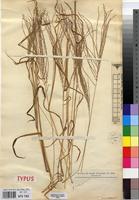
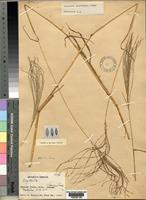
Type of Digitaria polybotrya Stapf [family POACEAE]
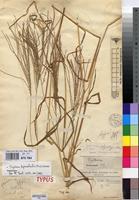
Type of Panicum nigritanum Hack. ex T.Durand & Schinz [family GRAMINEAE]
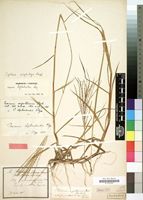
Digitaria polybotrya Stapf [family POACEAE]
Type of Digitaria polybotrya Stapf [family POACEAE]
Syntype of Digitaria polybotrya Stapf [family POACEAE]
Previous
Next

Name

Identification
Panicum nigritanum Hack. ex T.Durand & Schinz [family GRAMINEAE ] Verified by Not on sheet., Digitaria polybotrya Stapf [family GRAMINEAE ] (stored under name); Verified by Not on sheet.,
Related name
  • Panicum nigritanum
  • Panicum stoloniferissima
  • Digitaria leptorhachis
  • Digitaria polybotrya

Flora

Entry for DIGITARIA polybotrya Stapf [family ]
Herbarium
Royal Botanic Gardens, Kew (K)
Collection
Flora of Tropical Africa
Resource Type
Reference Sources
Entry From
Flora of Tropical Africa, Vol 9, page 1, (1917) Author: (By O. STAPF.)
Names
DIGITARIA polybotrya Stapf [family ]
Panicum nigritianum Hack. var. [family POACEAE], in Oest. Bot. Zeitschr. 1901, 293.
Information
Annual, up to 3 ft. high. Culms erect or subgeniculate, somewhat slender, 3-noded, smooth, collapsing and deeply sulcate when dry, simple or sparingly branched, uppermost internode long-exserted, the others soon bared by the sheaths slipping off. Leaf-sheaths rather loose, thin, finely striate, subherbaceous, finely hirsute or all or at least the uppermost glabrous except at the dark broad (2 lin.) hispidly bearded nodes; ligules membranous, truncate, crenulate, up to 2 lin. long; blades linear, long-tapering to a fine point, 3–4 in. by 1 1/2–2 lin., flat, flaccid, green, glabrous or sparingly hairy, margins cartilaginous, scaberulous towards the tips, otherwise smooth, midrib very slender, pale, primary lateral nerves up to 6 on each side, slightly raised above. Racemes very numerous, usually over 20, sessile, fastigiate on a slender angular common axis up to 3 in. long, overtopping it by 2–3 in., mostly solitary and bearing spikelets from the base or from near it, very slender, mostly suberect, rarely spreading, up to 4 rarely 5 in. long, flexuous, loose, pale green or tinged with purple; rhachis filiform, triquetrous, 1/10– 1/7 lin. wide, with scattered very fine long spreading hairs in the lower part, internodes about 1 lin. long, angles very finely marginate, scaberulous; pedicels 2-nate, finely filiform, very unequal, the longer 2/3 lin. long, angular, minutely scaberulous. Spikelets loosely appressed, hardly imbricate even when young, oblong to oblong-lanceolate, acute, about 2/3– 3/4 lin. by 1/4 lin., apparently glabrous. Lower glume a minute hyaline scale or 0; upper oblong, acute, as long as the spikelet, very thin, finely 5-nerved, with 4 very fine lines of hairs (the space inside the submarginal nerve glabrous), hairs very delicate with recurved or circinate tips, 1/10 lin. long. Lower floret: valve very thin, corresponding in shape and size to the spikelet, prominently but finely 7-nerved, nerves equidistant, with a delicate appressed fringe of hairs along the margins and a fine often imperfect line between the 2 inner lateral nerves (of each half) or there sometimes quite glabrous; valvule and lodicules microscopic. Upper floret lanceolate-oblong, acutely acuminate, as long as the spikelet, pale olive- or greyish-green, thinly chartaceous, margins of valve at length distant. Anthers 1/2 lin. long. Grain ellipsoid, white, 1/2 lin. long.
Distribution
Congo Lower Guinea Stanley Pool District; Mokaba, Vanderyst, 3890! Muschie, Vanderyst, 3919! islands in Stanley Pool, Buettner. Kwango District; sandbanks in the Kwilu River, Vanderyst, 2617 partly! between Lutschima and Katschaka, Vanderyst, 3807 partly!
Notes
Very near to D. nigritiana, Stapf, but differing in the broad bearded nodes, hairy sheaths and short blades. The spikelets are practically indistinguishable. There is a much battered specimen in the Kew collection communicated by Sir W. MacGregor from Lagos (no. 157 partly) which has the bearded nodes of D. polybotrya with which it agrees in the structure of the spikelets, but from which it differs in their whitish colour, fewer racemes, greater number of nodes, and more hairy leaves.

Related Materials

  • Terms and Conditions
  • Privacy Policy
  • Cookie Policy
  • Cookie Settings
  • Accessibility
  • Help
  • Contact Us
  • Facebook
  • Twitter
ITHAKA

JSTOR is part of ITHAKA, a not-for-profit organization helping the academic community use digital technologies to preserve the scholarly record and to advance research and teaching in sustainable ways.

©2000-2026 ITHAKA. All Rights Reserved. JSTOR®, the JSTOR logo, JPASS®, Aluka®, and ITHAKA® are registered trademarks of ITHAKA.

╳