JSTOR Global Plants Home
  • Home
  • Browse
  • About
  • Access
  • Account
    • Saved Items
    • Profile
  • Log in

Global Plants

Skip to Main Content
  • JSTOR Global Plants Home
  • Global Plants

    • Browse
    • About
    • Access
    • Account
      • Saved Items
      • Profile
Log in
  • Browse
  • About
  • Access
  • Account
    • Saved Items
    • Profile
Advanced Search

Compilation
Digitaria nitens

16 Images see all

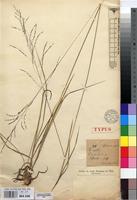
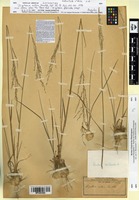
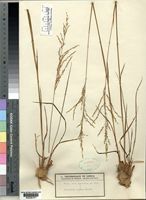
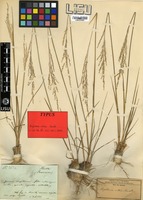
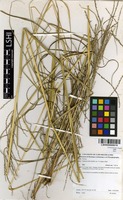
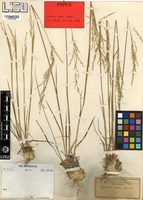
Type of Digitaria elegans Stapf [family POACEAE]
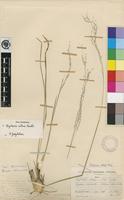
Digitaria flaccida Stapf [family POACEAE]
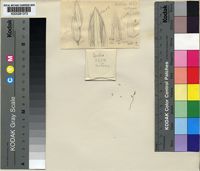
Paratype of Digitaria nitens Rendle [family POACEAE]
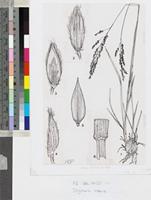
Digitaria nitens Rendle original illustration from Flora Zambesiaca
Type of Digitaria elegans Stapf [family POACEAE]
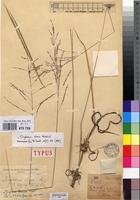
Isosyntype of Digitaria stolzii Mez [family POACEAE]
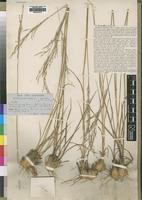
Isosyntype of Digitaria nitens Rendle [family POACEAE]
Isotype of Digitaria nitens Rendle [family POACEAE]
Digitaria flaccida Stapf [family POACEAE]
Digitaria nitens Rendle [family POACEAE]
Filed as Digitaria nitens Rendle [family POACEAE]
Type of Digitaria nitens Rendle [family POACEAE]
Syntype of Digitaria stolzii Mez [family POACEAE]
Type of Digitaria stolzii Mez [family POACEAE]
Isotype of Digitaria nitens Rendle [family POACEAE]
Holotype of Digitaria nitens Rendle [family POACEAE]
Previous
Next

Name

Identification
Digitaria nitens Rendle [family POACEAE ]
Related name
  • Digitaria nitens

Flora

Entry for DIGITARIA nitens Rendle [family ]
Herbarium
Royal Botanic Gardens, Kew (K)
Collection
Flora of Tropical Africa
Resource Type
Reference Sources
Entry From
Flora of Tropical Africa, Vol 9, page 1, (1917) Author: (By O. STAPF.)
Names
DIGITARIA nitens Rendle [family ], in Cat. Afr. Pl. Welw. ii. 165.
Panicum nitens K. Schum. [family POACEAE], in Just, Jahresb. 1899, i. 457.
Information
Perennial, compactly cæspitose. Culms erect, simple, up to 2 ft. high, slender, surrounded at the base by a dense mass of yellowish matted wool, pierced by the rigid fibres of decayed sheaths, 2–3-noded, glabrous and very smooth. Leaf-sheaths somewhat loose, glabrous and smooth, rarely the lowest of the culms shortly hairy at the nodes; ligules membranous, short, truncate; blades erect, narrowly linear, tapering to a sharp point, 3–6 in. by 1–1 1/2 lin., flat, rigid, glabrous or very finely hairy, margins scaberulous, midrib and primary side-nerves alike, about 7, somewhat stout and more or less prominent. Racemes peduncled, gathered into an oblong panicle which is 5–7 in. long, loose, flexuous, up to more than 2 1/2 in. long, simple or sometimes compound low down with short secondary branchlets; peduncle up to over 1 in. long, filiform, terete, smooth, purplish; rhachis filiform, about 1/8– 3/10 lin. wide, trigonous, slightly scaberulous along the finely marginate angles, internodes 1 1/2 lin. long; pedicels 2-nate or upwards solitary, filiform, angular, scabrid and minutely hispidulous towards the tips, with a subdiscoid tip, up to 1 1/2 lin. long. Spikelets oblong-lanceolate, acute to acuminate, 1 3/4 lin. long, pale, slightly silky. Lower glume 0; upper narrowly lanceolate, slightly gibbous at the base, acute, 3/4 to over 1 lin. long, very thin, very finely sub-5-nerved (the outer lateral nerves short and very close to the inner), stiffly hairy all over, and so densely near the base that the spikelets there appear shortly bearded. Lower floret corresponding in outline and size to the spikelet: valve very thin, finely 7-nerved, lateral nerves approximate, with dense lines of short (1/4– 1/3 lin.) stiff acute appressed hairs between the inner side-nerves and along the margins; valvule and lodicules minute. Upper floret lanceolate-oblong, acutely acuminate, very slightly shorter than the barren floret, whitish, very thinly chartaceous. Anthers almost 1 lin. long.
Distribution
Angola Lower Guinea Huilla; common in sandy clayey thickets near Lopollo, Welwitsch, 2634!
Notes
A somewhat aberrant type, in the habit of the panicle resembling the South African Digitaria flaccida, Stapf.

Related Materials

  • Terms and Conditions
  • Privacy Policy
  • Cookie Policy
  • Cookie Settings
  • Accessibility
  • Help
  • Contact Us
  • Facebook
  • Twitter
ITHAKA

JSTOR is part of ITHAKA, a not-for-profit organization helping the academic community use digital technologies to preserve the scholarly record and to advance research and teaching in sustainable ways.

©2000-2026 ITHAKA. All Rights Reserved. JSTOR®, the JSTOR logo, JPASS®, Aluka®, and ITHAKA® are registered trademarks of ITHAKA.

╳