JSTOR Global Plants Home
  • Home
  • Browse
  • About
  • Access
  • Account
    • Saved Items
    • Profile
  • Log in

Global Plants

Skip to Main Content
  • JSTOR Global Plants Home
  • Global Plants

    • Browse
    • About
    • Access
    • Account
      • Saved Items
      • Profile
Log in
  • Browse
  • About
  • Access
  • Account
    • Saved Items
    • Profile
Advanced Search

Compilation
Digitaria marginata

21 Images see all

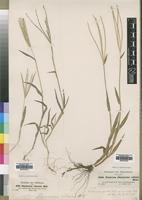
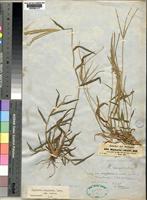
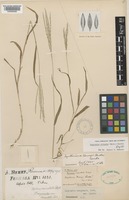
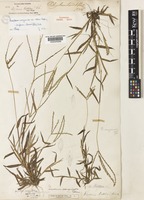
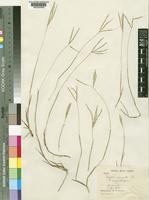
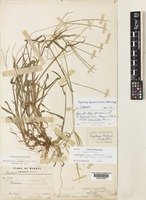
Isotype of Digitaria marginata (Link) Stapf var. fimbriata [family POACEAE]
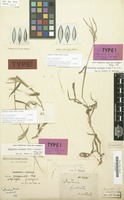
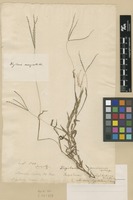
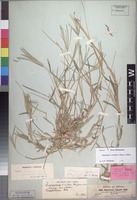
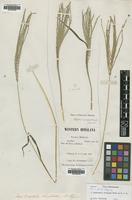
Holotype of Digitaria marginata Link [family GRAMINEAE]
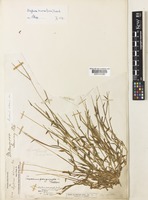
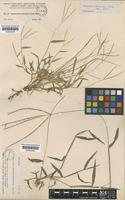
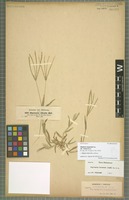
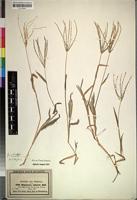
Type of Paspalum sanguinale (L.) Lam. var. rottleri (Kunth) Hook. f. [family POACEAE]
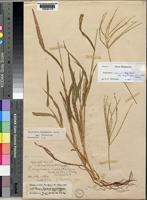
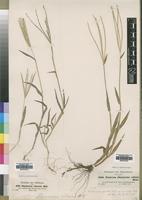
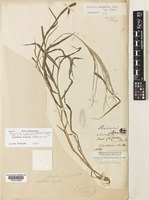
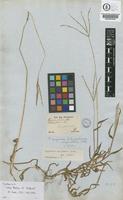
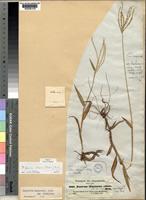
Digitaria ciliaris (Retz.) Koeler [family POACEAE]
Filed as Digitaria horizontalis Willd. [family POACEAE]
Digitaria nuda Schumach. [family POACEAE]
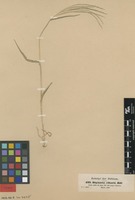
Isotype of Digitaria marginata Stapf var. nubica [family POACEAE]
Type of Digitaria henryi Rendle [family POACEAE]
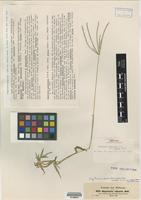
Isolectotype of Digitaria marginata Link variety nubica Stapf [family POACEAE]
Type of Digitaria barbata Willd. [family POACEAE]
Lectotype of Paspalum sanguinale (L.) Lam. var. rottleri (Kunth) Hook.f. [family POACEAE]
Isolectotype of Digitaria marginata Link var. nubica Stapf [family POACEAE]
Digitaria ciliaris (Retz.) Koeler [family POACEAE]
Lectotype of Digitaria marginata Link var. nubica Stapf [family POACEAE]
Digitaria psammophila Henrard [family POACEAE]
Type? of Digitaria setigera Roth [family POACEAE]
Isolectotype of Digitaria marginata Stapf var. nubica [family GRAMINEAE]
Type of Panicum ciliare A.Rich. [family POACEAE]
Type of Digitaria bicornis (Lam.) Roem. & Schult. subsp. gamblei Henrard [family POACEAE]
Previous
Next

Name

Identification
Isotype of Digitaria marginata Stapf [family POACEAE ] Digitaria ciliaris (Retz.) Koeler [family POACEAE ] (stored under name);
Related name
  • Panicum neesii
  • Syntherisma fimbriatum
  • Digitaria ciliaris
  • Digitaria marginata
  • Panicum sanguinale
  • Digitaria psammophila
  • Digitaria setigera
  • Panicum glaucescens
  • Panicum macrostachyum
  • Digitaria sanguinalis
  • Digitaria adscendens
  • Digitaria nuda
  • Panicum ciliare

Flora

Entry for DIGITARIA marginata Link [family ]
Herbarium
Royal Botanic Gardens, Kew (K)
Collection
Flora of Tropical Africa
Resource Type
Reference Sources
Entry From
Flora of Tropical Africa, Vol 9, page 1, (1917) Author: (By O. STAPF.)
Names
DIGITARIA marginata Link [family ], Hort. Berol. i. 229.
Information
Annual, 1 to over 2 ft. high. Culms tufted, usually ascending from a geniculate or prostrate and then often rooting base, simple or more often branched from the lower nodes, glabrous, few- to many-noded, upper node by far the longest and at length long-exserted. Leaf-sheaths thin, subherbaceous, loose, glabrous or more or less beset with spreading tubercle-based hairs which may be gathered at the base into a loose beard; ligules truncate, membranous, up to over 1/2 lin. long; blades linear-lanceolate to linear from a slightly contracted and rounded base, tapering to a slender acute point, up to 5 in. by 2–4 lin., flat, flaccid, glabrous or sparingly hairy particularly towards the mouth, margins finely cartilaginous, rough and often crisp, midrib very slender, whitish, lateral nerves numerous, the primary hardly standing out from the rest. Racemes mostly 4–9, sessile, subdigitate, solitary or 2–3-nate on a short angular scaberulous common axis, erect or spreading, rather slender, strict or slightly flexuous, 2–6 in. long, often finely pubescent at the base; rhachis almost straight, triquetrous, 3/10– 2/5 (rarely 1/2) lin. wide, lateral angles winged, herbaceous, scabrid, internodes up to over 1 lin. long; pedicels 2-nate, one very short, the other up to 3/4 lin. long, angular, scabrid. Spikelets appressed, not or only slightly imbricate, lanceolate, acutely acuminate, 1–1 1/2 lin. long, pale greenish, rarely tinged with purple, variously hairy, rarely quite glabrous. Lower glume an ovate obtuse to subacute membranous scale usually not over 1/6 lin. long, sometimes obsolete or quite suppressed; upper ovate-lanceolate, acute, equalling or more often considerably exceeding half of the upper floret, rarely distinctly shorter, 3-nerved, with fine lines of hairs between the nerves and along the margins, rarely quite glabrous. Lower floret: valve corresponding in outline and size to the spikelet, firmly membranous, 7-nerved, nerves quite smooth, the lateral usually rather distant from the middle nerve, approximate along the submarginal flexure, more or less prominent, particularly the inner, rarely quite glabrous, usually with fine lines of hairs between the inner side-nerves (of each half) and along the margins, the inner line of hairs not rarely augmented by a row of fine tubercle-based acute yellow bristles, hairs very fine, thin-walled, obtuse-tipped, straight or flexuous, closely appressed at first, ultimately loosened or somewhat stouter and like the bristles spreading at right angles and forming with them a rigid double fringe on each side of the spikelet; valvule and lodicules minute. Upper floret oblong-lanceolate, acutely acuminate, almost as long as the spikelet, thinly chartaceous, pale or slightly purplish, brownish when ripe, margins of valve slightly distant. Anthers about 3/8 lin., more rarely 1/4 or up to 9/10 lin. long. Grain oblong, about 4/5 lin. by 1/4– 3/10 lin., plano-convex, whitish; scutellum less than half the length of the grain.
Notes
This species, which occurs all over the tropics and also extends into some subtropical regions, has so far been found in Tropical Africa in the following modifications.

Related Materials

  • Terms and Conditions
  • Privacy Policy
  • Cookie Policy
  • Cookie Settings
  • Accessibility
  • Help
  • Contact Us
  • Facebook
  • Twitter
ITHAKA

JSTOR is part of ITHAKA, a not-for-profit organization helping the academic community use digital technologies to preserve the scholarly record and to advance research and teaching in sustainable ways.

©2000-2026 ITHAKA. All Rights Reserved. JSTOR®, the JSTOR logo, JPASS®, Aluka®, and ITHAKA® are registered trademarks of ITHAKA.

╳