JSTOR Global Plants Home
  • Home
  • Browse
  • About
  • Access
  • Account
    • Saved Items
    • Profile
  • Log in

Global Plants

Skip to Main Content
  • JSTOR Global Plants Home
  • Global Plants

    • Browse
    • About
    • Access
    • Account
      • Saved Items
      • Profile
Log in
  • Browse
  • About
  • Access
  • Account
    • Saved Items
    • Profile
Advanced Search

Compilation
Digitaria chevalieri

6 Images see all

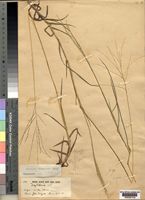
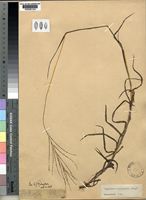
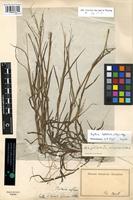
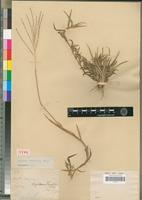
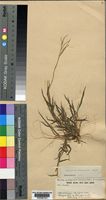
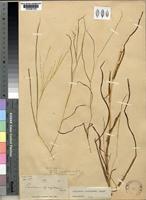
Isotype of Digitaria richardsonii Mez [family POACEAE]
Filed as Digitaria leptorhachis (Pilger) Stapf [family POACEAE]
Holotype of Digitaria chevalieri Stapf [family POACEAE]
Digitaria leptorhachis (Pilg.) Stapf [family POACEAE]
Previous
Next

Name

Identification
Digitaria leptorhachis (Pilger) Stapf [family POACEAE ] (stored under name); Verified by ??, 1971 Digitaria chevalieri Not on sheet [family POACEAE ] Verified by A.S.Hitchcock, Digitaria reflexa Not on sheet [family POACEAE ] Verified by Not on Sheet,
Related name
  • Panicum nigritanum
  • Digitaria patagiata
  • Digitaria leptorhachis
  • Digitaria richardsonii
  • Digitaria chevalieri
  • Digitaria reflexa

Flora

Entry for DIGITARIA Chevalieri Stapf [family ]
Herbarium
Royal Botanic Gardens, Kew (K)
Collection
Flora of Tropical Africa
Resource Type
Reference Sources
Entry From
Flora of Tropical Africa, Vol 9, page 1, (1917) Author: (By O. STAPF.)
Names
DIGITARIA Chevalieri Stapf [family ], in Chev. Sudania, 13 (name only).
Information
Perennial (apparently flowering the first year), forming dense tufts of barren shoots mixed with flowering culms and trailing runners; rhizome short, præmorse; innovations extravaginal, covered with silky-tomentose cataphylls; runners slender, many-noded, up to 6 in. long, with tufts of short leaves from the nodes. Culms erect from an ascending or shortly prostrate base, slender, about 3/4–1 1/2 ft. high, simple or with a leafy branch here and there, 8- or more-noded or in first year's specimens only 3- or 4-noded, all the internodes except the upper 2 or 3 shorter than the short sheaths, 1/3– 2/3 in. long, the uppermost very long and long-exserted, glabrous. Leaf-sheaths tight or the lower, which are very short loose, terete or subterete, densely and softly hairy to villous, bearded at the base, the uppermost quite glabrous upwards, hairs spreading, white, fine; ligules short, membranous, rounded; blades linear, tapering to an acute point, those of the culms more or less spreading, 1 to almost 3 in. by 1 1/2–2 lin., flat, soft, glaucous, more or less loosely villous, hairs very fine, margins cartilaginous, scaberulous to spinulously scabrid, lateral nerves obscure or the primary (3 or 4 on each side) slightly prominent. Racemes about 6–10, sessile or subsessile, subdigitate or racemosely arranged with a slender scabrid angular common rhachis (up to 2 in. long), sometimes slightly compound near the base, erect or more or less spreading, very slender, straight, rather loose, about 3 in. long, pale green; rhachis slightly wavy, filiform, triquetrous, 1/10– 1/8 lin. wide, with or without some long extremely fine spreading hairs in the lower part, angles finely marginate, very scabrid, internodes 1 1/2–2 lin. long; pedicels 2–3-nate, or fascicled near the base with very short and scanty secondary branchlets, finely filiform, very unequal, the longer up to 1 1/2 lin. long, angular, scabrid. Spikelets more or less appressed, not imbricate, oblong, subacute, 3/4 lin. long, pale greyish- or brownish-green, delicately silvery-silky. Lower glume a very minute cuff-like hyaline membrane, early disappearing; upper thin, oblong with a delicate hyaline obtuse (flattened out) tip, as long as the spikelet, delicately 5-nerved with 4 lines of extremely fine silvery hairs, hairs curled or circinate upwards. Lower floret: valve similar to the upper glume but broader and finely 7-nerved, the spaces between the midrib and the more prominent innermost side-nerves glabrous, hairs equalling but not exceeding the tips, up to 1/7 lin. long; valvule and lodicules very minute. Upper floret as long as the spikelet, narrowly oblong, subacute, the sides slightly exposed when ripening, pale to brownish when ripe, thinly chartaceous. Anthers 1/2 lin. long.
Distribution
French Sudan Upper Guinea Dendela, Chevalier, 629!Ivory Coast Upper Guinea Bingerville, along roads, Chevalier, 16003!Nigeria Upper Guinea Lagos Island, Dalziel, 1123! MacGregor, 157 partly!Nigeria Upper Guinea Lokoja, Richardson !
Notes
Chevalier's specimens from Bingerville evidently represent a first year's growth, although they are in flower. They form tufts of flowering culms and leafy shoots with a few young trailers. The leafy shoots and the trailers might be assumed to grow into flowering culms later in the season, and if so the grass would have to be considered as an annual. Chevalier's Dendela specimen, however, possesses unmistakable innovation-buds covered with short silky-tomentose cataphylls and similar cataphylls, are found at the base of one of the detached culms of Dalziel's specimen. The Bingerville specimens were collected in the middle of December, the Dendela one at the end of March.

Related Materials

  • Terms and Conditions
  • Privacy Policy
  • Cookie Policy
  • Cookie Settings
  • Accessibility
  • Help
  • Contact Us
  • Facebook
  • Twitter
ITHAKA

JSTOR is part of ITHAKA, a not-for-profit organization helping the academic community use digital technologies to preserve the scholarly record and to advance research and teaching in sustainable ways.

©2000-2026 ITHAKA. All Rights Reserved. JSTOR®, the JSTOR logo, JPASS®, Aluka®, and ITHAKA® are registered trademarks of ITHAKA.

╳