JSTOR Global Plants Home
  • Home
  • Browse
  • About
  • Access
  • Account
    • Saved Items
    • Profile
  • Log in

Global Plants

Skip to Main Content
  • JSTOR Global Plants Home
  • Global Plants

    • Browse
    • About
    • Access
    • Account
      • Saved Items
      • Profile
Log in
  • Browse
  • About
  • Access
  • Account
    • Saved Items
    • Profile
Advanced Search

Compilation
Digitaria bredoensis

2 Images see all

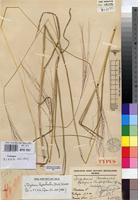
Holotype of Digitaria bredoensis Robyns & Van der Veken [family POACEAE]
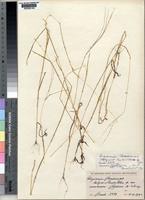
Digitaria leptorhachis (Pilg.) Stapf [family POACEAE]
Previous
Next

Name

Identification
Digitaria bredoensis Robyns & Van der Veken [family POACEAE ] Verified by Not on sheet, Digitaria leptorhachis (Pilg.) Stapf [family POACEAE ] (stored under name); Verified by Not on sheet,
Related name
  • Digitaria leptorhachis
  • Digitaria bredoensis

Flora

Entry for DIGITARIA leptorhachis (Pilg.) Stapf [family ]
Herbarium
Royal Botanic Gardens, Kew (K)
Collection
Flora of Tropical East Africa
Resource Type
Reference Sources
Entry From
Flora of Tropical East Africa, page 451, (1982) Author: W. D. CLAYTON and S.A. RENVOIZE
Names
DIGITARIA leptorhachis (Pilg.) Stapf [family ], in F.T.A. 9: 462 (1919); Clayton in F.W.T.A., ed. 2, 3: 450 (1972). Type: Mali, Ségou, Lecard 252 (K, iso.!)
Panicum leptorhachis Pilg. [family POACEAE], in E.J. 30: 119 (Mar. 1901)
Panicum nigritianum Hack. [family POACEAE], in Oest. Bot. Zeitschr. 51: 293 (Aug. 1901). Type: Nigeria, Brass R., Barter (K, iso.!)
Digitaria chevalieri Stapf [family ], in F.T.A. 9: 458 (1919). Type: Mali, Dendela, Chevalier 629 (P, holo.)
Digitaria nigritiana (Hack.) Stapf [family ], in F.T.A. 9: 463 (1919)
Digitaria richardsonii Mez [family ], in E.J. 57: 193 (1921). Type: Nigeria, Lokoja, Richardson (K, iso.!)
Digitaria bredoensis Robyns & Vander Veken [family ], in B.J.B.B. 22: 146 (1952). Type: Zambia, Makuja, Bredo 3860 (BR, holo.!)
Information
Annual, or perhaps a short-lived perennial; culms 30–100 cm. high, 1–2 mm. in diameter, wiry, ascending from a decumbent base, rooting at the lower nodes; nodes villous, rarely glabrous. Leaf-blades 5–20 cm. long, 2–6 mm. wide, pubescent or rarely glabrous. Inflorescence of 5–12(–17) racemes, these subdigitate or arranged on a common axis up to 10 cm. long; racemes 4–11 cm. long, sometimes bare at the base but with traces of arrested spikelets there, the spikelets paired on a slender triquetrous rhachis which occasionally bears a few long white hairs. Spikelets elliptic, 1.4–2 mm. long; lower glume absent or an obscure rim; upper glume as long as the spikelet, 5-nerved, puberulous; lower lemma as long as the spikelet, 7-nerved, pubescent (shortly and often obscurely) with stripes of appressed hairs, these smooth-walled, often with curled tips (but rarely verrucose–see note); fruit ellipsoid, grey.
Range
DISTR. T1, 4 Senegal to Sudan, Zaire and Zambia
Altitude range
1500 m.
Distribution
TANZANIA Bukoba, 1953, Thwaites 14!TANZANIA Mpanda District Temba, 17 Mar. 1971, Backlund B.14!TANZANIA Ufipa District Nziga Plain, 19 Mar. 1959, McCallum Webster T.163!
Notes
D. leptorhachis is an annual species with aerial roots from the lower nodes of the decumbent culm, though there is some tendency to develop a short-lived perennial habit and thus to intergrade with D. gazensis. In Zaire it is largely replaced by D. polybotrya Stapf, a more robust species with 16–40 racemes each 10–20 cm. long, and culms 2–4 mm. in diameter up to 150 cm. high. However, the spikelets are identical with D. leptorhachis and the size range of culm and inflorescence in the two species overlap, so that their distinctness is open to question.The situation is complicated by D. bredoensis, a species embracing the size range of both D. leptorhachis and D. polybotrya, and indistinguishable from these species except for the verrucose indumentum of the spikelets–a character which theoretically places it adjacent to D. longiflora in a different section of the genus. It is here treated as a synonym, more because of the impracticability of trying to identify it without a high-power microscope, than because of any firm taxonomic conviction. The Backlund and McCallum Webster sheets cited belong to this taxon.

Related Materials

  • Terms and Conditions
  • Privacy Policy
  • Cookie Policy
  • Cookie Settings
  • Accessibility
  • Help
  • Contact Us
  • Facebook
  • Twitter
ITHAKA

JSTOR is part of ITHAKA, a not-for-profit organization helping the academic community use digital technologies to preserve the scholarly record and to advance research and teaching in sustainable ways.

©2000-2026 ITHAKA. All Rights Reserved. JSTOR®, the JSTOR logo, JPASS®, Aluka®, and ITHAKA® are registered trademarks of ITHAKA.

╳