JSTOR Global Plants Home
  • Home
  • Browse
  • About
  • Access
  • Account
    • Saved Items
    • Profile
  • Log in

Global Plants

Skip to Main Content
  • JSTOR Global Plants Home
  • Global Plants

    • Browse
    • About
    • Access
    • Account
      • Saved Items
      • Profile
Log in
  • Browse
  • About
  • Access
  • Account
    • Saved Items
    • Profile
Advanced Search

Compilation
Dicranum latifolium

13 Images see all

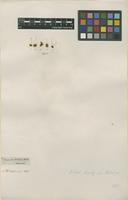
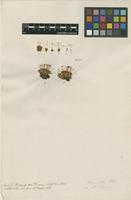
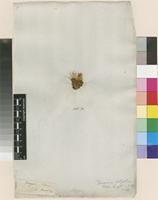
Filed as Dicranum latifolium Hedw. [family DICRANACEAE]
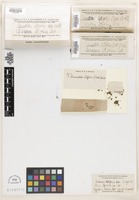
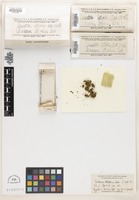
Type of Dicranum latifolium J.J. Amann [family DICRANACEAE]
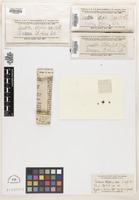
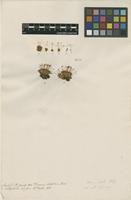
Filed as Barbula muralis (Hedw.) Crome [family POTTIACEAE]
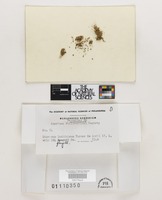
Filed as Dicranum latifolium Hedw. [family DICRANACEAE]
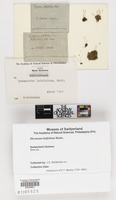
Filed as Desmatodon latifolius (Hedw.) Brid. [family POTTIACEAE]
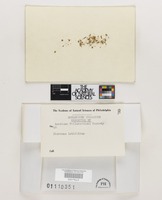
Filed as Dicranum latifolium Hedw. [family DICRANACEAE]
Filed as Desmatodon latifolius (Hedw.) Brid. [family POTTIACEAE]
Filed as Dicranum latifolium Hedw. [family DICRANACEAE]
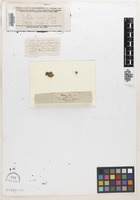
Filed as Bryum indet. [family BRYACEAE]
Filed as Dicranum latifolium Hedw. [family DICRANACEAE]
Filed as Desmatodon latifolius (Hedw.) Brid. [family POTTIACEAE]
Filed as Dicranum latifolium Hedw. [family DICRANACEAE]
Previous
Next

Name

Identification
Bryum indet. Not on sheet [family BRYACEAE ] (stored under name); Verified by Not on sheet, Dicranum latifolium Hedw. [family DICRANACEAE ] Verified by Smith, Sir James Edward,
Related name
  • Bryum indet.
  • Dicranum latifolium

Flora

Entry for Dicranum scoparium Hedwig [family ]
Herbarium
Flora of North America (FNA)
Collection
Flora of North America
Resource Type
Reference Sources
Entry From
Flora of North America, Vol 27,
Names
Dicranum scoparium Hedwig [family ], Sp. Musc. Frond., 126. 1801,
Dicranum latifolium J. J. Amann [family ]
Treatment Author(s)
Robert R. Ireland Jr.
Information
Plants in loose to dense tufts, light to dark green, glossy to sometimes dull. Stems 2–10 cm, tomentose with white to brown rhizoids. Leaves very variable, usually falcate-secund, rarely straight and erect, slightly contorted and crisped when dry, sometimes slightly rugose or undulate, (4–)5–8.5(–15) × 0.8–1.8 mm, concave proximally, keeled above, lanceolate, apex acute to somewhat obtuse; margins strongly serrate in the distal 1/3 or rarely slightly serrulate; laminae 1-stratose; costa percurrent, excurrent, or ending before apex, 1/10–1/5 the width of the leaves at base, usually with 2–4 toothed ridges above on abaxial surface, with a row of guide cells, two thin stereid bands, adaxial epidermal layer of cells not differentiated, the abaxial layer interrupted by several enlarged cells that form part of the abaxial ridge, not extending to the apices; cell walls between lamina cells not bulging; leaf cells smooth; alar cells 2-stratose, well- differentiated, sometimes extending to costa; proximal laminal cells linear-rectangular, pitted, (25–)47–100(–132) × (5–)7–12(–13) µm; distal laminal cells shorter, broad, sinuose, pitted, (11–)27–43(–53) × (5–)8–12(–20) µm. Sexual condition pseudomonoicous or dioicous; dwarf males on rhizoids of female plants or male plants as large as females; interior perichaetial leaves abruptly long-acuminate, convolute-sheathing. Seta 2–4 cm, solitary, rarely two per perichaetium, yellowish brown to reddish brown. Capsule 2.5–4 mm, arcuate, inclined to horizontal, smooth to striate when dry, yellowish brown to reddish brown; operculum 2–3.5 mm. Spores 14–24 µm.
Phenology
Capsules mature spring.
Altitude range
50–2900 m;
Distribution
GreenlandMexicoEuropeAsiaAustralia.USA Ala.USA AlaskaUSA Ariz.USA Ark.USA Calif.USA Colo.USA Conn.USA Del.USA D.C.USA Fla.USA Ga.USA IdahoUSA Ill.USA Ind.USA IowaUSA Kans.USA Ky.USA La.USA MaineUSA Md.USA Mass.USA Mich.USA Minn.USA Miss.USA Mo.USA Mont.USA N.H.USA N.J.USA N.Mex.USA N.Y.USA N.C.USA OhioUSA Okla.USA Oreg.USA Pa.USA R.I.USA S.C.USA S.Dak.USA Tenn.USA UtahUSA Vt.USA Va.USA Wash.USA W.Va.USA Wis.USA Wyo.USA Pacific Islands (New Zealand)Canada Alta.Canada B.C.Canada Man.Canada N.B.Canada Nfld. and Labr. (Nfld.)Canada N.W.T.Canada N.S.Canada NunavutCanada Ont.Canada P.E.I.Canada Que.Canada Sask.Canada Yukon
Discussion
Dicranum scoparium is undoubtedly the most polymorphic species of the genus in North America. It is commonly called the broom moss because the leaves are “swept” or turned in the same direction. However, the habit of the leaves varies from strongly falcate-secund, i.e., the swept state, to straight and erect, especially prevalent in northern plants. The leaf shape varies from the typical lanceolate and long-acuminate to the odd ovate-lanceolate and short-acuminate. The leaves are typically smooth, in sharp contrast to the strongly undulate leaves of D. polysetum, but on rare occasion they can be somewhat undulate-rugose. The leaf margins are usually distinctly toothed in the distal 1/3 but at times plants in some populations have extremely weak serrations, appearing nearly entire. The costae vary in extent from subpercurrent to shortly excurrent. The abaxial surface of the costae have two to four toothed ridges, compared to the two in D. polysetum, but in some forms they are almost nonexistent. The distal areolation of the leaves seems to remain constant in the myriad forms of D. scoparium, the cells being short-sinuose with pitted walls, generally containing conspicuous oil-drops.
Plants growing in arctic North America and those in extremely wet habitats, such as bogs, often have a different superficial appearance. The leaves are straight, erect, ovate-lanceolate, short-acuminate with weak serrations on the margins, and the abaxial ridges on the costae are poorly developed. Sometimes the plants have distal shoots with abnormal appearing leaves that are shorter and broader than those below. Some of these collections have been referred to Dicranum latifolium, which I consider to be a synonym of D. scoparium. Further field and laboratory studies are required to clarify the taxonomic status of those plants. In the sterile state, large-leaved plants of D. scoparium can be confused with D. majus. The latter is immediately distinguished by a double row of guide cells, instead of the single row in the former, thicker stereid bands, distal cells that are narrower and more elongate and costae that have small teeth or serrulations distally on the abaxial surface instead of the characteristic 2–4 toothed ridges of D. scoparium. When fruiting, the solitary, rarely paired, sporophytes of D. scoparium distinguish it from D. majus, which has multiple sporophytes, 2–5 per perichaetium.

Related Materials

  • Terms and Conditions
  • Privacy Policy
  • Cookie Policy
  • Cookie Settings
  • Accessibility
  • Help
  • Contact Us
  • Facebook
  • Twitter
ITHAKA

JSTOR is part of ITHAKA, a not-for-profit organization helping the academic community use digital technologies to preserve the scholarly record and to advance research and teaching in sustainable ways.

©2000-2026 ITHAKA. All Rights Reserved. JSTOR®, the JSTOR logo, JPASS®, Aluka®, and ITHAKA® are registered trademarks of ITHAKA.

╳