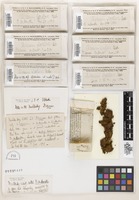
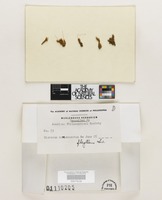
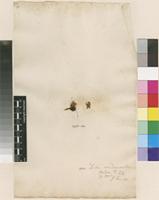
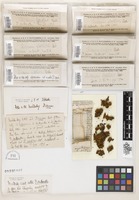
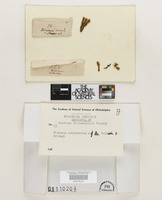
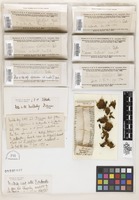
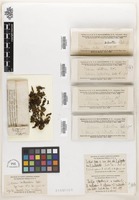
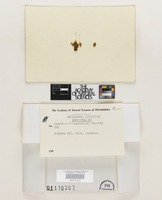
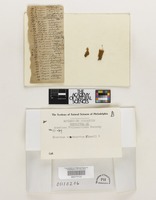
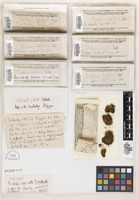
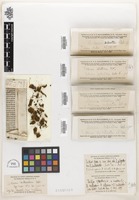
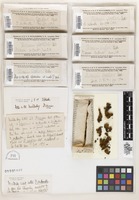
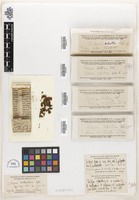
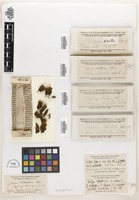
Plants in ± dense tufts, light green to yellowish brown, dull. Stems 1–9 cm, densely tomentose below with reddish brown rhizoids. Leaves erect-spreading, flexuose, ± curled at the tips when dry, slightly undulate or rugose, (2–)3.5–4.5(–7) × 0.5–1 mm, concave below, strongly keeled above, oblong-lanceolate, with a broad lanceolate base gradually narrowing to a short-acuminate apex; margins serrulate in the distal half, involute in central part; laminae 1-stratose, with a few 2-stratose regions; costa percurrent to shortly excurrent, 1/10–1/5 the width of the leaves at base, strong, smooth or papillose to toothed above on abaxial surface, abaxial ridges absent, with a row of guide cells, two thick stereid bands extending well into the apex, adaxial epidermal layer of cells not differentiated, the abaxial layer differentiated; cell walls between lamina cells strongly bulging; leaf cells papillose above on abaxial surface, sometimes nearly smooth; alar cells 2-stratose, differentiated, not extending to costa; proximal laminal cells elongate, pitted, (25–)41–56(–112) × (5–)6–7(–10) µm, abruptly shorter towards the apex; distal laminal cells quadrate, irregularly angled, rounded or rectangular, not or indistinctly pitted, cell walls unequally thickened, (5–)7–8(–20) × (5–)7–8(–12) µm. Sexual condition pseudomonoicous; dwarf males on stem rhizoids of female plants; interior perichaetial leaves abruptly short-acuminate, convolute-sheathing. Seta 1–4 cm, solitary, rarely 2 per perichaetium, yellowish. Capsule 1.5–3 mm, arcuate, inclined to horizontal, furrowed when dry, slightly contracted below the mouth, yellowish brown; operculum 1.5–2.5 mm. Spores 19–26 µm.