JSTOR Global Plants Home
  • Home
  • Browse
  • About
  • Access
  • Account
    • Saved Items
    • Profile
  • Log in

Global Plants

Skip to Main Content
  • JSTOR Global Plants Home
  • Global Plants

    • Browse
    • About
    • Access
    • Account
      • Saved Items
      • Profile
Log in
  • Browse
  • About
  • Access
  • Account
    • Saved Items
    • Profile
Advanced Search

Compilation
Diclis ovata

8 Images see all

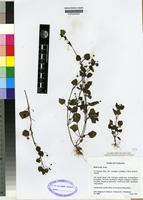
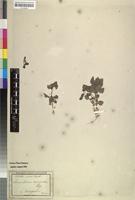
Isotype of Diclis ovata Benth. [family SCROPHULARIACEAE]
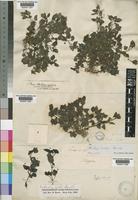
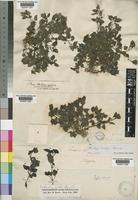
Type of Diclis ovata Benth. [family SCROPHULARIACEAE]
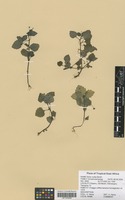
Diclis ovata Benth. [family SCROPHULARIACEAE]
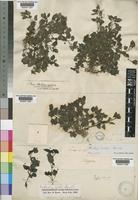
Type? of Diclis ovata Benth. [family SCROPHULARIACEAE]
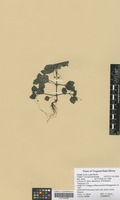
Filed as Diclis ovata Benth. [family SCROPHULARIACEAE]
Diclis ovata Benth. [family SCROPHULARIACEAE]
Previous
Next

Name

Identification
Diclis ovata Benth. [family SCROPHULARIACEAE ] (stored under name); Verified by Grant, A.L.,
Related name
  • Anarrhinum emirnense
  • Diclis ovata

Flora

Entry for Diclis ovata Benth. [family SCROPHULARIACEAE]
Herbarium
Royal Botanic Gardens, Kew (K)
Collection
Flora of Tropical East Africa
Resource Type
Reference Sources
Entry From
Flora of Tropical East Africa, page 1, (2008) Author: S.A. GHAZANFAR, F.N. HEPPER & D. PHILCOX
Names
Diclis ovata Benth. [family SCROPHULARIACEAE], in Hook. Comp. Bot. Mag. 2: 23 (1836); Engl. in P.O.A. C.: 356 (1895); Hemsley & Skan in F.T.A. 4(2): 287 (1906); Cufodontis in B.J.B.B. 33, Suppl.: 888 (1963); Hepper in F.W.T.A. ed. 2, 2: 354 (1963); Philcox in F.Z.: 12 (1990); U.K.W.F.: 254 (1994); Fischer, F.A.C. Scrophulariaceae: 24, pl. 6 (1999) & in Fl. Ethiop. & Eritr. 5: 256 (2006). Type: “Madagascar, Herb. Hooker” (K!, holo., see note)
Linaria veronicoides A.Rich. [family SCROPHULARIACEAE], Tent. Fl. Abyss. 2: 114 (1851). Type: Ethiopia, Adoua, September, Quartin Dillon s.n. (?FT)
Anarrhinum veronicoides (A.Rich.) O.Kuntze [family SCROPHULARIACEAE], in Jahrb. Bot. Gart. Berlin 4: 269 (1886)
Simbuleta veronicoides (A.Rich.) O.Kuntze [family ], Rev. Gen. Pl. 2: 465 (1891)
Information
Erect annual herb 3–17 cm high, ± branched, decumbent or ascending, rooting at nodes; stems subquadrangular, ± pubescent and glandular. Leaves mostly opposite below and alternate above, petiolate; petiole 5–19 mm long, glandular-hairy; lamina broadly ovate, 9–20(–41) mm long, 6–15(–26) mm wide, cuneate or truncate at the base, margins dentate sometimes obscurely so, sparsely pubescent especially on the veins. Flowers axillary, solitary; pedicels filiform, 1–2.5(–4) cm long, not exceeding the leaves, glandular. Calyx lobes unequal, 1.2–2 mm long, glandular-hairy. Corolla white with upper lip brownish with spur, 3.5 mm long, 1 mm wide, lower lip 3-lobed, upper lip emarginate. Capsule 4 mm in diameter, 4-valved, valves spreading at dehiscence. Fig. 5, p. 21.
Range
DISTR. U 2–4, 6; K 2–6; T 1–4, 6–8
Altitude range
1300–2300 m
Distribution
KENYA Naivasha District S Kinangop, June 1961, Polhill 430!KENYA Kiambu District Kabete, Aug. 1947, Bogdan 1065!KENYA Masai District km 48 on main road – Narok, 16 June 1956, Verdcourt 1502!TANZANIA Lushoto District Mkuzi–Kwai road, May 1953, Drummond & Hemsley 2675!TANZANIA Mbeya District Mbeya, May 1975, Hepper & Field 5274! & Matagoro Hills, Feb. 1956, Milne-Redhead & Taylor 8859!UGANDA Kigezi District Kachwekano Farm, Mar. 1950, Purseglove 3342!UGANDA Mengo District Entebbe, E. Brown 317!UGANDA Masaka District Bugala I., Sese, Oct. 1958, Symes 498!
Distribution (external)
Ethiopia
Angola
Zambia
Malawi
Mozambique
Zimbabwe
Madagascar
Mauritius
Notes
USES. None recorded on specimens from our area. CONSERVATION Least Concern (LC); widespread. There are 3 plants on a sheet at K with ‘type sheet’ written on it possibly in Bentham’s handwriting. All are from Madagascar: the first collected by G.W. Parker in Aug. 1880, the middle one without a collector’s name on a cut out label giving the name of the country only (Madagascar), and the third collected by R. Baron in July 1880. As the new species was published in 1836, neither of the two collections dated 1880 can be the holotype of Diclis ovata. In the protologue Bentham cites a specimen fom Madagascar which he has seen, but does not give the name of the collector or a collection number. It is quite probable that the middle specimen is one of Bojer’s collections from Madagascar, of which a couple are at P, and I have seen them. The specimen at K is definitely the holotype, however it cannot be said if those of Bojer’s at P are isotypes.

Related Materials

  • Terms and Conditions
  • Privacy Policy
  • Cookie Policy
  • Cookie Settings
  • Accessibility
  • Help
  • Contact Us
  • Facebook
  • Twitter
ITHAKA

JSTOR is part of ITHAKA, a not-for-profit organization helping the academic community use digital technologies to preserve the scholarly record and to advance research and teaching in sustainable ways.

©2000-2026 ITHAKA. All Rights Reserved. JSTOR®, the JSTOR logo, JPASS®, Aluka®, and ITHAKA® are registered trademarks of ITHAKA.

╳