JSTOR Global Plants Home
  • Home
  • Browse
  • About
  • Access
  • Account
    • Saved Items
    • Profile
  • Log in

Global Plants

Skip to Main Content
  • JSTOR Global Plants Home
  • Global Plants

    • Browse
    • About
    • Access
    • Account
      • Saved Items
      • Profile
Log in
  • Browse
  • About
  • Access
  • Account
    • Saved Items
    • Profile
Advanced Search

Compilation
Dicerocaryum zanguebarium

9 Images see all

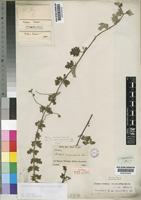
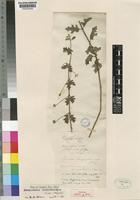
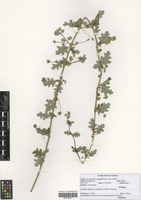
Isotype of Pretrea forbesii Decne. [family PEDALIACEAE]
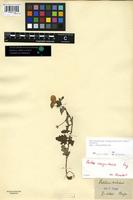
Filed as Dicerocaryum zanguebarium (Lour.) Merr. [family PEDALIACEAE]
Filed as Pretrea zanguebarium Gay [family PEDALIACEAE]
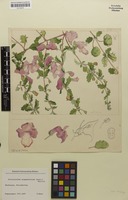
Dicerocaryum zanguebarium
Isotype of Dicerocaryum sinuatum Bojer [family PEDALIACEAE]
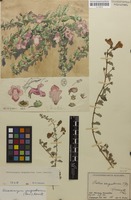
Dicerocaryum zanguebarium (Lour.) Merr.
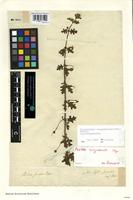
Filed as Pretrea zanguebarium Gay [family PEDALIACEAE]
Filed as Dicerocaryum zanguebarium (Lour.) Merr. [family PEDALIACEAE]
Previous
Next

Name

Identification
Dicerocaryum zanguebarium (Lour.) Merr. [family PEDALIACEAE ]
Related name
  • Dicerocaryum zanguebarium

Flora

Entry for DICEROCARYUM zanguebarium (Lour.) Merrill [family PEDALIACEAE]
Herbarium
Royal Botanic Gardens, Kew (K)
Collection
Flora of Tropical East Africa
Resource Type
Reference Sources
Entry From
Flora of Tropical East Africa, page 1, (1953) Author: A. BRUCE
Names
DICEROCARYUM zanguebarium (Lour.) Merrill [family PEDALIACEAE], 1 c. Type: Portuguese East Africa, near Mozambique Is., Loureiro (P, holo.!, K, photo!)
Martynia zanguebaria Lour. [family PEDALIACEAE], Fl. Coch. 386 (1790). Type: Portuguese East Africa, near Mozambique Is., Loureiro (P, holo.!, K, photo.!)
Dicerocaryum sinuatum Boj. [family PEDALIACEAE], in Ann. Sci. Nat., sér. 2, 4: 269, t. 10 (1835). Type: Zanzibar, Bojer (P, holo., K, iso.!)
Pretrea zanguebaria (Lour.) J. Gay ex DC [family PEDALIACEAE], Prod. 9: 256 (1845); F.T.A. 4 (2): 565 (1906) as zanguebarica
Information
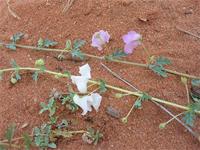
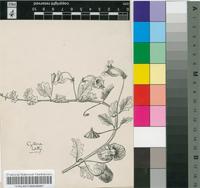
Procumbent herb with trailing stems 0.45–2.1 m. long, sparsely to densely pubescent. Leaves oblong, ovate or cordate-ovate in outline, grossly dentate to pinnately incised, 1.1–5 cm. long, 0.6–4 cm. broad, usually discolorous, thinly to densely pubescent on both surfaces, glandular below; petiole 0.3–1.6 cm. long (Fig. 4/1–7). Flowers pink, mauve, violet or crimson often streaked or dotted with a darker colour; pedicels 1.5–5.5 cm. long. Calyx-lobes lanceolate, pubescent. Corolla pubescent, varying from 1.5–4.5 cm. in length; lobes rounded at the apex (Fig. 4/10). Ovary densely pubescent; disc saucer-shaped. Fruit 1.5–2.6 cm. long, 1–2 cm. broad, pubescent; horns about 5 mm. long (Fig. 4/14–15). Seeds (Fig. 4/16) subovoid, reticulate, slightly 4-angled, scarcely compressed, 4 mm. long, 2.5 mm. broad at the base. Fig. 4.
Range
DISTR. T3, 6; Z
Altitude range
0–500 m.
Distribution
TANGANYIKA Pangani District Bushiri Estate, July 1950, Faulkner 584!;TANGANYIKA Uzaramo District Dar es Salaam, Feb. 1874, Hildebrandt 1133!;TANGANYIKA Rufiji District Mafia Island, Kilindoni, Sept. 1937, Greenway 5239!ZANZIBAR Unlocalized, Bojer!ZANZIBAR Zanzibar Is., Mnazi Mmoja, Aug. 1951, R.O. Williams 80!
Distribution (external)
Portuguese East Africa
Northern
Southern Rhodesia
Angola
Bechuanaland
Transvaal
South West Africa
Notes
VARIATION. There is considerable variation within this species, particularly in leaf-shape, indentation, indumentum, length of pedicel and flower-size. The species described within this “ group ” (now reduced to synonymy) were differentiated from one another by characters which are not constant, e.g. some specimens from the interior (Bechuanaland, Amboland and Ngamiland) described under Pretrea eriocarpa Decne., appear to differ from the coastal forms in having shorter, broader, less deeply divided leaves; there are, however, intermediate forms, particularly from the Transvaal and Rhodesia, which have both leaf-forms. Other characters have been tried out but appear to vary independently, so that the species cannot be separated into clear-cut varieties. In view of this lack of correlation it has been decided to treat the whole as one variable species. The citation “ British East Africa: near Malindi, Allen 157,” in F.T.A. 4 (2): 566 is an error. C. E. F. Allen collected in Southern Rhodesia and his number-157 was collected there near Malindi (18° 45′ S., 27° 1′ E.) in November 1905.

Related Materials

  • Terms and Conditions
  • Privacy Policy
  • Cookie Policy
  • Cookie Settings
  • Accessibility
  • Help
  • Contact Us
  • Facebook
  • Twitter
ITHAKA

JSTOR is part of ITHAKA, a not-for-profit organization helping the academic community use digital technologies to preserve the scholarly record and to advance research and teaching in sustainable ways.

©2000-2026 ITHAKA. All Rights Reserved. JSTOR®, the JSTOR logo, JPASS®, Aluka®, and ITHAKA® are registered trademarks of ITHAKA.

╳