JSTOR Global Plants Home
  • Home
  • Browse
  • About
  • Access
  • Account
    • Saved Items
    • Profile
  • Log in

Global Plants

Skip to Main Content
  • JSTOR Global Plants Home
  • Global Plants

    • Browse
    • About
    • Access
    • Account
      • Saved Items
      • Profile
Log in
  • Browse
  • About
  • Access
  • Account
    • Saved Items
    • Profile
Advanced Search

Compilation
Dicerocaryum senecioides

3 Images see all

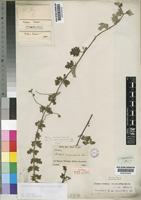
Isotype of Pretrea forbesii Decne. [family PEDALIACEAE]
Dicerocaryum senecioides (Klotzsch) Abels. [family PEDALIACEAE]
Dicerocaryum senecioides (Klotzsch) Abels
Previous
Next

Name

Identification
Dicerocaryum senecioides (Klotzsch) Abels [family PEDALIACEAE ]
Related name
  • Dicerocaryum senecioides

Flora

Entry for Dicerocaryum senecioides Kotzsch Abels [family PEDALIACEAE]
Herbarium
Royal Botanic Gardens, Kew (K)
Collection
Flora Zambesiaca
Resource Type
Reference Sources
Entry From
FZ, Vol 8, Part 3, page 86, (1988) Author: H. D. Ihlenfeldt
Names
Pretrea forbesii Decne. [family PEDALIACEAE], in Ann. Sci. Nat. Bot. Ser. 5, 3: 334 (1865).—Abels in Mem. Soc. Brot. 25: 219 (1975). Type: Mozambique, “ad sinum Delagoa Africae australis”, Forbes s.n. (K, isotype; P, holotype).
Dicerocaryum senecioides Kotzsch Abels [family PEDALIACEAE], in Mem. Soc. Brot. 25: 218 (1975). TAB. 26 fig. A. Type: Mozambique, Boror, Peters s.n. (B, holotype†; CGE, lectotype).
Pretrea artemisiaefolia Klotzsch [family PEDALIACEAE], in Peters, Reise Mossamb., Bot. 1: 189, t. 31 (1862), as “artemisiaefolia”. Type: Mozambique, Sena, Peninsula Cabaceira, Peters s.n. (B, holotype†).
Pretrea loasifolia Klotzsch [family PEDALIACEAE], in Peters, Reise Mossamb. Bot. 1: 188–189 (1862), as “loasaefolia”.—Abels in Mém. Soc. Brot. 25: 218 (1975). Type: Mozambique, Inhambane, Peters s.n. (B, holotype†).
Pretrea senecioides Klotzsch [family PEDALIACEAE], in Peters, Reise Mossamb., Bot. 1: 189–190, t. 32 (1862). Type as above.
Information
Stems subglabrous or pubescent, the mature fruit usually glabrous. Leaf lamina usually narrowly ovate to ovate, up to 2.7 cm. long, pinnatipartite to pinnatilobed (Mozambique, Zimbabwe E and Malawi) or pinnatifid to deeply crenate or deeply serrate (Zimbabwe N, W, C, S); petioles 3–12 mm. long. Flowers 17–27 mm. long; pedicels 15–50 mm. long. Fruit broadly elliptic in outline, 16–27 mm. long, 10–19 mm. broad, the central portion distinctly raised and 6–9 mm. high (spines excl.) each loculus containing usually 5 seeds, the central one erect, the lateral ones ascending from a very short basal placenta; funicles short. Seeds obovate in outline, c. 4.5 mm. long and 3 mm. broad.
Habitat
In grassland or open savanna, on sand, often in disturbed vegetation and in abandoned fields, also on maritime sand dunes.
Distribution
Mozambique M Inhaca Isl., Delagoa Bay, fl. & fr. 31.viii.1959, Watmough 319 (SRGH).Mozambique GI Massengena, fl. & fr. vii.1932, Smuts P 363 (PRE).Mozambique MS ChSnoio, near R. Vanduzi, fl. & fr. 28.iv.1948, Andrada 1200 (LISC).Mozambique Z Maganja da Costa, fl. & fr. 13.ix.1944, Mendonça 2051 (LISC).Zimbabwe S Zvishavane-Nyanda, fl. 15.iii.1958, Leach 8234 (SRGH).Zimbabwe E Chipinge Distr., on Sabi R. bank, fl. & fr. 22.iii.1959, Phelps 303 (SRGH).Zimbabwe W Bulawayo, fr. v.1898, Rand s.n. (BM; BR).Zimbabwe C Marondera, fl. & fr. 12.iii.1942, Dehn 186 (M; SRGH).Malawi S Dzanjo Village, fl. & fr. 16.xi.1955, Jackson 1760 (SRGH).Mozambique N Between Mametil and luluti, fl. & fr. 12.vii.1948, Pedro & Pedrogão 4455 (EA).Zimbabwe N Vicinity of Umvukwe Mts., fl. & fr. 29–30.iv.1948, Rodin 4479 (P; SRGH).Botswana SE Palapye Distr., Moeng-College, fl. 29.xi.1957, de Beer 510 (SRGH).
Distribution (external)
S. Africa
Notes
Stapf (in F.C. 4, 2: 463 (1904) and in F.T.A. 4, 2: 565 (1906)) considered Pretrea senecioides, P. artemisiaefolia, P. loasifolia and P. forbesii as conspecific with Dicerocaryum zanguebarium (Lour.) Merr. from Tanzania and Madagascar. M collections from the Flora Zambesiaca area belong to Subsp. senecioides (Abels in Mem. Soc. Brot. 25: 219 (1975)).

Related Materials

  • Terms and Conditions
  • Privacy Policy
  • Cookie Policy
  • Cookie Settings
  • Accessibility
  • Help
  • Contact Us
  • Facebook
  • Twitter
ITHAKA

JSTOR is part of ITHAKA, a not-for-profit organization helping the academic community use digital technologies to preserve the scholarly record and to advance research and teaching in sustainable ways.

©2000-2026 ITHAKA. All Rights Reserved. JSTOR®, the JSTOR logo, JPASS®, Aluka®, and ITHAKA® are registered trademarks of ITHAKA.

╳