JSTOR Global Plants Home
  • Home
  • Browse
  • About
  • Access
  • Account
    • Saved Items
    • Profile
  • Log in

Global Plants

Skip to Main Content
  • JSTOR Global Plants Home
  • Global Plants

    • Browse
    • About
    • Access
    • Account
      • Saved Items
      • Profile
Log in
  • Browse
  • About
  • Access
  • Account
    • Saved Items
    • Profile
Advanced Search

Compilation
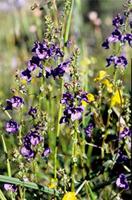
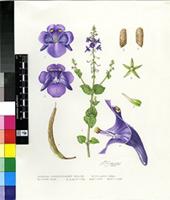
Diascia veronicoides

13 Images see all

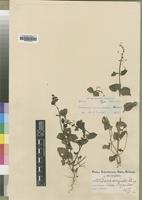
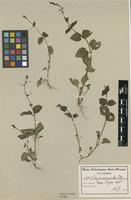
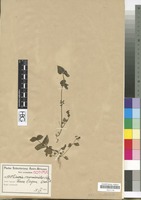
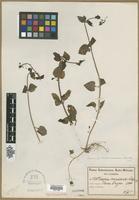
Type of Diascia veronicoides Schltr. [family SCROPHULARIACEAE]
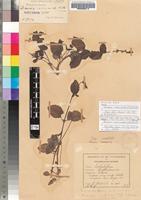
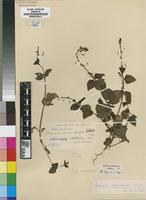
Syntype of Diascia veronicoides Schltr. [family SCROPHULARIACEAE]
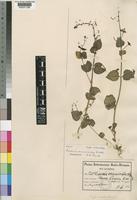
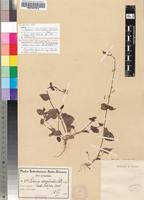
Type of Diascia veronicoides Schltr. [family SCROPHULARIACEAE]
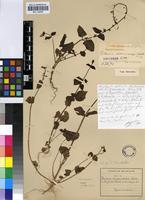
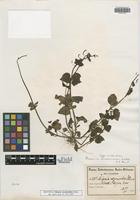
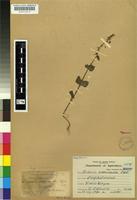
Isotype of Diascia veronicoides Schltr. [family SCROPHULARIACEAE]
Syntype of Diascia veronicoides Schltr. [family SCROPHULARIACEAE]
Isotype of Diascia veronicoides Schltr. [family SCROPHULARIACEAE]
Diascia veronicoides Schltr.
Isotype of Diascia veronicoides Schltr. [family SCROPHULARIACEAE]
Type of Diascia veronicoides Schltr. [family SCROPHULARIACEAE]
Type? of Diascia veronicoides Schltr. [family SCROPHULARIACEAE]
Previous
Next

Name

Identification
Diascia veronicoides Schltr. [family SCROPHULARIACEAE ]
Related name
  • Diascia veronicoides

Flora

Entry for DIASCIA veronicoides Schlechter [family SCROPHULARIACEAE]
Herbarium
Royal Botanic Gardens, Kew (K)
Collection
Flora Capensis
Resource Type
Reference Sources
Entry From
Flora Capensis, Vol 4, page 121, (1904) Author: By W. P. HIERN, F.R.S.
Names
DIASCIA veronicoides Schlechter [family SCROPHULARIACEAE], in Engl. Jahrb. xxvii. 178
Information
an annual herb, weak, decumbent or ascending, glabrous for the most part, slightly puberulous towards the top, slender, 1–2 ft. high, loosely branched below; branches ascending, or the lowest spreading, tetragonous; internodes 3/4–2 1/2 in. long; leaves opposite, ovate, obtuse or acutely and shortly acuminate at the apex, subcordate or subtruncate at the base, dentate or denticulate, membranous, green on both faces, 1/2–1 1/2 in. long, 3/8–1 1/5 in. broad; petioles short or ranging up to 3/4 in. long, narrowly decurrent; racemes terminal, elongating, 1 1/2–12 in. long, many-flowered; pedicels very slender, 1/4– 1/2 in. long or the upper shorter, patent, bent near the apex; bracts ovate-subulate, sessile, embracing the base of the pedicel, spreading or deflexed, 1/6– 1/5 in. long; calyx-segments lanceolate, acute, glabrous, 1/12– 1/10 in. long; corolla purple, about 1/3 in. broad; spurs 2, diverging, conical, acute, about 1/10 in. long; filaments slender, glabrous, all bearing anthers; capsule linear, glabrous, 1/2– 2/3 in. long by 1/24– 1/20 in. broad, mostly erect and subparallel, straight or somewhat curved. null
Distribution
CENTRAL REGION Clanwilliam Div.; on Koude Berg, near Wupperthal, 2400 ft., Bolus, 9065! Div.? on hills at Agtertiern, 900 ft., Schlechter, 10867! Hanover Div.; near Naauwpoort, Denoon, 22! (in Herb. Bolus), doubtfully referred to this species.WESTERN REGION Vanrhynsdorp Div.; in rocky places in a deep valley of the Karree Bergen, about 2000 ft., Schlechter, 8203!

Related Materials

  • Terms and Conditions
  • Privacy Policy
  • Cookie Policy
  • Cookie Settings
  • Accessibility
  • Help
  • Contact Us
  • Facebook
  • Twitter
ITHAKA

JSTOR is part of ITHAKA, a not-for-profit organization helping the academic community use digital technologies to preserve the scholarly record and to advance research and teaching in sustainable ways.

©2000-2026 ITHAKA. All Rights Reserved. JSTOR®, the JSTOR logo, JPASS®, Aluka®, and ITHAKA® are registered trademarks of ITHAKA.

╳