JSTOR Global Plants Home
  • Home
  • Browse
  • About
  • Access
  • Account
    • Saved Items
    • Profile
  • Log in

Global Plants

Skip to Main Content
  • JSTOR Global Plants Home
  • Global Plants

    • Browse
    • About
    • Access
    • Account
      • Saved Items
      • Profile
Log in
  • Browse
  • About
  • Access
  • Account
    • Saved Items
    • Profile
Advanced Search

Compilation
Dianthera debilis

4 Images see all

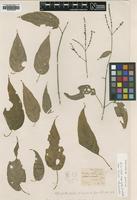
Type of Dianthera debilis C.B.Clarke [family ACANTHACEAE]
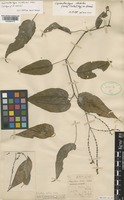
Syntype of Dianthera debilis C.B.Clarke [family ACANTHACEAE]
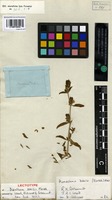
Lectotype of Monechma debile (Forssk.) Nees [family ACANTHACEAE]
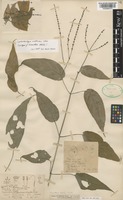
Syntype of Dianthera debilis C.B.Clarke [family ACANTHACEAE]
Previous
Next

Name

Identification
Dianthera debilis C.B.Clarke [family ACANTHACEAE ] Verified by Bertel Hansen, Leptostachya wallichii Nees [family ACANTHACEAE ] (stored under name); Verified by Bertel Hansen,
Related name
  • Dianthera debilis
  • Leptostachya wallichii

Flora

Entry for JUSTICIA debilis (Forssk.) Vahl [family ACANTHACEAE]
Herbarium
Royal Botanic Gardens, Kew (K)
Collection
Flora Somalia
Resource Type
Reference Sources
Entry From
Flora Somalia, (2000) Author: by M. Hedrén (Asystasia, Barleria, Duosperma, Hypoestes, Ichthyostoma, Isoglossa, Justicia, Lepidagathis, Peristrophe, Ruellia, Ruspolia) and M. Thulin (Acanthus, Anisotes, Blepharis, Crabbea, Crossandra, Dicliptera, Dyschoriste, Ecbolium, Elytraria, Megalochlamys, Neuracanthus, Rhinacanthus, Ruttya, Satanocrater, Thunbergia) [updated by M. Thulin 2008]
Names
JUSTICIA debilis (Forssk.) Vahl [family ACANTHACEAE], (1790);
Dianthera debilis Forssk. [family ], (1775);. [type as above]
Monechma debile (Forssk.) Nees [family ACANTHACEAE], (1847). [type as above]
?JUSTICIA somalensis Franch. [family ], (1882);. type: N2, “Mana”, Revoil s.n. (P holo., not seen).
Monechma troglodyticum Chiov. [family ACANTHACEAE], (1941);. type: N1, Hargeisa, Gillett 4255 (K holo., FT iso.).
Information
Perennial herb, mostly branched from the base with ascending stems up to c. 40 cm tall; young stems greyish green, very densely pubescent with 0.2–0.4 mm long somewhat retrorse hairs; old stems brownish. Leaves green, veins not prominent, fairly densely pubescent with 0.2–0.5 mm long spreading hairs; blade thin, up to 20–35 x 8–16 mm, base attenuate to shortly attenuate, apex obtuse to acute; petiole up to 8–12 mm. Flowers in terminal and axillary clusters developing into bracteate spike-like inflorescences; bracts lanceolate to ovate, up to 7–12 x 5.5–7 mm, mostly ± densely ciliate at margin with erect up to 0.5–1 mm long thin and flexous hairs, elsewhere fairly densely pubescent with 0.1–0.2 mm long spreading hairs; apex acute to acuminate; bracteoles inconspicuous. Calyx-lobes 5, narrowly triangular, green, densely pubescent with up to 0.25 mm long erect glandular and eglandular hairs, c. 4 x 0.3 mm in flower, up to 3.3–6.7 x 0.5–0.7 mm in fruit. Corolla crimson with purplish markings at lower lip near throat, 9.3–11 mm long; tube 5.5–6 mm long; upper lip 4.5–5 mm long; lower lip 5.3–6 mm long and 5.3–6.3 mm wide. Anthers greenish, 1.2–1.5 mm long, cells displaced by 0.2–0.3 mm, tail of lower cell c. 0.6–0.7 mm long. Capsule 2-seeded, greenish, fairly densely pubescent with 0.2–0.3 mm long erect to slightly retrorse eglandular hairs, up to 5.7–6.3 x 1.8–2.3 mm, sterile in lower 1/4 to 1/3. Seeds blackish, smooth, flattened, up to 2.2–2.6 mm in diam.
Range
N1, 2 widespread in north-eastern and eastern tropical Africa, and in tropical Arabia.
Altitude range
c. 1400–1500 m.
Distribution
SOMALIA Thulin, Abdi Dahir & Abdisalam Hassan 9148; Carter 873.
Distribution (external)
Eritrea
Ethiopia
Notes
Ged waraba (Som.). Plants from Somalia may have lax inflorescences with a few flowers at each node and bracts without long hairs at the margin.

Related Materials

  • Terms and Conditions
  • Privacy Policy
  • Cookie Policy
  • Cookie Settings
  • Accessibility
  • Help
  • Contact Us
  • Facebook
  • Twitter
ITHAKA

JSTOR is part of ITHAKA, a not-for-profit organization helping the academic community use digital technologies to preserve the scholarly record and to advance research and teaching in sustainable ways.

©2000-2026 ITHAKA. All Rights Reserved. JSTOR®, the JSTOR logo, JPASS®, Aluka®, and ITHAKA® are registered trademarks of ITHAKA.

╳