JSTOR Global Plants Home
  • Home
  • Browse
  • About
  • Access
  • Account
    • Saved Items
    • Profile
  • Log in

Global Plants

Skip to Main Content
  • JSTOR Global Plants Home
  • Global Plants

    • Browse
    • About
    • Access
    • Account
      • Saved Items
      • Profile
Log in
  • Browse
  • About
  • Access
  • Account
    • Saved Items
    • Profile
Advanced Search

Compilation
Dialiopsis africana

5 Images see all

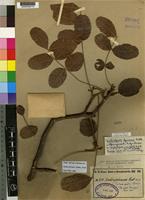
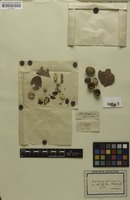
Type of Dialiopsis africana Radcl.-Sm. [family SAPINDACEAE]
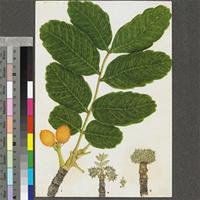
Dialiopsis africana Radlk. original illustration from the 'Trees of Central Africa'
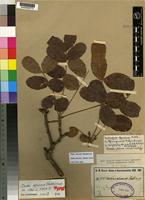
Type of Dialiopsis africana Radcl.-Sm. [family SAPINDACEAE]
Filed as Zanha africana (Radlk.) Exell [family BURSERACEAE]
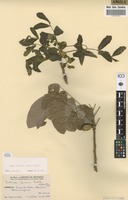
Original material? of Dialiopsis africana Radlk. [family SAPINDACEAE]
Previous
Next

Name

Identification
Dialiopsis africana Radlk. [family SAPINDACEAE ]
Related name
  • Dialiopsis africana

Flora

Entry for ZANHA africana (Radlk.) Exell [family SAPINDACEAE]
Herbarium
Royal Botanic Gardens, Kew (K)
Collection
Flora of Tropical East Africa
Resource Type
Reference Sources
Entry From
Flora of Tropical East Africa, page 1, (1998) Author: DAVIES & B. VERDCOURT
Names
ZANHA africana (Radlk.) Exell [family SAPINDACEAE], in F.Z. 2: 537, t. 115A (1966); Verdc. & Trump, Common Pois. Pl. E. Afr.: 108 (1969); Vollesen in Opera Bot. 59: 58 (1980); Beentje, K.T.S.L.: 423 (1994). Lectotype, chosen here: Tanzania, Songea, Ungoni, Kwa Mtumbo, Busse 785 (EA!, lecto., EA!, K!, isolecto.)
Dialiopsis africana Radlk. [family SAPINDACEAE], in E. & P. Pf., Nachtr. 3: 207 (1907) & in E.P. IV, 165: 1419 (1933); T.T.C.L.: 557 (1949); K.T.S.: 509 (1961); F.F.N.R.: 224 (1962); Haerdi in Acta Trop., suppl. 8: 124 (1964)
Information
Small tree 3.5–12 m. tall with rather nodular gnarled grey branches; bark red, brittle, reticulate, flaking off in patches, with orange layer beneath. Leaves up to ± 23 cm. long; petiole 1–5 cm. long, ferruginous pubescent; leaf rhachis 4–35 cm. long, similarly pubescent; leaflets in 3–8 pairs, often not exactly opposite, ovate, elliptic or almost round, the lower pairs considerably smaller than the upper; upper leaflets 8–15 cm. long, 4–8 cm. wide, obtuse at the apex, truncate to cordate at the base, crenate towards the apex or rarely entire, glabrous to sparsely or densely ferruginous pubescent; lateral nerves in up to 14 pairs, the venation prominently reticulate beneath; petiolules 1–3 mm. long. Male inflorescences precocious, ± sessile clusters, 1.5 cm. wide, forming masses ± 5 cm. wide, peduncles sometimes 0.5–?3 cm. long; female inflorescences tawny felted, with peduncle up to 2 cm. long, lengthening in fruit. Flowers greenish, sweet-scented; sepals 5, 4 mm. long, united for 1 mm. at base; disk cup-shaped, 0.7 mm. high. Stamens and staminodes 5; filaments of stamens 9 mm. long; anthers 1.2 mm. long. Fruit bright orange, ellipsoid, up to 2.6 cm. long, 1.3–1.8 cm. wide, velvety; sepals and style base persistent; stalks 0.3–1.9 cm. long. Fig. 3/1–4.
Range
DISTR. K 4; T 1, 2, 4–8
Altitude range
300–1750 m.
Distribution
KENYA Machakos District Makueni, 24 Nov. 1955, Glover in E.A.H. 14/56!TANZANIA Mwanza District Geita, Sept. 1949, F.H. 2852!TANZANIA Ufipa District ridge E. of Lake Kwela, 7 Nov. 1950, Bullock 3473!TANZANIA Kilosa District between Berega and Mlali on Mpwapwa road, 10 Dec. 1935, B.D. Burtt 5384!
Distribution (external)
; Zaire
S. Angola
Zambia
Malawi
Mozambique
Zimbabwe
Notes
The fruits contain ± 10.5% saponins and are used as soap after boiling; reports from South Africa suggest they are edible. The bark of the roots appears to contain powerful drug elements. It is used in childbirth and against fungal infections, fits, insanity, pains of head and neck and other complaints, both by rubbing into incisions or on to the skin and taken internally. Fatalities following ingestion of an infusion of pounded root are known.The syntypes of Z. africana, Busse 785 and 785a, Rovuma R., Kwa-Ktira (seeds only) were destroyed at Berlin; one of the isosyntypes at EA, Busse 785, has therefore been selected as lectotype.

Related Materials

  • Terms and Conditions
  • Privacy Policy
  • Cookie Policy
  • Cookie Settings
  • Accessibility
  • Help
  • Contact Us
  • Facebook
  • Twitter
ITHAKA

JSTOR is part of ITHAKA, a not-for-profit organization helping the academic community use digital technologies to preserve the scholarly record and to advance research and teaching in sustainable ways.

©2000-2026 ITHAKA. All Rights Reserved. JSTOR®, the JSTOR logo, JPASS®, Aluka®, and ITHAKA® are registered trademarks of ITHAKA.

╳