JSTOR Global Plants Home
  • Home
  • Browse
  • About
  • Access
  • Account
    • Saved Items
    • Profile
  • Log in

Global Plants

Skip to Main Content
  • JSTOR Global Plants Home
  • Global Plants

    • Browse
    • About
    • Access
    • Account
      • Saved Items
      • Profile
Log in
  • Browse
  • About
  • Access
  • Account
    • Saved Items
    • Profile
Advanced Search

Compilation
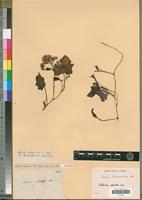
Delairea odorata

9 Images see all

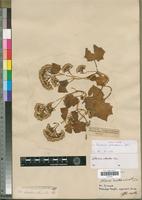
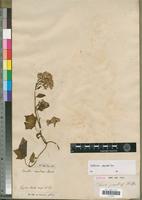
Syntype of Senecio scandens DC. [family ASTERACEAE]
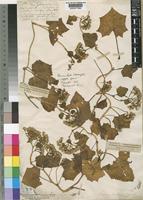
Delairea odorata Lem. [family COMPOSITAE]
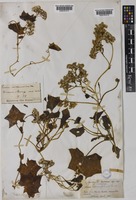
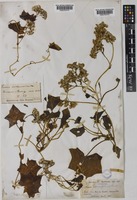
Syntype of Senecio scandens DC. [family ASTERACEAE]
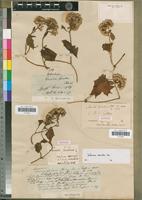
Delairea odorata Lem. [family ASTERACEAE]
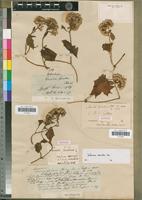
Syntype of Senecio scandens DC. [family ASTERACEAE]
Delairea odorata Lem. [family ASTERACEAE]
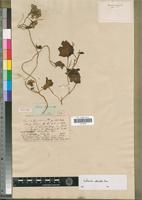
Syntype of Senecio scandens DC. [family ASTERACEAE]
Previous
Next

Name

Identification
Delairea odorata Lem. [family COMPOSITAE ] (stored under name); Senecio mikanioides Otto ex Harv. [family COMPOSITAE ] Senecio burchellii DC. [family COMPOSITAE ]
Related name
  • Senecio scandens
  • Delairea odorata
  • Senecio mikanioides
  • Senecio hederaefolius
  • Senecio burchellii

Flora

Entry for SENECIO mikanioides Otto [family COMPOSITAE]
Herbarium
Royal Botanic Gardens, Kew (K)
Collection
Flora Capensis
Resource Type
Reference Sources
Entry From
Flora Capensis, Vol 3, page 44, (1894) Author: (By W. H. HARVEY).
Names
SENECIO mikanioides Otto [family COMPOSITAE], MSS.
SENECIO scandens DC. [family COMPOSITAE], ! l. c. 404, excl. syn. Th.
Cacalia scandens Zey. [family COMPOSITAE], ! Coll. 157.
Mikania senecioides Hort. [family COMPOSITAE]
Delairea odorata Lemaire [family COMPOSITAE]
Breonia palmata Hort. [family RUBIACEAE]
Information
scandent, quite glabrous; leaves petiolate, sharply 5–7-angled or lobed, hastate or cordate at base, the lobes deltoid or obsolete, with broad, shallow interspaces; fl. branches terminal and axillary, with a few depauperated leaves, bearing a compound, many-headed corymb; inv. very sparingly calycled, of 8–9 narrow scales, shorter than the flowers; heads discoid, 8–10-fl.; achenes hispidulous on the striæ. A much branched, climbing suffrutex, many feet high. Petioles 1–1 1/2 inch long, slender, sometimes auricled at base. Leaves somewhat fleshy, drying thin, ivy-shaped, variably lobed or angled. Corymb generally much branched, on weak shoots subsimple. Inv. scarcely 2 lines long, much shorter than the flowers.
Distribution
SOUTH AFRICA Forests of Uitenhage, Albany and Caffraria, Burchell, E. & Z.! &c. Zey.! 2977. Katberg, H. Hutton! Natal, T. Cooper, 1130. Cult. in Cape and European gardens. (Herb. D., Sd., Hk.)
Notes
As this is not Thunberg's “Cacalia scandens;” and as the name “ scandens ” is already occupied for an Indian species, I am compelled to reject it.

Related Materials

  • Terms and Conditions
  • Privacy Policy
  • Cookie Policy
  • Cookie Settings
  • Accessibility
  • Help
  • Contact Us
  • Facebook
  • Twitter
ITHAKA

JSTOR is part of ITHAKA, a not-for-profit organization helping the academic community use digital technologies to preserve the scholarly record and to advance research and teaching in sustainable ways.

©2000-2026 ITHAKA. All Rights Reserved. JSTOR®, the JSTOR logo, JPASS®, Aluka®, and ITHAKA® are registered trademarks of ITHAKA.

╳