JSTOR Global Plants Home
  • Home
  • Browse
  • About
  • Access
  • Account
    • Saved Items
    • Profile
  • Log in

Global Plants

Skip to Main Content
  • JSTOR Global Plants Home
  • Global Plants

    • Browse
    • About
    • Access
    • Account
      • Saved Items
      • Profile
Log in
  • Browse
  • About
  • Access
  • Account
    • Saved Items
    • Profile
Advanced Search

Compilation
Deinbollia oblongifolia

8 Images see all

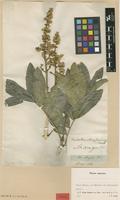
Filed as Deinbollia oblongifolia (E.Mey. ex Arn.) Radlk. [family SAPINDACEAE]
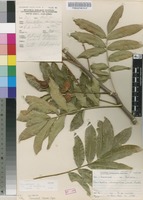
Deinbollia oblongifolia (E.Mey. ex Arn.) Radlk. [family SAPINDACEAE]
Syntype of Rhus oblongifolia E.Mey. ex Arn. [family SAPINDACEAE]
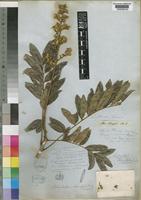
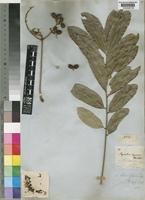
Deinbollia oblongifolia (E.Mey. ex Arn.) Radlk. [family SAPINDACEAE]
Syntype of Rhus oblongifolia E.Mey. [family ANACARDIACEAE]
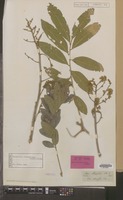
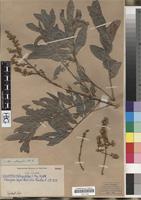
Deinbollia oblongifolia (E.Mey. ex Arn.) Radlk. [family SAPINDACEAE]
Type of Rhus oblongifolia E. Mey. nom.nud. [family SAPINDACEAE]
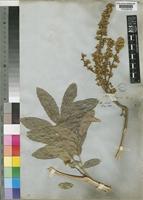
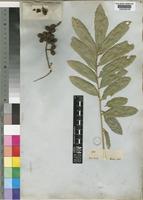
Deinbollia oblongifolia (E.Mey. ex Arn.) Radlk. [family SAPINDACEAE]
Previous
Next

Name

Identification
Deinbollia oblongifolia (E. Mey.) Radlk. [family SAPINDACEAE ] (stored under name); Verified by HBG-formal name change, 2011 Sapindus oblongifolius (E. Mey.) Sond. [family SAPINDACEAE ] Verified by HBG-formal name change, 2011 Rhus oblongifolia E. Mey. nom.nud. [family SAPINDACEAE ] Verified by Not on sheet,
Related name
  • Pappea capensis
  • Sapindus capensis
  • Deinbollia oblongifolia
  • Rhus oblongifolia
  • Sapindus oblongifolius

Flora

Entry for Deinbollia oblongifolia E. Mey. Radlk. [family SAPINDACEAE]
Herbarium
Royal Botanic Gardens, Kew (K)
Collection
Flora Zambesiaca
Resource Type
Reference Sources
Entry From
FZ, Vol 2, Part 2, page 494, (1966) Author: A. W. Exell
Names
Deinbollia oblongifolia E. Mey. Radlk. [family SAPINDACEAE], in Sitz.-Ber. Bayer. Akad. 8: 299 (1878); in Engl., Pflanzenr. IV, 165, 1, 3: 673 (1932). Type from Natal.
Rhus oblongifolia E. Mey. [family SAPINDACEAE], in Drège, Zwei Pflanz.-Docum.: 156, 159 (1843). Type as above.
Hippobromus oblongifolius E. Mey. Drège [family SAPINDACEAE], in Linnaea, 19: 614 (1847). Type as above.
Sapindus oblongifolius E. Mey. Sond. [family SAPINDACEAE], in Harv. & Sond., F.C. 1: 240 (1860). — Sim. For. Fl. Port. E. Afr.: 32 (1909). Type as above.
Information
Shrub up to c. 1·5 m. tall; branchlets glabrous or soon glabrescent. Leaves up to 30 cm. long, petiolate; petiole up to 9 cm. long, somewhat sparsely pubescent (more densely so in the furrows) or glabrous; rhachis terete, often ribbed but scarcely winged, glabrous or sparsely pubescent; leaflets 5–7-jugate; petiolules up to 3 mm. long; leaflet-lamina up to 15 × 5 cm., elliptic to oblong-elliptic, glabrous or nearly so, apex acute (rarely long-acuminate) to blunt, margin entire, base cuneate to rounded; lateral nerves 12–15 pairs. Inflorescence terminal, up to 35 cm. long, fulvous-tomentose or fulvous-pubescent. Flowers cream-coloured, in short-stalked or subsessile cymules; pedicels 1·5–3·5 mm. long, tomentose. Sepals 4·5–5·5 × 3–3·5 mm., elliptic to broadly elliptic, very densely fuscous- or silvery-pubescent. Petals 4·5–5·5 × 2·5 mm., elliptic, ciliate. Disk glabrous. Male flowers not seen; staminodes 14–16 in female flowers with filaments 1 mm. long. Ovary 3-lobed, tomentose; style 3·5 mm. long. Fruit whitish-yellow; cocci 10–15 × 8–10 mm., subglobose or ellipsoid, sparsely pubescent at first, glabrescent. Seeds up to 10 × 8 mm., subglobose to obovoid or ellipsoid, glabrous.
Habitat
Coastal thickets.
Altitude range
100
0
inferred from habitat
Distribution
Mozambique M Vila Luisa, fr. 1.x.1957, Barbosa & Lemos 7888 (K; LMJ); Inhaca I., fr. 16.ix.1954, Barbosa & Balsinhas 5569 (BM; LMJ).Mozambique GI Bilene, Macia, fl. 20.vi.1950, Gomes e Sousa 3998 (K; PRE).Mozambique Z Maganja da Costa, fl. vi.1946, Pedro 1519 (LMJ).
Distribution (external)
Natal

Related Materials

  • Terms and Conditions
  • Privacy Policy
  • Cookie Policy
  • Cookie Settings
  • Accessibility
  • Help
  • Contact Us
  • Facebook
  • Twitter
ITHAKA

JSTOR is part of ITHAKA, a not-for-profit organization helping the academic community use digital technologies to preserve the scholarly record and to advance research and teaching in sustainable ways.

©2000-2026 ITHAKA. All Rights Reserved. JSTOR®, the JSTOR logo, JPASS®, Aluka®, and ITHAKA® are registered trademarks of ITHAKA.

╳