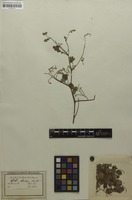
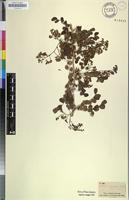
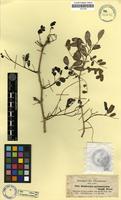
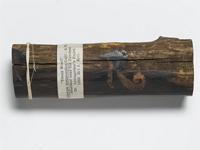
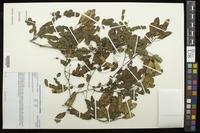
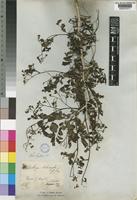
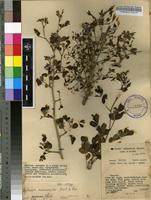
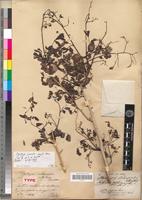
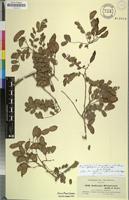
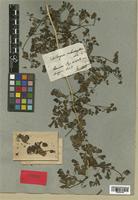
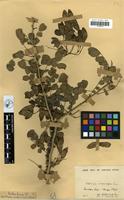
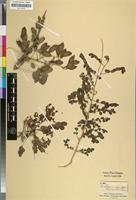
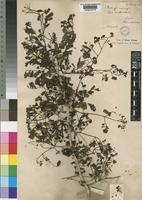
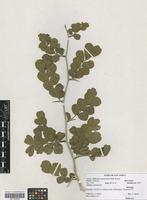
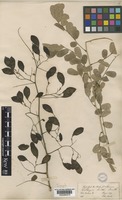
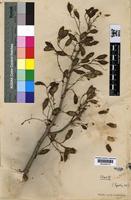
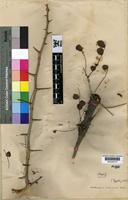
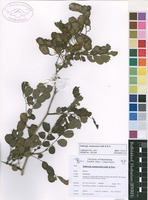
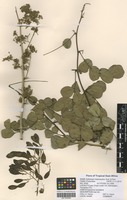
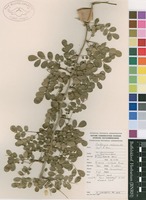
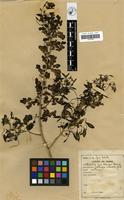
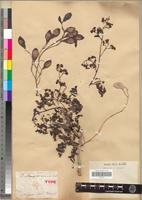
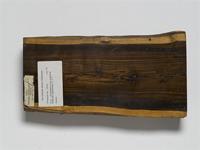
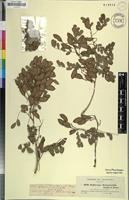
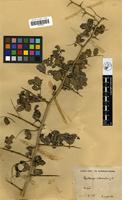
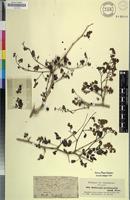
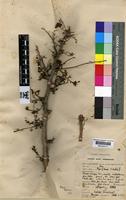
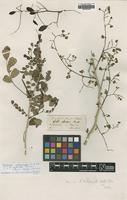
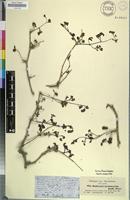
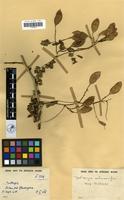
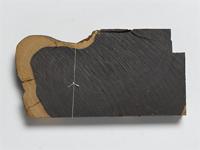
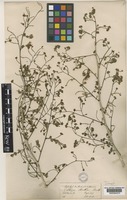
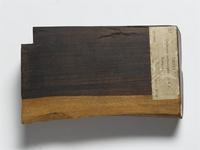
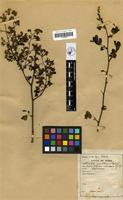
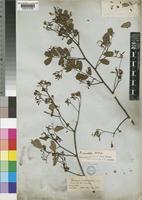
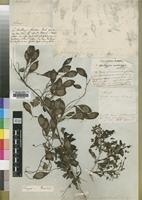
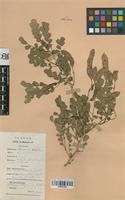
Spiny shrub or tree, up to 5–12(–30) m. tall, typically several-stemmed and much branched to form a low irregularly shaped crown; bark grey, ultimately rough and fissured or flaking; heartwood purplish-brown to black. Branchlets clustered at the nodes, some growing out, others relatively short and spine-tipped, covered at first with short crisped hairs, but usually soon glabrescent. Leaves mostly 6–22 cm. long; stipules oblong-ovate or oblong, 2–6 mm. long, fugaceous; lateral leaflets 4–6(–8) on either side of rhachis, mostly oblong-obovate to obovate, 1–5(–5.5) cm. long, 0.7–3(–5) cm. wide, truncate or emarginate at apex, broadly cuneate to rounded or slightly cordate at base, shortly pubescent at least beneath, glabrescent; primary lateral nerves 8–12 on either side of midrib, the lower ones ascending to upper half. Panicles appearing with flush of new leaves, ±3–12 cm. long, laxly branched, many-flowered, with slender subglabrous to shortly crisped-pubescent axes; bracts linear-lanceolate to ovate, concave, 0.5–1 mm. long, caducous; bracteoles at top of short pedicel similar. Calyx 2–3(–4) mm. long, sparsely pubescent to subglabrous except on margins. Corolla 4–6 mm. long, white, fragrant; standard elliptic-obovate or obovate, narrowed to claw; wings little shorter than standard and slightly exceeding keel. Stamens usually 9, united or variously divided. Fruit elliptic-oblong or irregularly oblong, bluntly pointed, with the 0.5–1 cm. long stipe 3–7 cm. long, 0.8–1.4 (–2) cm. wide, papery, glabrous, laxly and rather diffusely veined, 1–2-seeded. Fig. 21/1–9.