JSTOR Global Plants Home
  • Home
  • Browse
  • About
  • Access
  • Account
    • Saved Items
    • Profile
  • Log in

Global Plants

Skip to Main Content
  • JSTOR Global Plants Home
  • Global Plants

    • Browse
    • About
    • Access
    • Account
      • Saved Items
      • Profile
Log in
  • Browse
  • About
  • Access
  • Account
    • Saved Items
    • Profile
Advanced Search

Compilation
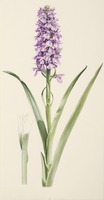
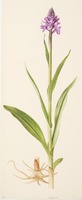
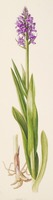
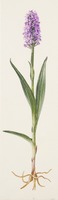
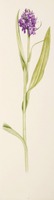
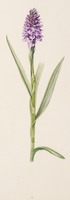
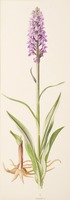
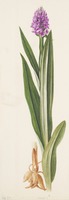
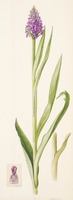
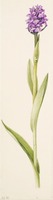
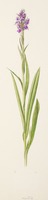
Dactylorhiza praetermissa

13 Images see all

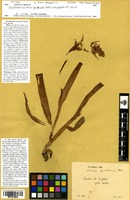
Paratype of Dactylorhiza occitanica Geniez, Melki, Pain & Soca [family ORCHIDACEAE]
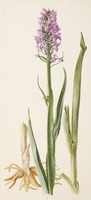
Dactylorhiza praetermissa Druce
Previous
Next

Name

Identification
Dactylorhiza praetermissa (Druce) Soó [family ORCHIDACEAE ] (stored under name); Verified by Vermeulen, P., 1949 Dactylorchis praetermissa (Druce) Verm. [family ORCHIDACEAE ] Verified by Vermeulen, P., 1949
Related name
  • Dactylorhiza praetermissa
  • Dactylorchis praetermissa
Common name
  • Leopard marsh orchid, Flora of North America Vol. 26

Flora

Entry for Dactylorhiza majalis (Reichenbach) P. F. Hunt & Summerhayes var. junialis (Vermeulen) Senghas [family ORCHIDACEAE]
Herbarium
Flora of North America (FNA)
Collection
Flora of North America
Resource Type
Reference Sources
Entry From
Flora of North America, Vol 26,
Names
Dactylorhiza majalis (Reichenbach) P. F. Hunt & Summerhayes var. junialis (Vermeulen) Senghas [family ORCHIDACEAE], Jahresber. Naturwiss. Vereins Wuppertal, 21–22: 126. 1968
Orchis latifolia Linnaeus var. junialis Vermeulen [family ORCHIDACEAE], Ned. Kruidk. Arch., 43: 404. 1933
Dactylorhiza praetermissa (Druce) Soó subsp. junialis (Vermeulen) Soó [family ORCHIDACEAE]
Dactylorhiza praetermissa var. junialis (Vermeulen) Vermeulen [family ORCHIDACEAE]
Orchis pardalina Pugsley [family ORCHIDACEAE]
Treatment Author(s)
Charles J. Sheviak
Paul M. Catling
Susan J. Meades
Richard M. Bateman
Information
Plants 20–55(–70) cm. Stems 4–10.5 mm diam. Leaves: proximal leaves 4–5, sheathing; distal leaves 2–3, not sheathing, all dark green, heavily marked with purplish spots (some annular) on adaxial surface only, keeled abaxially, margins entire, proximal leaves well spaced along stem, lance-elliptic to oblong, slightly hooded at apex, largest 12–20+ × 1.5–5(–6) cm, distal leaves sessile, narrowly lanceolate, apex acute to acuminate. Inflorescences: floral bracts green to suffused with purple, often spotted, narrowly lanceolate, 6.5–15 × 2–5 mm, extending slightly beyond flowers. Flowers mauve to lavender; sepals and petals lanceolate, 6–10 × 3–4.5 mm, apex obtuse to acute; sepals suberect, prominently oblique at base, dark spotted; distal petals hooded; lip marked with red-violet loops (continuous or discontinuous), dashes, and spots, obcordate, shallowly 3-lobed, 7–11 × 9.5–14 mm, widest at middle; lateral lobes slightly to less often strongly reflexed, with shallow sinus on either side of small toothlike middle lobe 1–3.5 mm, apex obtuse to acute, usually exceeding lateral lobes by ca. 1 mm; spur straight to slightly down-curved, 4.5–7 × 2–4 mm, 1/2–2/3 as long as ovary. 2n = 80.
Phenology
late jun
late jul
Altitude range
to 200 m;
Distribution
Europe (Belgium).Europe (s England).Europe (n France).Europe (Luxembourg).Europe (Netherlands).Canada Nfld. and Labr. (Nfld.)Canada Ont.
Discussion
Dactylorhiza majalis var. junialis occurs on seepage slopes in Ontario and in bogs in Newfoundland.
First discovered in 1959 in the town of Timmins, Ontario, and reported by F. Cowell to H. Andrews (1961), Dactylorhiza majalis var. junialis became known as the Timmins orchid. Originally identified as Orchis purpurella T. Stephenson & T. A. Stephenson, it was later assigned to Dactylorhiza maculata (Linnaeus) Soó (C. A. Luer 1975; P. M. Catling and V. R. Catling 1991), D. fuchsii (P. M. Catling and C. J. Sheviak 1993), and most recently D. majalis subsp. praetermissa var. junialis by R. M. Bateman (in S. J. Meades 1999), who suggested that the Timmins orchid and a population of Dactylorhiza in St. John’s, Newfoundland, may be the same taxon but from a different source (H. J. Clase and S. J. Meades 1996). The St. John’s plants differ from those in Timmins by having larger spurs and less defined lip markings. Although the original lakeshore habitat in Timmins was destroyed, plants transplanted in the local area have become naturalized along the Mattagami River.
Another controversial naturalized Dactylorhiza population occurs at Tilt Cove (Baie Verte Peninsula, Newfoundland), near the site of an abandoned nickel and copper mine. It differs from the previous Dactylorhiza populations by its unspotted leaves; smaller, less marked flowers with short, conic spurs; and wetter, more basic (ultramafic) habitat. According to local accounts, its presence dates to the early 1900s, when mining equipment, packed in hay, was imported from England (S. J. Meades 1999). It remained unknown to the botanical community until found by S. G. Hay, A. Bouchard, and L. Brouillet in 1988. First identified as D. incarnata (S. G. Hay et al. 1990), it is known locally as the Tilt Cove orchid. Recently, R. M. Bateman tentatively identified the taxon as D. majalis subsp. praetermissa (southern marsh-orchid). He noted, however, that while the Tilt Cove plants most closely resemble subsp. praetermissa, they do not match exactly any European Dactylorhiza species. Additional studies are underway to obtain a more confident identification.
Native/Introduced
introduced;

Related Materials

  • Terms and Conditions
  • Privacy Policy
  • Cookie Policy
  • Cookie Settings
  • Accessibility
  • Help
  • Contact Us
  • Facebook
  • Twitter
ITHAKA

JSTOR is part of ITHAKA, a not-for-profit organization helping the academic community use digital technologies to preserve the scholarly record and to advance research and teaching in sustainable ways.

©2000-2026 ITHAKA. All Rights Reserved. JSTOR®, the JSTOR logo, JPASS®, Aluka®, and ITHAKA® are registered trademarks of ITHAKA.

╳