JSTOR Global Plants Home
  • Home
  • Browse
  • About
  • Access
  • Account
    • Saved Items
    • Profile
  • Log in

Global Plants

Skip to Main Content
  • JSTOR Global Plants Home
  • Global Plants

    • Browse
    • About
    • Access
    • Account
      • Saved Items
      • Profile
Log in
  • Browse
  • About
  • Access
  • Account
    • Saved Items
    • Profile
Advanced Search

Compilation
Dactyloctenium giganteum

6 Images see all

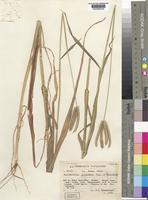
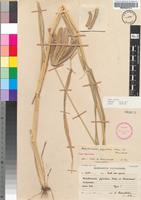
Type of Dactyloctenium giganteum Fisher & Schweick. [family POACEAE]
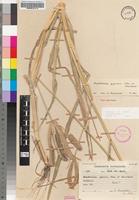
Isotype of Dactyloctenium giganteum Fisher & Schweick. [family POACEAE]
Dactyloctenium giganteum Fisher & Schweick.
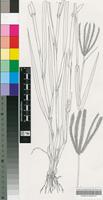
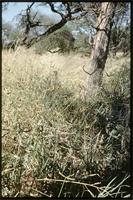
Dactyloctenium giganteum Fisher & Schweick. from Botswana
Isotype of Dactyloctenium giganteum Fisher & Schweick. [family POACEAE]
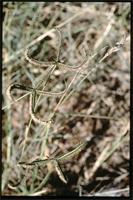
Dactyloctenium giganteum Fisher & Schweick. from Botswana
Previous
Next

Name

Identification
Dactyloctenium giganteum Fisher & Schweick. [family POACEAE ]
Related name
  • Dactyloctenium giganteum

Flora

Entry for DACTYLOCTENIUM giganteum Fisher & Schweick. [family POACEAE]
Herbarium
Royal Botanic Gardens, Kew (K)
Collection
Flora of Tropical East Africa
Resource Type
Reference Sources
Entry From
Flora of Tropical East Africa, Part (Part 2), page 177, (1974) Author: W. D. CLAYTON, S. M. PHILLIPS AND S. A. RENVOIZE
Names
DACTYLOCTENIUM giganteum Fisher & Schweick. [family POACEAE], in Ann. Natal Mus. 10: 53 (1941); Ann. list Nyasaland grasses: 34 (1958); G.T.: 39 (1965). Type: South West Africa, Grootfontein, Schoenfelder 1018 (NH, holo., K, Schweickerdt 1451 grown from seed of the holotype !)
Information
Robust tufted annual; culms (37–)70–160 cm. high, erect or geniculately ascending and occasionally rooting at the lower nodes. Leaf-blades flat, 11–45 cm. long, 5–12 mm. wide, almost glabrous to papillose-hispid especially along the margins. Inflorescence composed of (1–)3–9 linear spikes 3.5–11 cm. long; spikes usually ascending to form a brush-like cluster at the top of the culm, less often widely spreading. Spikelets 2–7-flowered, elliptic, 4–6.2 mm. long; glumes subequal, 1.5–2.2 mm. long, the lower lanceolate to narrowly elliptic in profile with a thick scabrid keel, the upper elliptic in profile, the keel extended into a divergent scabrid awn(1 1/2–) 1 3/4–4 times as long as the glume; lemmas lanceolate to narrowly ovate in profile, 3–4 mm. long, acuminate, the keel scabrid, ± straight or only slightly concave above the middle, extended into an awn-point 0.7–2 mm. long; palea-keels unwinged; anthers 1.3–2.1 mm. long. Grain 0.7–1.1 mm. long, broadly obovate to obtriangular, transversely rugose.
Range
DISTR. K4, 7; T1–8 southwards to South West Africa and South Africa (Transvaal and Natal)
Altitude range
200–2000 m.
Distribution
KENYA Machakos District Mtito Andei, 19 Feb. 1962, Bogdan 5437 !KENYA Teita District Voi Gate W. to Pipeline, 5 Jan. 1967, Greenway & Kanuri 12959 !KENYA Tana River District S. bank of Tana opposite Mbalambala [Burdali], Sampson 21!TANZANIA Shinyanga, Mar. 1936, B. D. Burtt 5665 !TANZANIA Ufipa District near Zimba, 12 Feb. 1958, Vesey-FitzGerald 1489!TANZANIA Iringa District Msembe [Msamba], 21 Feb. 1970, Greenway & Kanuri 13913 !
Notes
Difficulty is often experienced in distinguishing D. giganteum from D. aegyptium, especially as the latter is notoriously variable, and the two species are undoubtedly closely related. The easiest criterion for separating them is anther-length, but in addition D. giganteum usually has a much more robust erect habit, longer less widely spreading spikes, narrower spikelets with longer awned upper glumes and narrower less gibbous lemmas tipped with a definite scabrid awn-point, in contrast to the stouter cusp or mucro of D. aegyptium.

Related Materials

  • Terms and Conditions
  • Privacy Policy
  • Cookie Policy
  • Cookie Settings
  • Accessibility
  • Help
  • Contact Us
  • Facebook
  • Twitter
ITHAKA

JSTOR is part of ITHAKA, a not-for-profit organization helping the academic community use digital technologies to preserve the scholarly record and to advance research and teaching in sustainable ways.

©2000-2026 ITHAKA. All Rights Reserved. JSTOR®, the JSTOR logo, JPASS®, Aluka®, and ITHAKA® are registered trademarks of ITHAKA.

╳